
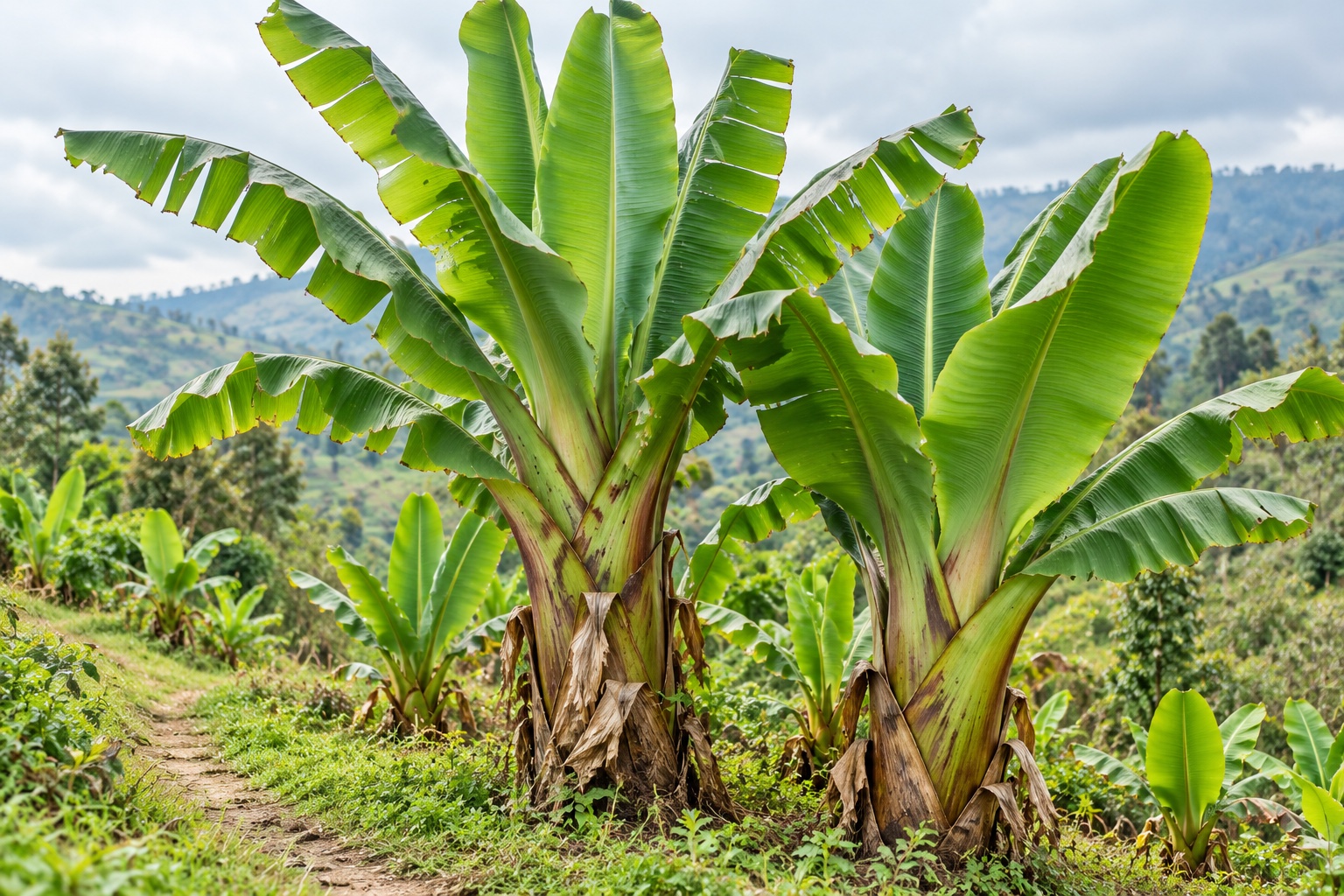
Work on turning Ethiopia's staple crop enset into food has received international recognition. At World Food Day in Rome on 16 October 2026, FAO presented an Award for Achievement to Arba Minch University researcher Addisu Fekadu Andeta. The organisation's report published that day describes innovations in enset processing.
The work behind the recognition
FAO credits the work with a microbial starter culture that shortens fermentation time, alongside mechanical tools that improve processing efficiency and reduce losses after harvest. It also says Lucy Enset, the enterprise Andeta founded, has created market opportunities and supported smallholder farmers, particularly women.
Those benefits are FAO's account of the work being honoured. The news report does not supply a measured percentage reduction in food losses, a precise fermentation-time comparison or an adoption count. The award should therefore be understood as recognition of the work, without adding numerical outcomes the source does not provide.
A continuing research story
The research predates this year's award. In its Science and Innovation Forum programme for 16 October 2025, FAO profiled Andeta as a lead scientist working on indigenous food products at Arba Minch University and as Lucy Enset's founder. The profile connected processing research with commercialisation. That earlier context makes this a story of continuing work gaining recognition, rather than an invention first appearing in October 2026.
FAO's description of the Award for Achievement emphasises identifiable contributions to sustainable agricultural and rural development or food security, including technical and institutional improvements. It also highlights the sustainability and replicability of achievements.
Why the processing step matters
For readers in the UAE and elsewhere, the useful perspective is that food innovation can involve improving what happens between harvesting a familiar crop and bringing its products to market. Attention often goes to growing something new; this recognition invites a closer look at the tools, processes and enterprises around an existing food.
Useful follow-up reporting would show who can access the tools, how performance is measured and whether producers find them practical in everyday use. Those questions keep the focus on implementation while leaving room for the knowledge and experience already held by food-growing communities.
Editorial note
This original AI-assisted news perspective uses official FAO sources checked on 18 October 2026. The cover is an AI-generated editorial illustration of enset plants, not a photograph of Andeta, his enterprise, a programme site or the award ceremony.
A good read is worth sharing.
Pass this story on to someone who would enjoy it.



The conversation 0
A thought, a question, a little food for thought. Join in — no account needed.
Loading the conversation…
Be the first to add a thought.