
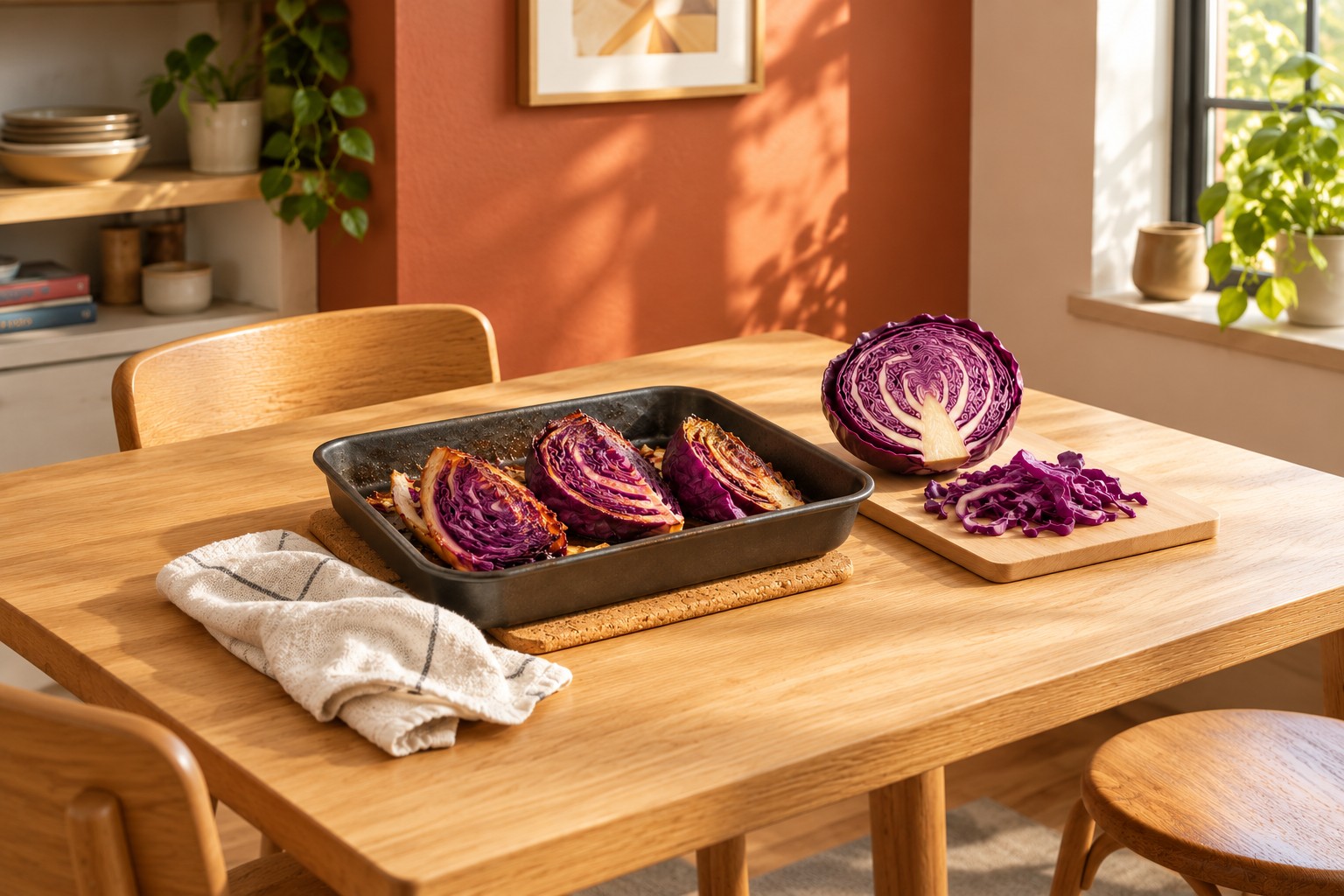
A cabbage changes character with the cut. Fine ribbons bring crunch to a flatbread; a wedge gives you browned edges and tender layers; slowly softened strips settle into a warm bowl. That range is useful when one vegetable needs to do more than one job during a busy week.
For a home kitchen in Dubai, start by choosing the meal you actually want to eat. A crisp lunch and a warm evening plate can use the same head of red cabbage while feeling quite different. You can also use green cabbage, adjusting the cooking to the leaves in front of you.
Start with the meal, then choose the cut
Cabbage can be one part of a varied pattern of eating. WHO's healthy-diet guidance places diversity alongside adequacy, balance and moderation. Its emphasis is on a range of nutritious foods across food groups. Giving a familiar vegetable several appealing uses is a practical way to make room for it in that wider pattern.
Complete the meal with foods you enjoy: rice, potatoes or bread, alongside beans, tofu, eggs, fish or another protein food. The NHS Eatwell Guide includes starchy foods and protein foods as well as vegetables, and explains that balance can be achieved across a day or week. Every individual plate need not reproduce the diagram.
1. Fine ribbons for a crisp finish
Slice cabbage finely enough that the ribbons are easy to pick up with the rest of the meal. For a simple dressing, mix lemon juice with a little olive oil, ground cumin and black pepper. Start lightly, toss, then taste. This keeps the cabbage's texture at the centre of the dish.
Tuck a small handful into a flatbread with warm beans and chopped tomato, or scatter it over a bowl of rice and lentils just before eating. Keep the other fillings simple so the cabbage has room to contribute. If a thick shred feels tough, change the cut next time: narrow ribbons and a roughly chopped chunk offer very different bites.
2. Wedges with browned edges
Cut a section into wedges, leaving enough of the core attached to help the layers stay together. Brush the cut surfaces lightly with oil and arrange them with space between each piece on a roasting tray. Cook until the edges have browned and the thicker centre is tender to the point of a knife, checking the cabbage rather than relying only on its colour.
Serve a wedge beside rice and beans, or with fish and potatoes. A little lemon and chopped parsley can finish the plate. Trim away any core that remains too firm to enjoy. For a different flavour next time, try a small amount of smoked paprika before roasting instead of changing the whole meal around it.
3. Soft ribbons for a warm bowl
For a gentler texture, cook sliced onion in a little oil, then add cabbage ribbons and a splash of water. Cover and cook gently, stirring occasionally, until the leaves are as tender as you like. Add more water if the pan is drying out. Taste before finishing with lemon or another seasoning you enjoy.
Spoon the softened cabbage beside potatoes and beans, or fold it through a warm grain bowl. You can leave some pieces broader for a more substantial bite. This version gives cabbage a quiet supporting role when the rest of the meal already has plenty of crunch or strong seasoning.
Keep the wider meal in view
A varied selection of fruit and vegetables helps make room for nutrients with everyday jobs in the body. The NHS vitamin C guide describes roles in maintaining healthy skin, blood vessels, bones and cartilage. It also recommends getting vitamin C through varied, balanced eating. Let cabbage join other vegetables in that routine: choose the preparation you enjoy, then keep changing the other foods and colours on your plate.
Give the rest of the head a plan
Choose one format for your next meal and give the remaining cabbage another intended use. Crisp ribbons might accompany today's flatbread, while wedges suit the next meal you cook at home. The point is to learn which cut, texture and seasoning make this ordinary vegetable welcome at your table.
Sources checked on 29 October 2026. Cover: AI-generated editorial illustration of raw and roasted red cabbage in an ordinary home dining setting, with no people.
A good read is worth sharing.
Pass this story on to someone who would enjoy it.
The conversation 0
A thought, a question, a little food for thought. Join in — no account needed.
Loading the conversation…
Be the first to add a thought.