
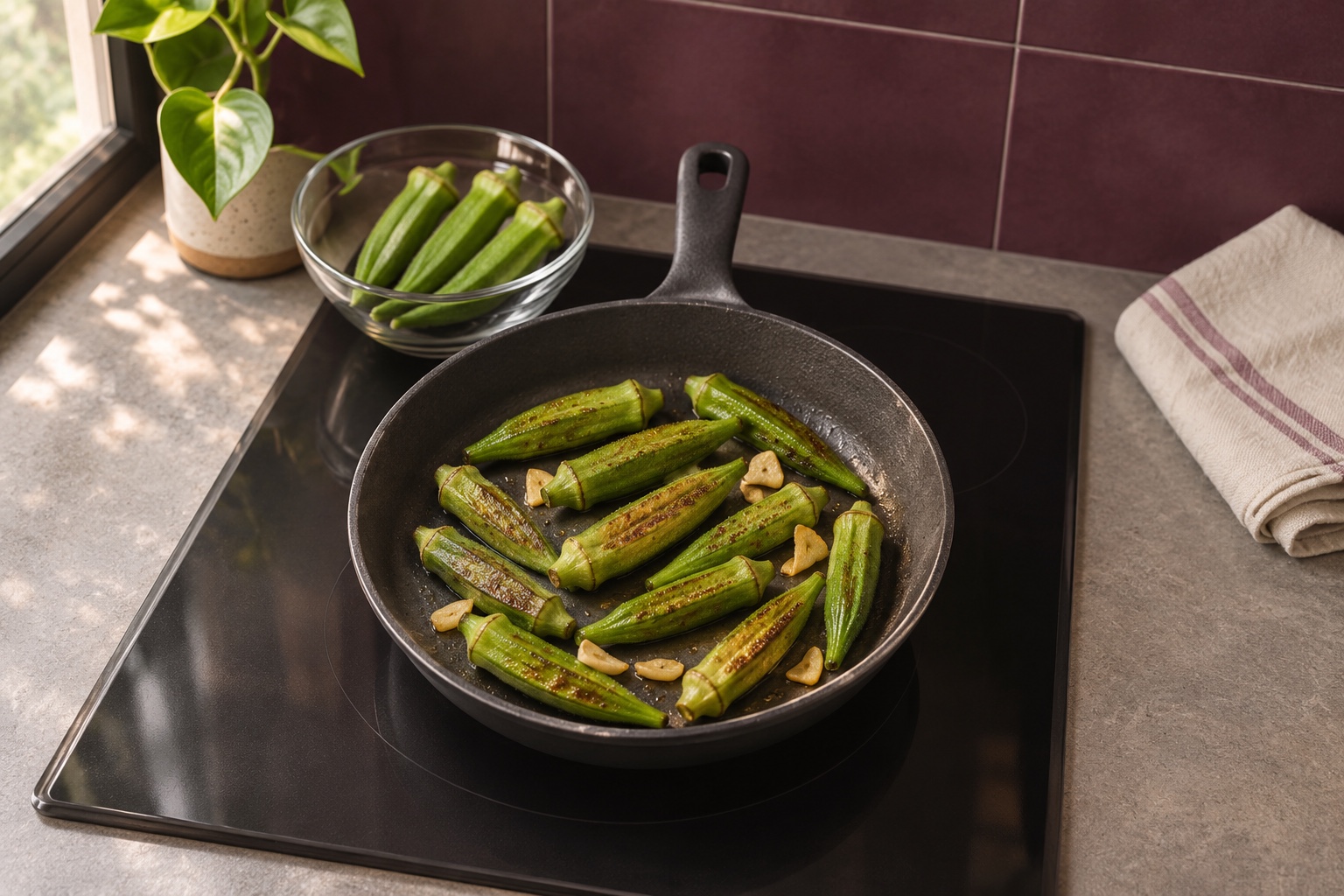
Okra can be a small green vegetable that you pick up with a fork, or the ingredient that gives a stew its body. Decide which you want before reaching for the knife. If you are bringing home a bag labelled bamia, bhindi or okra, you can use it for a quick pan alongside rice and dhal, or a softer tomato dish to spoon over a meal. The difference starts with how you cut the pods and how much liquid goes into the pan.
Leave the pods intact for a quick pan
Okra develops a characteristic slippery texture as it cooks. This comes from mucilage in the plant. The FAO’s SEAVEG proceedings describe keeping pods intact and cooking them briefly as ways to get a less slippery result. Start by washing the pods, then spread them on a clean towel and dry them before cooking. Trim the stalk ends gently, leaving the cap and pod closed where you can. FAO proceedings on okra’s texture, page 368
Use a wide pan and just enough oil to lightly coat its surface. Add a layer of whole pods with room between them, letting one side make contact with the pan before turning. If you have more okra than will sit in one layer, cook it in batches. Look for a few browned patches and pods that yield when pressed with a spoon. Try a pod to check tenderness as you go, especially when the bag contains different sizes. The larger ones may need longer.
Add sliced garlic near the end so you can watch its colour. Finish with a squeeze of lemon and ground cumin, or serve the okra with a small spoonful of plain yoghurt beside it. For lunch, put it alongside rice and a dal you already enjoy. The pods can stay a distinct part of the meal, with the sauce coming from what you serve beside them.
Give the softer version a sauce
For a spoonable dish, cook chopped onion in a little oil until soft. Add garlic and ground coriander, then chopped tomatoes. Let the tomatoes turn into a sauce before adding the washed okra, whole or cut into large pieces, and enough water to loosen the sauce if needed. Simmer gently and check until the pods are tender. Stir with care so they keep some shape. A little lemon at the end lets you adjust the acidity after tasting the tomatoes.
If you include a firmer vegetable, think about which ingredient needs the head start. The NHS’s Bengali deresh curry begins cooking cubed potatoes before adding halved okra and water, then simmers until the okra is soft. That order gives you a way to bring two different vegetables to the tenderness you want in one pan. Serve the saucy okra over rice, or use flatbread to scoop it up. NHS deresh curry with potato and okra
Choose the method before planning the rest of lunch
If your only pan is a small saucepan, the saucy version may be easier to manage. You can add the pods to the tomatoes and turn them gently instead of trying to brown several batches.
A quick pan suits a meal that already has a sauce, such as lentil dhal. A tomato stew supplies its own sauce and works with plain rice. Choose the version that fits what is already cooking, then set out the pan and cut the pods accordingly. If you are trying okra for the first time, cook a small amount whole before committing the entire bag to a stew. You can feel the ridges, taste the mild green flavour and decide how tender you like it.
Sources checked on 19 November 2026. Cover: AI-generated editorial illustration of whole okra in a skillet in a home kitchen.
A good read is worth sharing.
Pass this story on to someone who would enjoy it.
The conversation 0
A thought, a question, a little food for thought. Join in — no account needed.
Loading the conversation…
Be the first to add a thought.