
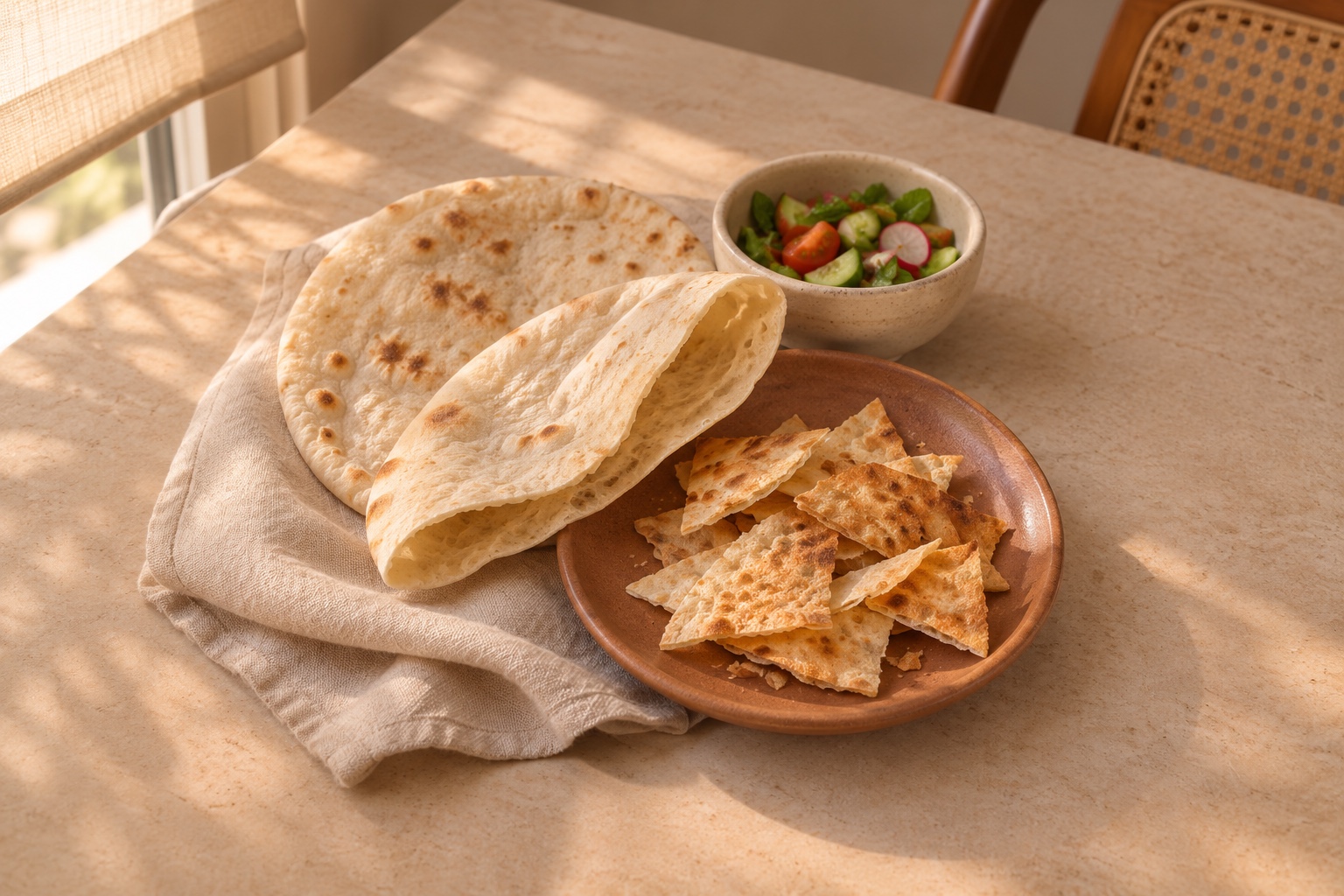
Two rounds of khubz often outlast a takeaway dinner or the pack you opened for hummus. The next day, one may still fold easily while the other cracks at the edge. Give each a different job. A few seconds of gentle heat can make the first useful for a wrap. The drier one, if it has been stored properly and is free of spoilage, can become the crunch in a salad or soup. This works with the plain, thin Arabic flatbread sold as khubz or pita in many UAE groceries.
Warm the round you want to fold
Start with the bread that bends in your hands. Warm it briefly in a dry frying pan over medium heat, turning it once, and check it as soon as it softens. If the bread is slightly dry, try a short burst in the microwave and check after a few seconds, since the time depends on the microwave and the thickness of the bread. Keep the warmed rounds under a clean tea towel until you fill them. Worcestershire County Council includes brief microwave warming among its tips for slightly stale bread. Council guide to keeping and using bread
For an easy lunch, spread a warm round with labneh or hummus, then add thin strips of cucumber and whichever herbs you have. Keep the filling in a narrow strip so the bread has room to bend around it. A particularly thin round folds around fillings more easily than it opens into a pocket. If an existing split runs down the side, lay the bread flat, spoon the filling onto the sound half and fold it over.
Toast the dry pieces for fattoush or soup
Tear usable dry bread into rough bite-sized pieces. If the halves of a pita pocket separate easily, pull them apart for thinner, more evenly crisp pieces. Spread them in one layer on a tray. A little oil is optional, and a pinch of sumac or za’atar can go on after baking. At about 180°C in a conventional oven, start checking thin pieces at five minutes and take them out once they are dry and lightly golden. Give them a moment to cool on the tray so you can judge the crunch.
Lebanese fattoush gives dry pita a place in the dish itself. The FAO’s profile of food in Lebanon describes it alongside seasonal vegetables and herbs. Try a bowl of chopped cucumber, tomatoes, radishes and mint with lemon and olive oil. Fold some bread through so it catches the dressing and put the crispest pieces on top just before serving. A handful also goes well over lentil soup. Keep any extra toasted pieces dry and separate from the dressed dish. FAO’s Lebanon food profile
Freeze the spare rounds while they’re flexible
When you open a new pack, take out what you expect to use soon and freeze the rest while fresh. Put one or two rounds together in each portion, with a square of baking paper between portions if you plan to use one freezer bag. Seal the bag and date it. The next time you want a wrap alongside soup or a quick lunch, you can take out one portion and leave the rest frozen. Follow the package’s storage and any thawing instructions.
Bread research distinguishes staling, which changes texture, from microbial spoilage. Dryness alone is a texture change. Discard mouldy bread and follow any use-by date and storage instructions on the package. A best-before date describes quality. Make the freezer decision while the bread is still fresh, then decide what texture you want when it comes out. Household bread storage experiment · Food Standards Agency guide to date labels and spoilage
Sources checked on 18 November 2026. Cover: AI-generated editorial illustration of soft khubz, toasted flatbread pieces and a small salad at home.
A good read is worth sharing.
Pass this story on to someone who would enjoy it.
The conversation 0
A thought, a question, a little food for thought. Join in — no account needed.
Loading the conversation…
Be the first to add a thought.