
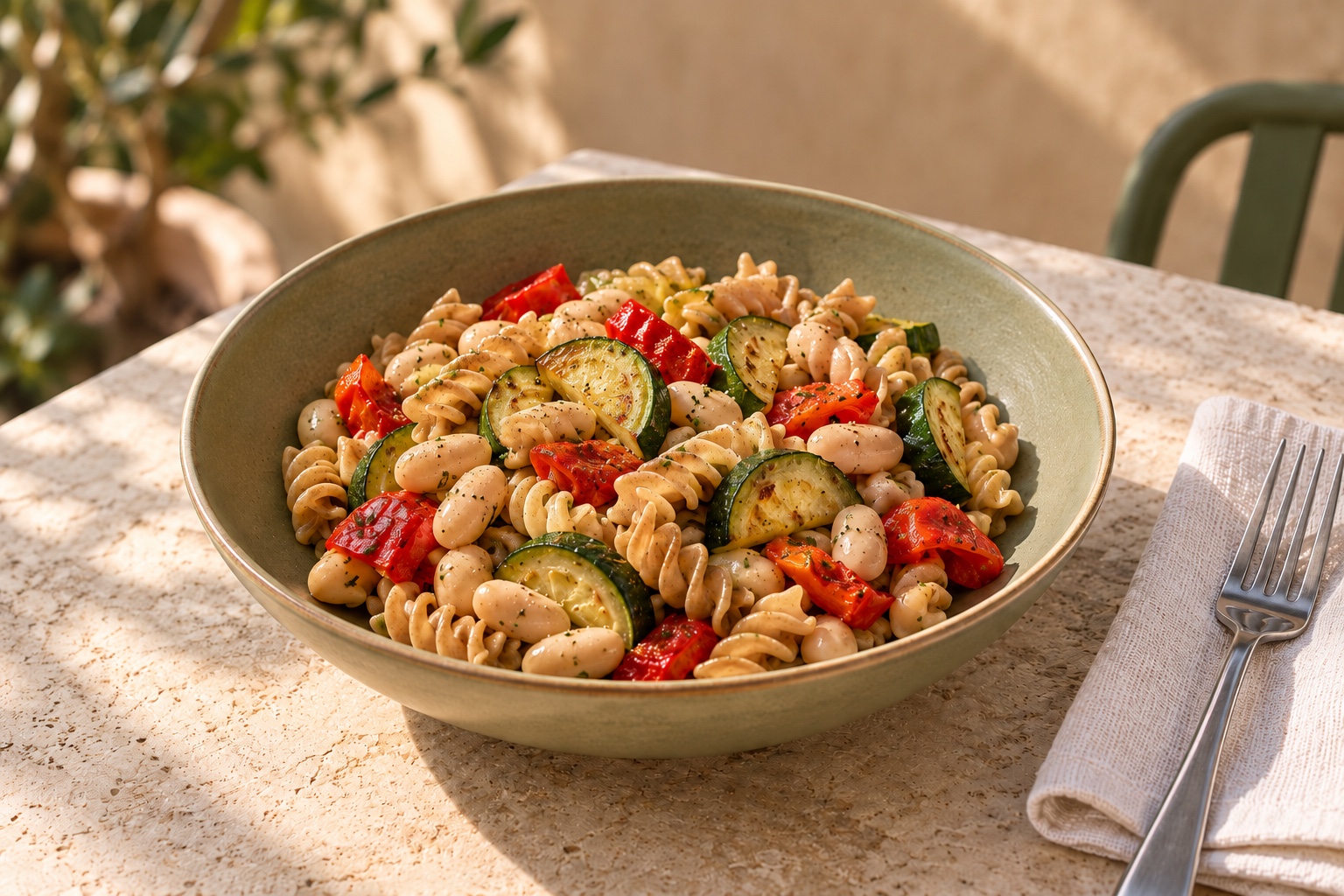
The pasta aisle offers spirals, tubes, shells and ribbons, often with several versions of each. Choosing pasta for lunch becomes easier when you separate three questions: what does the pack contain, what do its numbers describe, and what will sit beside it on the plate?
For a weekday in Dubai, those questions can turn a cupboard ingredient into a useful lunch plan. You might have courgettes to use, roasted peppers ready to serve or a tin of white beans. Start there, then choose a pasta that makes the combination enjoyable to eat.
Read the words above the numbers
The NHS food-label guide explains nutrition information per 100g or 100ml, with some packs also giving a portion figure. It also notes that a manufacturer's idea of a portion may differ from yours. A useful comparison therefore begins with the stated quantity, rather than whichever number looks smallest.
Look for wording such as dry, cooked, as sold or as prepared. If one panel describes dry pasta and another describes a prepared product, their 100g columns are not describing the same state of the food. Check the instructions and any accompanying explanation before treating them as a direct comparison.
A filled pasta or a ready-made pasta dish also brings ingredients beyond the plain pasta itself. Read what is included: the filling, sauce and other additions matter to the comparison. For your own lunch, the label on the pasta cannot describe the vegetables, beans, dressing or cheese you add later.
Where wholewheat fits
The NHS starchy-food guidance includes pasta as a possible meal base and identifies wholewheat pasta as a higher-fibre option than ordinary pasta. That is a useful distinction when comparing products. The fibre comparison alone does not set your serving size or calculate the nutrition of your finished bowl.
If wholewheat is unfamiliar, try it with ingredients you already like. Courgettes browned in a pan, roasted peppers or a lemony dressing can give you a familiar starting point. Pay attention to the packet's cooking directions and the texture you enjoy, rather than expecting every pasta to behave identically.
Choose a shape for the fork
Short tubes are easy to spear alongside pieces of pepper. Spirals make an appealing mix with sliced courgette, while small shells can sit beside white beans without a long strand needing to be twirled. These are culinary preferences to try, not a nutritional ranking of shapes.
Think about how you will eat the meal, too. At a desk or shared lunch table, a short shape may be convenient for you. If you prefer ribbons, cut the vegetables into pieces that are comfortable to pick up with them. Shape is a practical choice; the ingredient list and nutrition panel answer different questions.
Before opening another pack, look at the ingredients already in the kitchen. A few strips of pepper can change the flavour direction; a courgette can cook while the pasta boils. Keep the chopping and number of pans realistic for the time available, rather than choosing a recipe that needs an entirely new shopping basket.
Build a courgette, pepper and white-bean bowl
Cook your chosen pasta according to its pack. In another pan, cook sliced courgette until tender, allowing a little colour if you like that flavour. Add roasted peppers cut into strips or small pieces. Use ready-to-eat canned white beans, prepared according to their label, or beans you have already cooked safely.
Combine the vegetables and beans with the drained pasta. Try lemon juice, parsley and a little olive oil, then taste before adding more seasoning. Leave the beans mostly intact for distinct bites, or gently crush a few to help bring the mixture together. Adjust the ingredients and quantities for the people eating; this is an unmeasured meal idea.
The World Health Organization's healthy-diet guidance supports variety across vegetables, pulses, wholegrains and protein sources. Here, that principle becomes a practical reminder to look beyond the pasta. On another day, change the vegetables or choose a different protein ingredient rather than repeating exactly the same bowl.
Make the next lunch easier
Before shopping again, note which shape and texture you enjoyed. Keep the cooking and storage instructions with the product: the NHS distinguishes cupboard-stored dried pasta from refrigerated fresh pasta. For a packed lunch, plan suitable chilled storage and transport as well as the ingredients.
Original AI-assisted article for general adult food choices. Sources checked on 24 October 2026. Cover: AI-generated editorial illustration of a generic pasta meal, not a measured portion or product nutrition claim.
A good read is worth sharing.
Pass this story on to someone who would enjoy it.
The conversation 0
A thought, a question, a little food for thought. Join in — no account needed.
Loading the conversation…
Be the first to add a thought.