
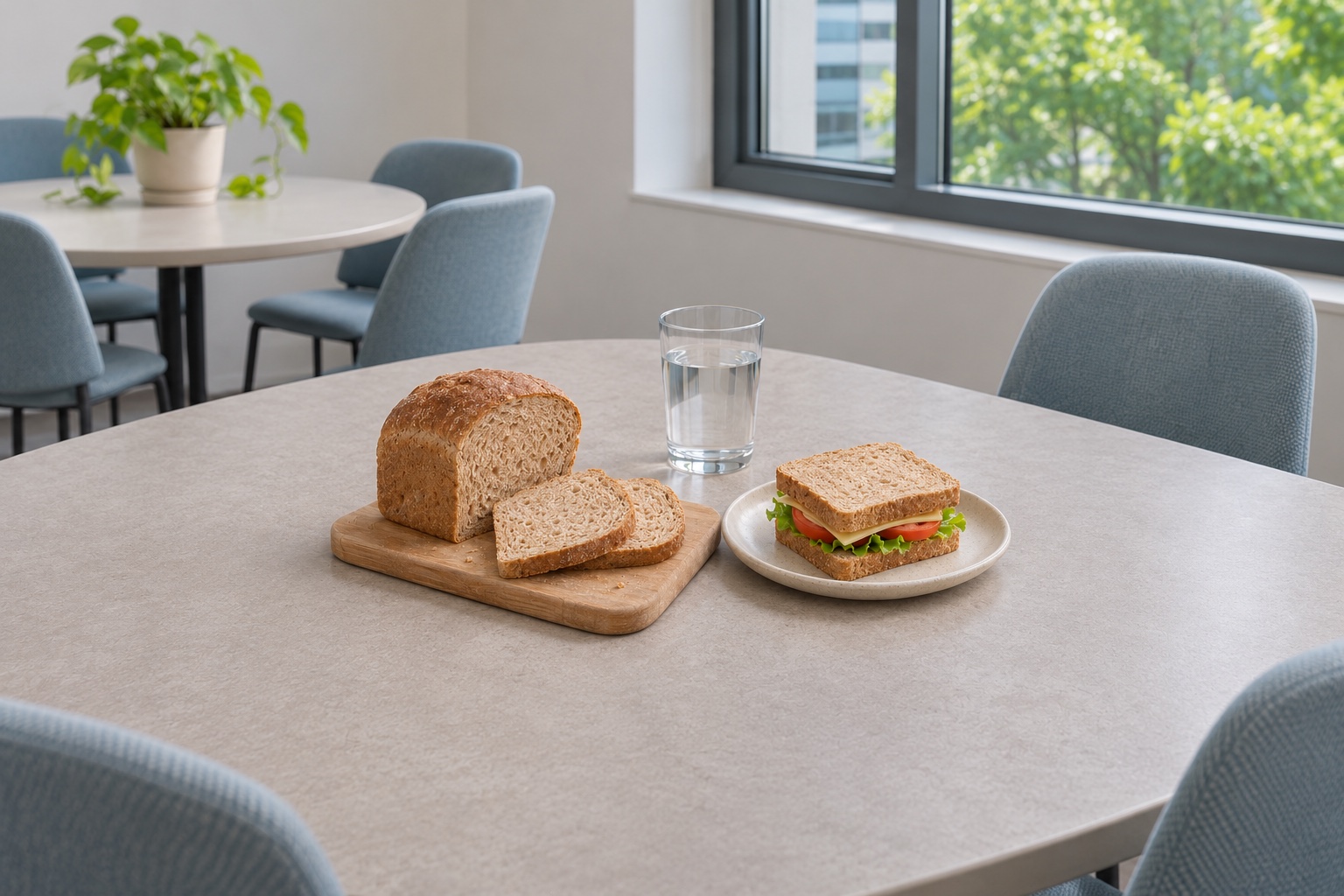
Before choosing a loaf, picture the next two meals you will make with it. Perhaps it needs to hold a cheese and tomato sandwich for lunch, then become toast beside eggs the following morning. That small plan makes the bread aisle easier to navigate. You have something concrete to look for: a loaf with ingredients you understand, a texture you enjoy and slices that work for the meal.
Start with the grain ingredients
Whole grains retain the bran, germ and endosperm of the grain kernel. Refining removes the bran and germ, along with some fibre and nutrients. The FDA’s consumer guide to dietary fibre recommends looking for wholegrain ingredients on the ingredient list, with examples including whole wheat, whole rye and whole oats. It also explains that ingredients appear in descending order by weight.
Use that information to read the flour names before deciding. If a pack gives a percentage for wholemeal flour, that provides another detail to compare. A wholegrain ingredient near the beginning of a list helps you understand the recipe, while a stated percentage gives a clearer idea of its amount. At a bakery counter, ask which flours are used and whether the baker can tell you their proportions.
Buying loose bread can make label comparisons harder. Ask if written ingredient and nutrition information is available, then decide whether you have enough detail to compare it with the packaged loaf you usually buy.
Give the fibre figure its own check
The same FDA guide identifies wholegrain foods as sources of dietary fibre and explains that the US Nutrition Facts panel reports fibre in grams per serving. The serving quantity matters when comparing two breads.
Read the amount of bread that each nutrition figure describes. If both packs provide fibre per 100g, compare those columns. If the figures are per serving, check whether a serving means one slice, two slices or a stated weight. Two loaves can have quite different slice sizes. Matching the quantities first makes the comparison useful, especially when you are choosing a loaf for an everyday sandwich.
The NHS guide to starchy foods recommends choosing wholegrain options for more fibre. It also recognises higher-fibre white bread as an option for people who prefer white bread. Your choice can take account of both the nutrition information and what you enjoy eating.
Choose a texture that suits the filling
For a soft sandwich, try a wholemeal tin loaf with a fairly even crumb and flexible slices. Spread one slice with a little plain yoghurt or hummus, add cucumber and a modest layer of your preferred filling, then close it and see how it holds together. Next time, adjust the slice thickness or the amount of filling if the sandwich felt awkward to eat.
For a meal eaten at the table, a sturdier slice can have a different job. Try it beside a warm bean and tomato dish so you can tear off pieces as you eat. Or toast a slice and top it with cooked mushrooms. A loaf that feels too firm for a cold sandwich may be exactly what you enjoy with a spoonable meal.
Buy for the week you have
Think about how many bread meals are actually on your calendar. For a UAE working week that includes bought lunches, a smaller loaf may suit your kitchen better. If toast is breakfast most days, a larger loaf may be easier to use. Check the pack’s storage directions and choose a quantity that fits your routine.
Once you find a loaf you like, remember what worked: its flour ingredients, fibre amount, slice size and texture. Those details give you a practical way to choose again, even when the brand or shop changes.
Sources checked on 7 November 2026. Cover: AI-generated editorial illustration.
A good read is worth sharing.
Pass this story on to someone who would enjoy it.
The conversation 0
A thought, a question, a little food for thought. Join in — no account needed.
Loading the conversation…
Be the first to add a thought.