
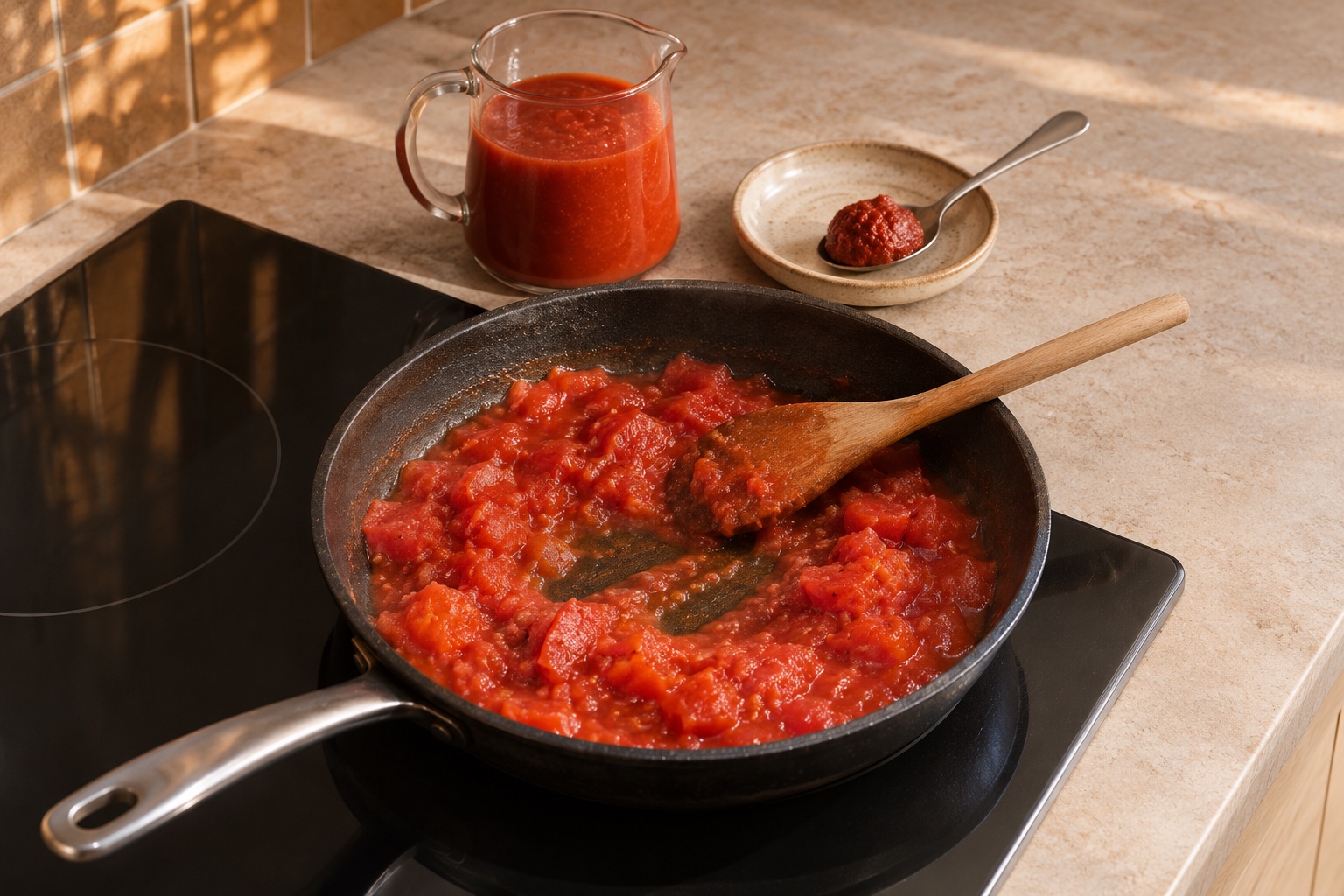
You drag a spoon across the bottom of the pan. The trail fills straight away, and the sauce runs off the spoon. That might be just right for a bowl of soup. If you were planning to make wells for shakshuka, give the base a little more time. Choosing between chopped tomatoes, passata and tomato paste starts with how you want the finished sauce to move.
On a Dubai grocery run, you might be shopping for a weekend shakshuka and a quick pasta dinner in the same trip. Both can start with tomatoes and garlic. The difference is whether you want pieces you can scoop up with bread or an even sauce that coats the pasta.
Chopped tomatoes for a sauce with pieces
Choose chopped tomatoes when you want the spoonful to carry some soft pieces as well as sauce. For a shakshuka-style base, start with softened onion and peppers, then add the tomatoes with their juice. Give the mixture time to thicken before making wells. The NHS shakshuka recipe does this with tinned chopped tomatoes and a little tomato purée, along with vegetables and spices.
Pull the spoon through the middle of the pan. If the vegetables slide straight back into the trail, simmer the sauce uncovered and check again. A trail that stays open briefly is a useful cue that the base can hold a shallow well. If the sauce is catching on the bottom, turn down the heat and stir in a splash of water.
Passata for an even coating
Passata is smooth enough to pour. It suits a quick pasta sauce when you want tomato in every bite without distinct pieces. Soften sliced garlic in a little olive oil, add the passata and simmer it gently. Toss a spoonful with a piece of pasta to see how it clings. If the sauce falls straight into the bowl, give it a little more time in the pan. If it sits in thick patches, stir in a splash of pasta cooking water and test again.
The choice also changes the feel of soup. The NHS vegetable soup recipe gives you the option of chopped tomatoes or passata, with a separate spoonful of tomato purée in either version. Pick chopped tomatoes if you want soft pieces alongside the other vegetables. Pick passata if you want the tomato to blend into the broth.
Tomato paste for more intensity by the spoonful
Paste stays mounded on the spoon. Use a small amount to deepen the tomato flavour of a stew or sauce. Stir a teaspoon into softened onions, then add a little of the cooking liquid and stir until the paste disperses. Taste once everything has simmered together before deciding whether to add more.
Look at the recipe quantity as well as the label. In the NHS examples, a tablespoon or two of purée accompanies a much larger amount of chopped tomatoes or passata. The USDA Food Buying Guide uses separate entries for US canned tomato paste and purée, with different concentrations of tomato solids. A spoonful of thick concentrate and a cup of a pourable product do different jobs in a pan.
Take a second look at the label
Check whether the pack contains plain tomatoes or comes with seasoning. If you are comparing salt between two brands of the same product, use the same weight for both, such as the amount per 100 grams when both packs give it. The NHS guide to food labels explains where to find salt per 100 grams on UK packs. Once the sauce reaches the consistency you want, taste it before adding salt, especially if stock or another seasoned ingredient is already in the pan.
Start with the texture you want to eat. Keep chopped tomatoes for a spoonable base, pour passata when you want an even coating, and reach for paste when the pan needs a stronger tomato flavour from a small addition.
Sources checked on 12 November 2026. The cover is an AI-generated editorial illustration.
A good read is worth sharing.
Pass this story on to someone who would enjoy it.
The conversation 0
A thought, a question, a little food for thought. Join in — no account needed.
Loading the conversation…
Be the first to add a thought.