
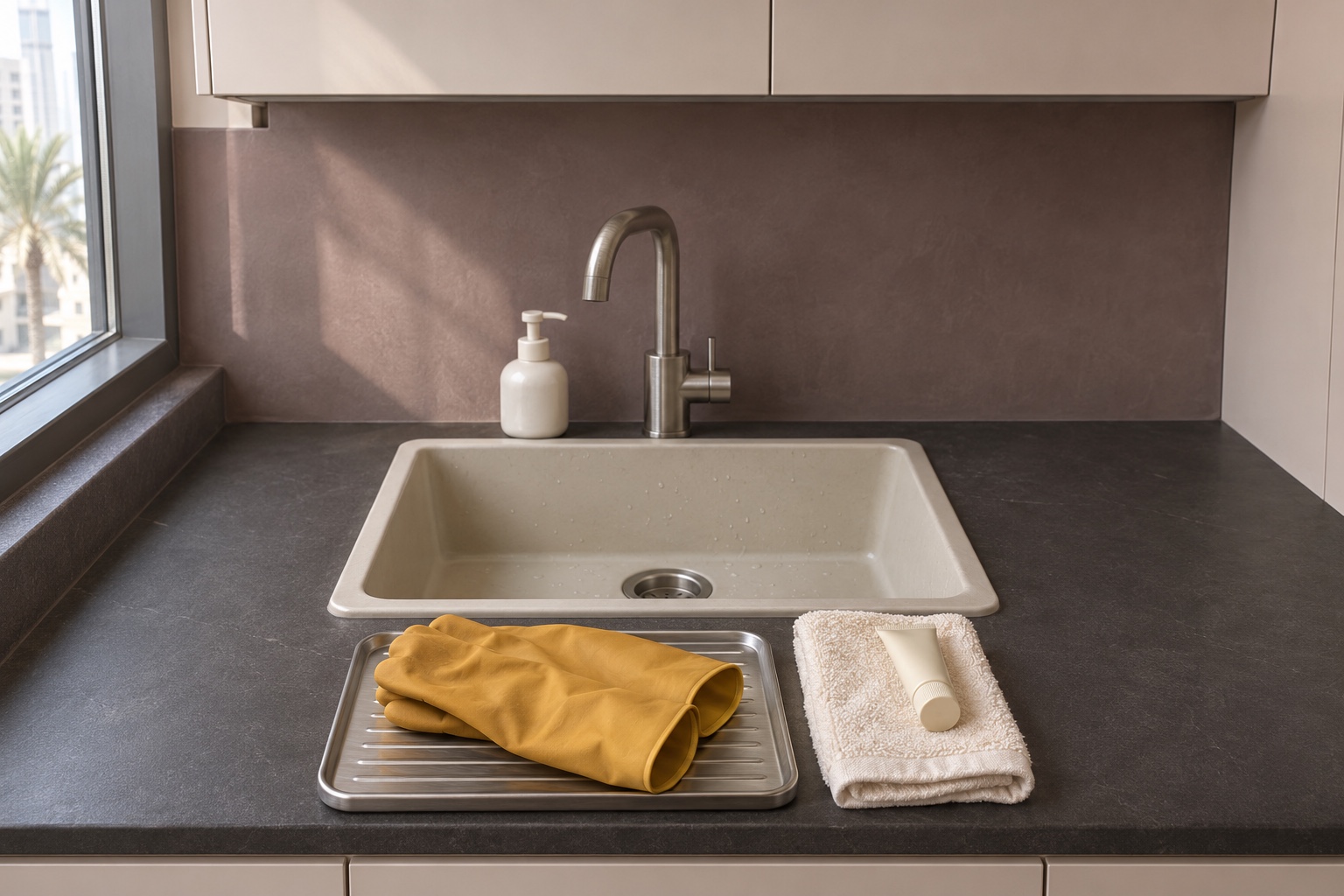
By the time dinner is on the table, your hands may already have prepared chicken, washed a chopping board and scrubbed a pan. If the skin feels tight when you put the last plate away, look at the whole sequence. Keep the handwashing that protects food. Then look for ways to spend less time with your hands in dishwater and give them a chance to dry between jobs.
Wash thoroughly before handling food
Use soap and clean running water. Work up a lather over all surfaces of your hands and scrub for at least 20 seconds. Rinse well and dry your hands with a clean towel. If a Dubai apartment tap runs very warm, give it a moment to settle at a comfortable temperature before you start. Oxford University Hospitals suggests mildly warm water and a mild, fragrance-free soap for people with sensitive hands. CDC handwashing guide · Oxford NHS hand care leaflet
Keep washing at the important points before, during and after food preparation. For example, after shaping raw chicken kebabs, wash your hands before you reach for the salad bowl or a clean serving plate. A clean hand towel within reach makes it easier to finish the wash properly when the kitchen is busy. Give it its own hook away from the cloth you use on the counter. Food Standards Agency kitchen hygiene guidance
Spend less time with your hands in dishwater
Repeated exposure to water and detergents can irritate the skin. The jobs to look at are the ones that keep your hands wet, such as soaking plates, scrubbing pots or wiping down the counter with cleaning products. If you have a dishwasher, use it for the things that can go in it. A long-handled brush can help you scrub the remaining pan without putting your whole hand in the water. These are ways to reduce skin contact during cleanup. NHS on irritants and contact dermatitis · UK Health and Safety Executive guidance for kitchens
For the dishes you wash by hand, keep a pair of household washing-up gloves just for cleaning. Take them off when the job is done. If you switch back to preparing food, put the cleaning gloves aside and wash your hands. The habit is easiest when the gloves have their own place by the sink and the clean serving utensils have a different spot. Oxford NHS advice on gloves and detergents · CDC guidance on when to wash
Moisturise after the last wash
When the food is put away and the sink is clear, dry your hands gently, including between the fingers. Try a plain, fragrance-free hand cream after washing. After dinner cleanup is a convenient time because you can go longer before the next wash. Keep the closed tube with your hand towel or wherever you are most likely to remember it. In a small controlled study, 25 people washed their hands and forearms repeatedly. The forearm measurements showed less drying and roughening when they used a hand cream after each wash. That experiment looked at short-term skin changes under a set routine. Oxford NHS moisturising advice · Controlled handwashing and hand cream study
If dryness keeps returning, gets severe or comes with persistent itching or cracking, ask a healthcare professional to assess it. Reactions to soaps, gloves and other products can have different causes. An assessment can help you identify which exposures to change. NHS guidance on when to seek help
Sources checked on 17 November 2026. Cover: AI-generated editorial illustration of a kitchen sink set up for washing and hand care.
A good read is worth sharing.
Pass this story on to someone who would enjoy it.
The conversation 0
A thought, a question, a little food for thought. Join in — no account needed.
Loading the conversation…
Be the first to add a thought.