
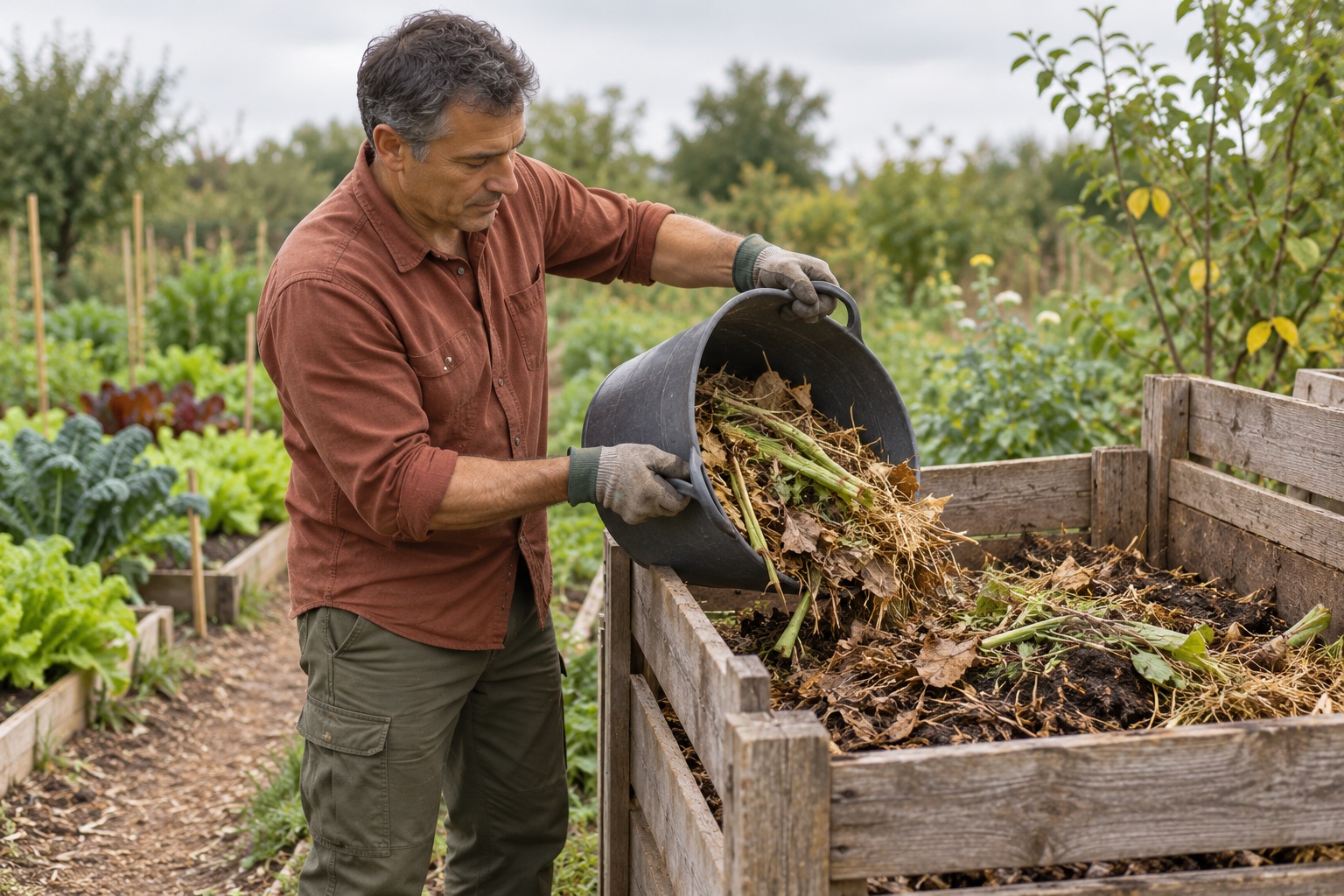
A FAO profile published on 26 October 2026 follows Georgian farmer Nana Nikuradze's first year of making compost. The new account puts a practical change in the spotlight: returning farm residues to the soil.
A first season, within an existing programme
FAO reports that Nikuradze began composting this year after joining a Farmer Field School two years earlier. The EU- and Sweden-supported training covered several farming practices. The wider ENPARD programme has reached more than 1,500 crop farmers across Georgia through field training; that is cumulative programme reach, not a count of new compost adopters.
Replacing all her manufactured fertiliser is an ambition, rather than a documented result. The feature is a farmer profile, not a controlled comparison of compost-related yields, costs or produce quality.
Two different jobs for waste reduction
Composting farm residues and preventing edible food from being thrown away address different parts of a food system. The European Commission's existing food-use hierarchy prioritises prevention at source and redistribution before waste treatment and nutrient recovery. This is European policy context, rather than a new announcement or a rule for the UAE.
That distinction matters when interpreting a sustainability story. A method for recovering nutrients from material left after growing food should not be read as a reason to generate avoidable surplus meals. The farm case invites a wider question about what happens before and after food reaches a plate.
A useful question for Dubai readers
For the HAS Journal's readers, the lasting relevance is how to examine a waste-reduction claim. Ask which material is being counted: farm stems, preparation trimmings or edible leftovers? Then ask what changed, over what period, and how the result was measured. Those questions help distinguish a concrete practice from an appealing slogan.
This Georgian example does not establish a composting method for a Dubai kitchen, a result for UAE farms or a practice used by HAS suppliers. It offers a starting point for understanding the less visible stages of food production, while keeping prevention and recovery in their proper places.
Sources checked on 27 October 2026. Cover: AI-generated editorial illustration of generic plant-residue handling, not Nikuradze, her farm or the FAO programme.
A good read is worth sharing.
Pass this story on to someone who would enjoy it.

The conversation 0
A thought, a question, a little food for thought. Join in — no account needed.
Loading the conversation…
Be the first to add a thought.