
Two bags of bulgur can look almost identical on a grocery shelf. Tip a little from each into a saucer and the difference is easier to see. Fine bulgur looks like small, angular crumbs. Coarse bulgur has larger pieces that you can pick out one by one. If you are shopping for kibbeh and a pot of pilaf, those two bags will do different jobs.
Read the size before you read the recipe
Bulgur starts as wheat that is cooked and dried. Most of the bulgur you buy for these dishes has been cracked into pieces, then sorted by size. The Turkish Food Codex for bulgur offers an example of why a package may give you both a use and a size. It distinguishes pilavlık, a category for pilaf, from köftelik, a category for köfte. Each category has more than one size, and the pilaf category includes a fine grade. If an imported packet gives a size as well as a dish name, use both clues and check the preparation directions on the back.
At a UAE grocery with a mixed selection of imported brands, look for the words fine or coarse first when the recipe names a grind. If the wording is unclear and the packaging has a window, look at the pieces. There should be a clear difference between tiny flecks and chunky fragments. If all you have is an unmarked jar at home, compare a spoonful of the dry grain against a plain plate before you commit it to the recipe.
Fine bulgur for herbs or a mixture you want to shape
Fine bulgur has two useful roles. In tabbouleh, the small, softened pieces can sit among the chopped herbs without taking over each forkful. In kibbeh, fine bulgur can be worked into a smooth enough mixture to shape around a filling. A food science study of emmer bulgur describes fine bulgur as a common choice for tabbouleh and coarse as a common choice for pilaf. Those are culinary examples from its discussion. The laboratory cooking times apply to the samples it tested.
The grain’s texture after soaking matters more than how much the spoonful has swollen. For example, a Syrian kibbeh recipe collected by Nottinghamshire County Council soaks fine bulgur, drains it and squeezes out excess water before it is worked into the shell mixture. For a herb salad, check for hard little centers and drain any free liquid before folding the softened grain through the herbs. Follow the packet or the recipe’s directions for soaking and cooking, especially with a brand you have never used.
Coarse bulgur when you want to feel each grain
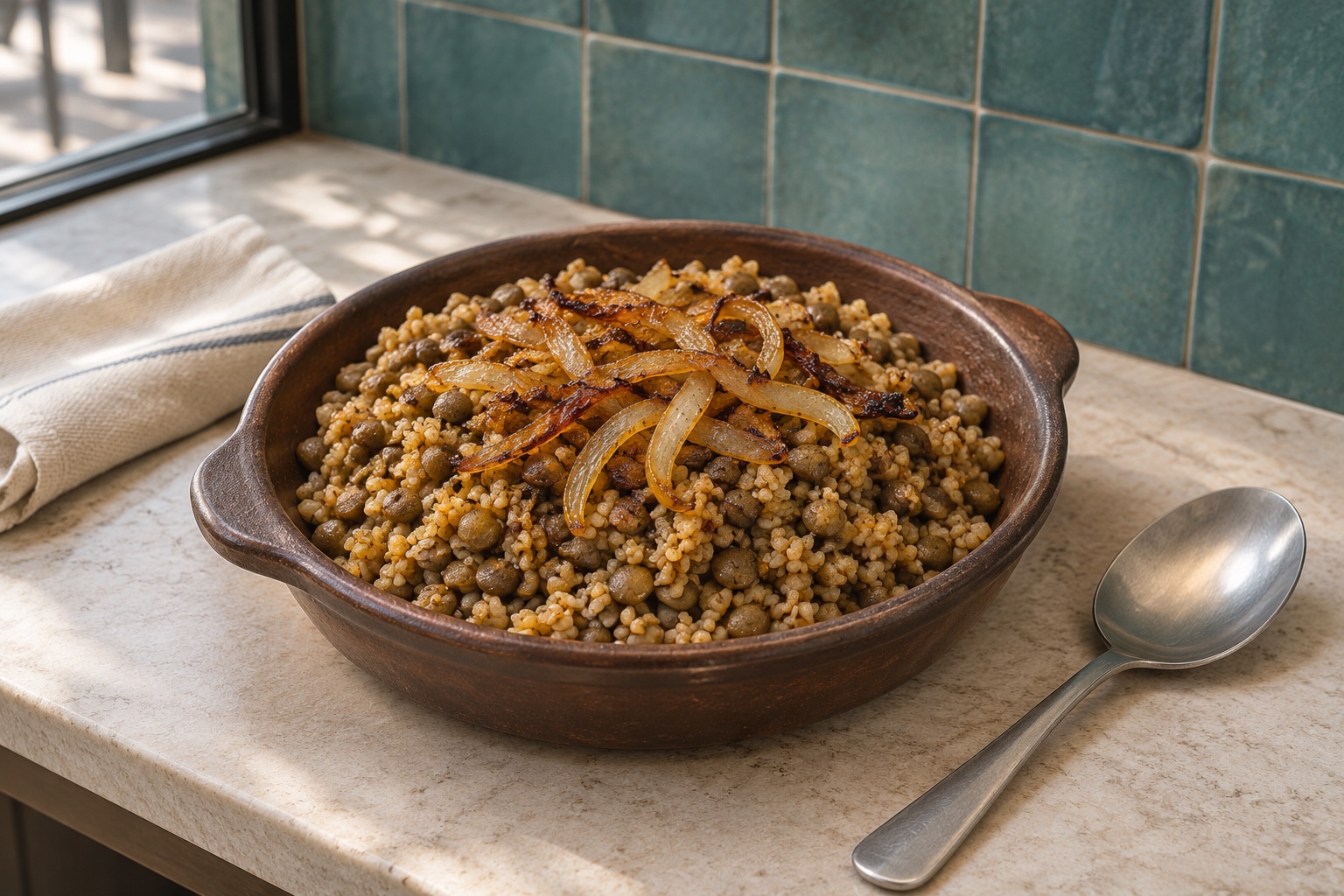
Use coarse bulgur for a side with a distinct bite or as the grain in a lentil dish. In the NHS LPP recipe collection’s version of Buthna’s mejadra, coarse bulgur is one option in a pot with lentils, onions and spices. The covered cooking and rest give the grain time to soften before the mixture is fluffed. At home, try a coarse bulgur pilaf with browned onions alongside roasted aubergine and a spoonful of yoghurt, or serve it with a stew whose sauce can run between the grains.
With a new packet, cook a small amount plain according to its directions and taste it before seasoning the whole pot. If you want the grains for a loose side, look for a tender center and pieces that separate when you lift them with a fork. For a soup, you might prefer the same grain a little softer. Write the grind on the jar if you decant it, and keep the cooking directions until you know how that brand behaves.
Bulgur is wheat and contains gluten at every grind. The NHS lists bulgur among the wheat foods excluded for coeliac disease, and NIDDK independently identifies wheat and wheat ingredients as sources of gluten.
Sources checked on 14 November 2026. Cover: AI-generated editorial illustration of bulgur and lentil mejadra with browned onions.
A good read is worth sharing.
Pass this story on to someone who would enjoy it.
The conversation 0
A thought, a question, a little food for thought. Join in — no account needed.
Loading the conversation…
Be the first to add a thought.