
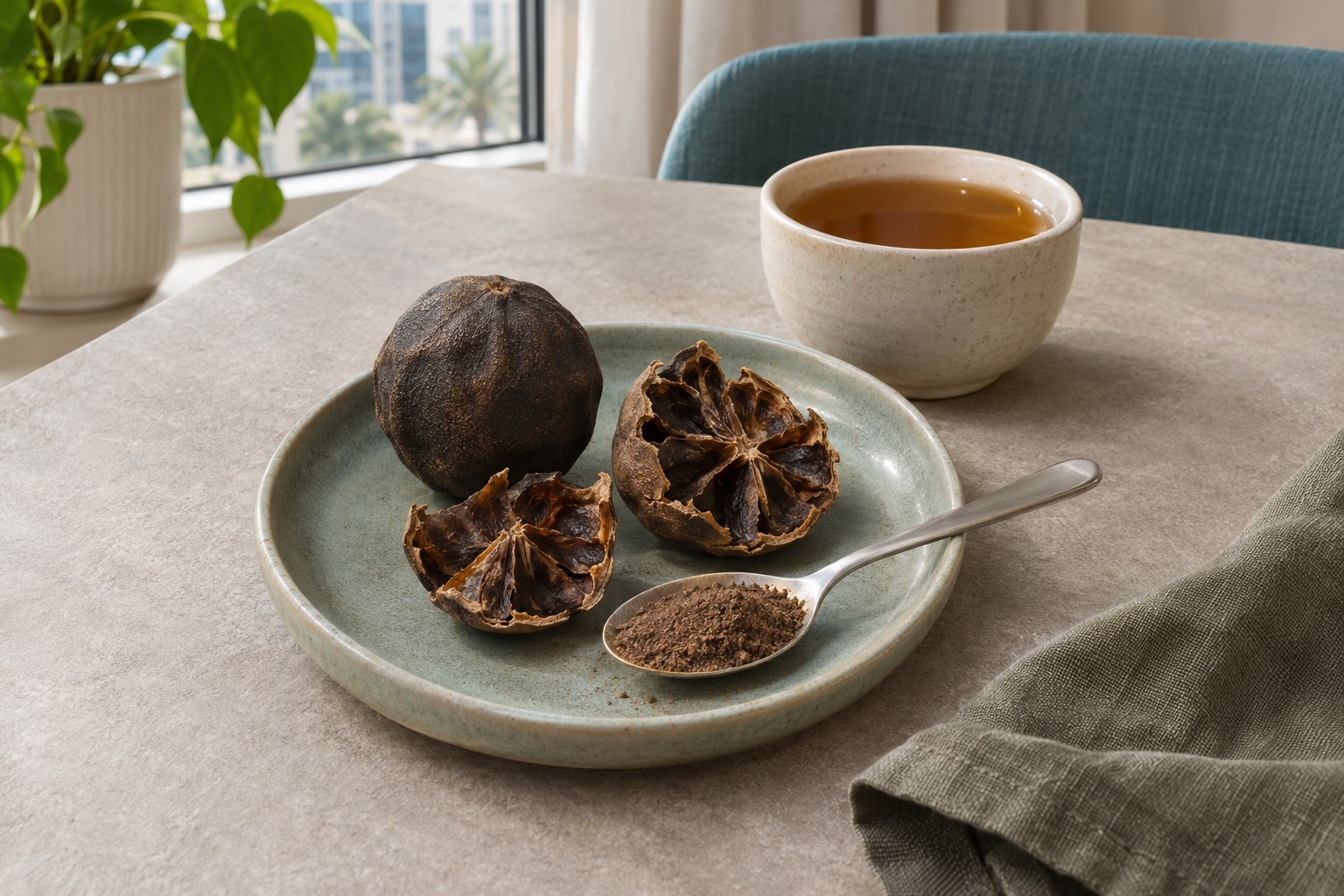
Open a jar of loomi and you may wonder how a fruit that looks so dry can do much for dinner. Simmer one in broth, though, and the aroma gives it away: citrus, with a deeper, slightly bitter edge. That combination is the reason to reach for a dried lime when a squeeze of fresh lime would take the dish in a different direction.
The UAE government's guide to Emirati food places limes among the ingredients that flavour Emirati dishes and describes the country's tradition of spiced rice and stews, including machboos and saloona. Black lime, also called loomi, is made from dried limes and used as a souring spice in Middle Eastern cooking. The authors of a 2026 study of black lime powder describe the spice as distinctly aromatic and sour, with bitterness that can vary. That variation is a good reason to taste the pot before deciding how much more it needs.
For broth or rice, start with one lime you can lift out
Put a small whole dried lime in a pot of gently simmering vegetable broth. Start with one for about a litre, then taste a cooled spoonful after 15 minutes or so. If the broth still tastes the way it did at the start, give the lime more time. For a stronger flavour in the next batch, tap the rind in a mortar until it just cracks, keeping the fruit in one piece if you can. Remove it when the broth has enough citrus character, or before using the broth to cook rice.
This is a useful first method because it leaves you room to change your mind. A whole lime can come out as soon as the broth tastes right. Ground lime, once stirred in, stays in the dish. When the stock is going into rice, taste it before adding the rice and again once the grains are cooked. A broth you like on its own gives you a better starting point than a fixed spice count.
For a tomato stew, try a few cracked pieces
For a chickpea and tomato stew, break a dried lime into a few large pieces in a mortar. If you see loose seeds, pick them out. Tuck one or two pieces into a small stainless steel spice infuser and simmer it with the chickpeas, tomatoes and a little water. The infuser keeps shards of rind from getting lost among the chickpeas. Taste the sauce once the tomatoes have softened, then take the infuser out when the citrus is as noticeable as you want it.
Use this approach when you want loomi to come through alongside other strong flavours, such as toasted cumin or browned onions. If your first spoonful tastes more bitter than you wanted, lift out the infuser and dilute the sauce with some more of the unseasoned stew base or a splash of water. Taste again before adding anything else.
For food already on the plate, use a pinch of powder
Stir a tiny pinch of ground black lime into a spoonful of plain yoghurt and taste it alongside a roasted carrot or a piece of cauliflower. If you like the balance, season the rest of the yoghurt the same way and spoon it over the vegetables. For a sharper finish, toss hot roasted vegetables with a little olive oil and a pinch of the powder, then taste before adding more. The powder is useful at this stage because it can be distributed through a spoonful of sauce without simmering a whole fruit.
If you're choosing between a bag of whole loomi and a jar of powder, think about the next meal you actually plan to make. Buy whole fruit if a soup, broth or pot of rice is on the menu. Pick up ground loomi if what you really need is a finish for a tray of vegetables. Once you know how your lime tastes, the two forms start to earn different places in the kitchen.
Sources checked on 5 November 2026. Cover: AI-generated editorial illustration.
A good read is worth sharing.
Pass this story on to someone who would enjoy it.


The conversation 0
A thought, a question, a little food for thought. Join in — no account needed.
Loading the conversation…
Be the first to add a thought.