
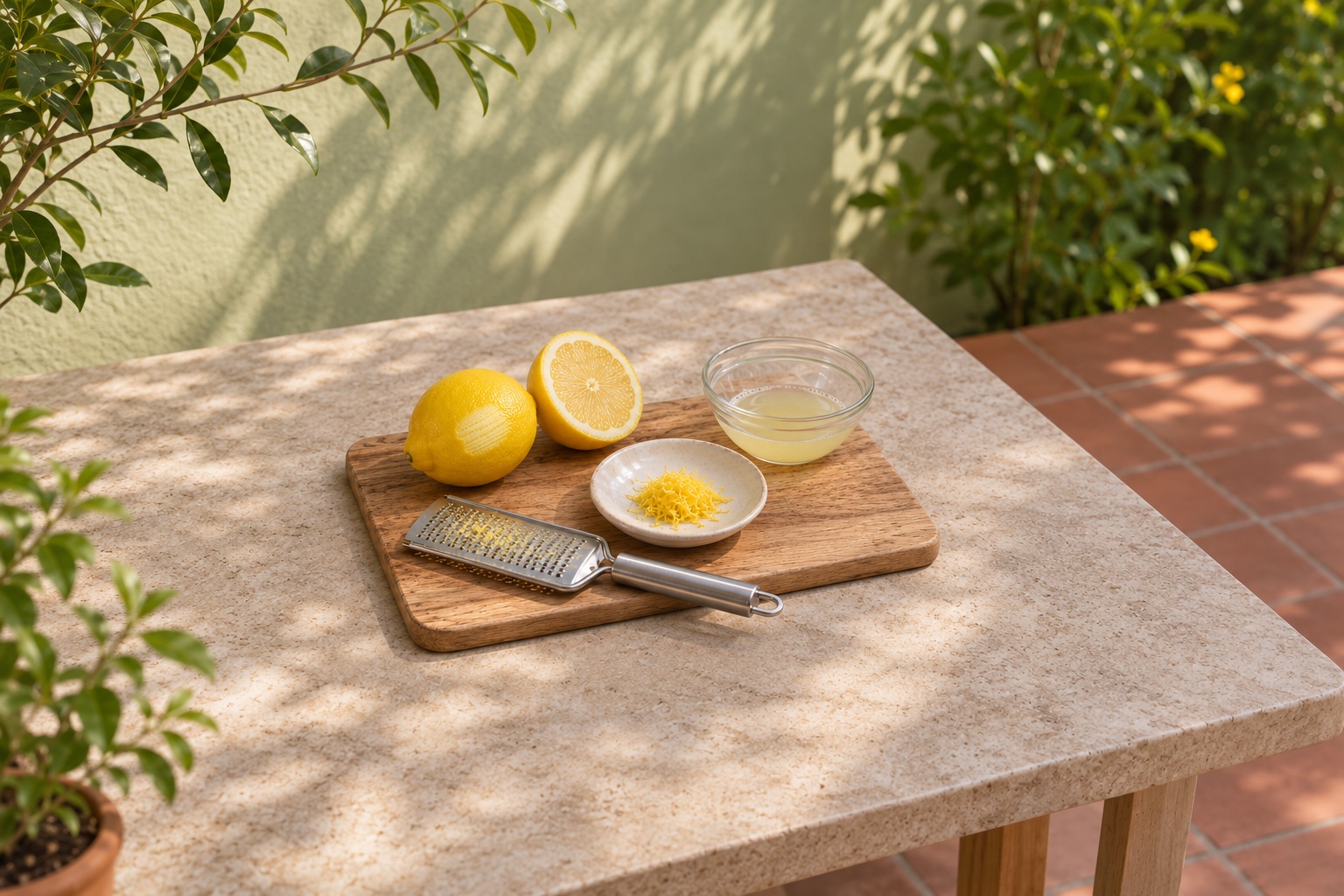
There is a moment before cutting a lemon when you can decide how you want it to taste in dinner. A little zest gives a bowl of warm grains a lemon scent. A splash of juice gives each bite a tart edge. Preparing both separately lets you adjust those qualities as you taste, using the same fruit.
Try it the next time you put together a quick meal in Dubai or anywhere else. The method works with an ordinary bowl of cooked grains and chickpeas, and it is equally at home with grilled vegetables or fish. The aim is to recognise what the dish needs before squeezing a whole half over it.
Start with the whole lemon
Wash the fruit before preparing it. The UK Food Standards Agency recommends washing produce with water, rubbing the surface and giving it a final rinse. Dry the lemon so it is easier to hold while you work. Food Standards Agency produce washing guidance.
Grate a little of the yellow surface into a saucer while the lemon is still whole. Rotate the fruit to reach a fresh patch after each few strokes. The white layer underneath is the pith, which can taste bitter. For a finely scattered finish, use a fine grater. A vegetable peeler gives you broader pieces that you can slice into threads. The US National Heart, Lung, and Blood Institute's cooking guide describes these options and uses a rinsed lemon, zested before squeezing, in its asparagus sauce. NHLBI cooking guide.
Once you have enough zest, cut and squeeze the fruit into a second small dish. Pick out any seeds. Working over a separate dish lets you see how much juice you have and makes it easy to spoon in a little at a time. Even lemons of similar size can be awkward to judge by eye once you start squeezing.
Taste the zest and juice separately
Try a quick comparison with two small bites of the food you are about to serve. Add a few strands of zest to one bite and a few drops of juice to the other. Notice how the first smells as you lift it to your mouth and how the second tastes. Keep the portions small so you can still adjust the main dish after the comparison.
Preparation order and cooking order are separate decisions. For example, an NHS recipe for orange and sultana milk pudding prepares the zest before squeezing the orange and puts them into the pudding at different points. For a meal you are finishing at the table, you can taste both additions as you go. NHS orange and sultana milk pudding recipe.
Use the two dishes to finish dinner
For a grain bowl, toss warm cooked bulgur or rice with cooked chickpeas, chopped mint and a little olive oil. Start with a small spoonful of lemon juice, stir and taste a bite with both grain and chickpeas. If the bowl includes something tart already, such as pickled vegetables, taste it before deciding how much juice to add. Scatter a little zest across the bowl just before serving and taste again.
The same approach works when the lemon is going into a sauce. Stir a little juice into plain yoghurt with chopped herbs, taste it with the vegetables you plan to serve, then add a few strands of zest if you want more lemon aroma. A spoonful of sauce can seem lively on its own and taste milder on a full bite of dinner, so make the final adjustment with the two together.
When serving several people, leave the little dish of juice on the table alongside the meal. You can finish the shared plate with a light scattering of zest and let each person add the tartness they enjoy. Once you have tried the two additions side by side, it is easier to decide how to use the next lemon before you cut it.
Sources checked on 11 November 2026. Cover: AI-generated editorial illustration of fresh lemon zest and juice on a shaded terrace.
A good read is worth sharing.
Pass this story on to someone who would enjoy it.
The conversation 0
A thought, a question, a little food for thought. Join in — no account needed.
Loading the conversation…
Be the first to add a thought.