
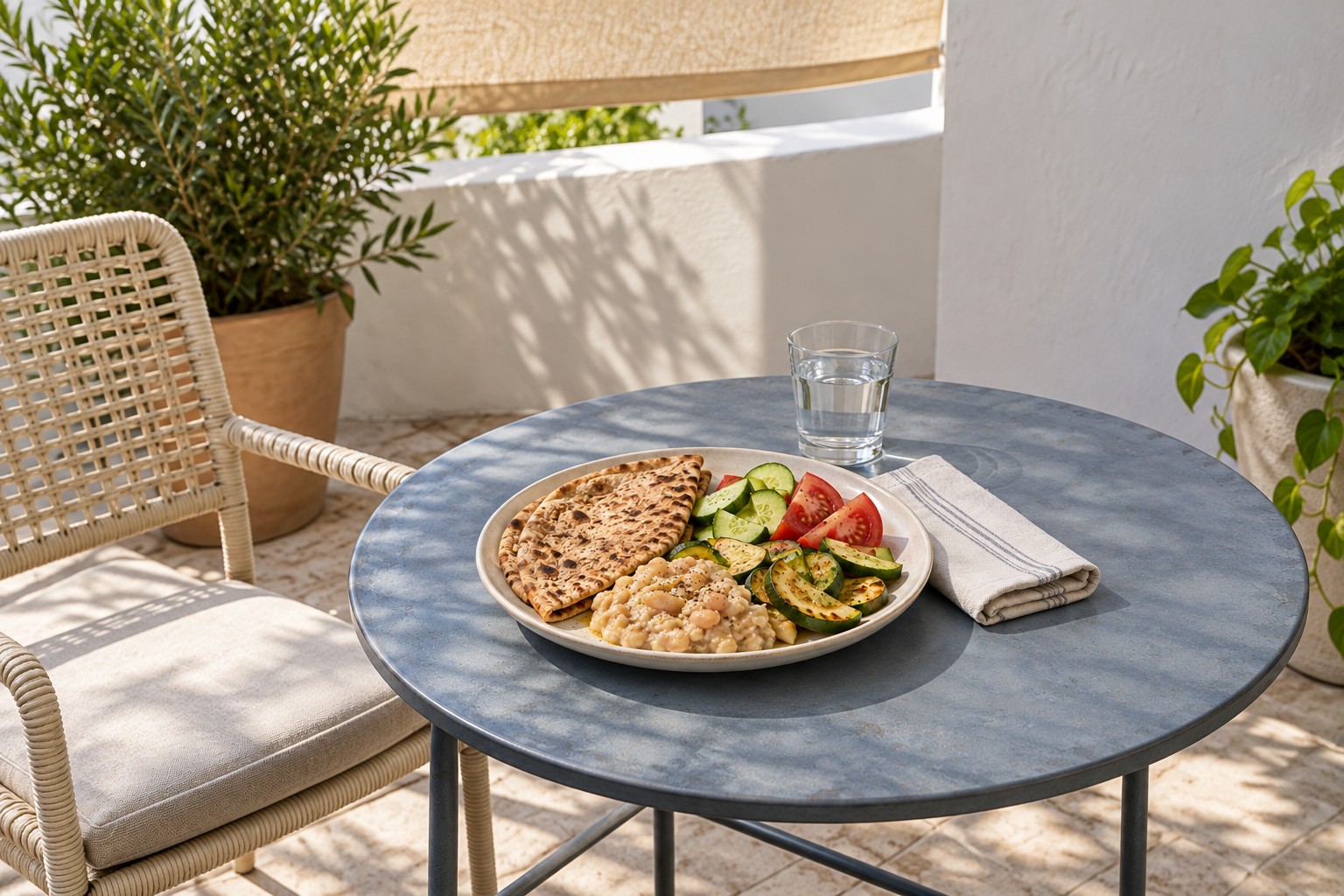
A warm bowl, a filled flatbread or a plate of roasted vegetables can each be a good place to start lunch. Before adding another ingredient, think about the next mouthful. Is everything soft? Would you enjoy something juicy alongside it? Is the bread crisp enough already?
That is the texture check: a small cooking decision about the way a meal feels. For a weekday lunch in Dubai, it can work with the food you already planned to cook or order. You do not need a long shopping list or an elaborate garnish.
Give enjoyment and nutrition their own questions
WHO’s healthy-diet guidance describes a broader foundation involving enough nutrients, appropriate balance, moderation and food variety. It also recognises that diets reflect people’s needs, food customs and available ingredients. A contrast between creamy and crunchy does not establish that foundation. The ideas here are culinary suggestions, rather than a tested method for improving health or controlling appetite.
Start with the texture you already have
Choose a word for the main part of lunch. A bean mash might be creamy, a courgette tender, a toasted piece of bread crisp. Then choose one contrast you actually want. Soft vegetables might sit nicely beside a cucumber salad. A fairly dry flatbread filling might be more enjoyable with tomato or a spoonful of a sauce you like.
You can also decide that nothing is missing. A soft stew with soft bread can be exactly the lunch you want. The check is an invitation to notice your preference, rather than a rule requiring crunch in every meal.
Work through one simple lunch
Imagine a wholegrain flatbread with white beans and courgette. Use ready-to-eat canned beans, drained, and mash them roughly with a little water, lemon and olive oil to a consistency you enjoy. Keep some small pieces for a less uniform spread. Cook the courgette until tender, then place it beside or over the beans.
Now make the finishing choice. A few cucumber half-moons offer a crisp contrast; tomato wedges bring juiciness. Toasted flatbread has a different role from soft bread folded around a filling. You might serve the vegetables beside the bread so each bite can be assembled as you eat.
There is no need to use every option. If tomato already supplies the moisture you want, a second sauce may add little to your enjoyment. If the bread is pleasantly crisp, you may prefer tender vegetables throughout the filling. Adjust the arrangement as well as the ingredients.
Change the preparation before buying more
The same ingredient can play different roles. Roughly mashed beans feel different from whole beans. Cucumber cut into substantial pieces gives a different bite from thin ribbons. Bread can be soft, lightly toasted or served separately for dipping. These choices let a familiar shopping basket produce several different lunches.
Try one change at a time. If a meal feels too dry for your taste, add a modest spoonful of something moist and taste again. If you want more bite, put a small crisp side alongside it. This keeps the original meal recognisable and makes it easier to decide what you enjoy.
Let the texture survive until lunch
For a packed meal, think about which components you would prefer to combine at the table. A little container for dressing lets you choose how much to add. Bread served beside a moist filling offers a different experience from bread wrapped around it in advance. These are preferences about texture, separate from the storage instructions the food requires.
When ordering, useful questions can be equally straightforward: what is in the sauce, how are the vegetables prepared, and can the dressing come separately? A photograph may suggest crispness or creaminess; the description gives you more concrete information about the ingredients.
Look at the whole meal, too
The NHS Eatwell Guide offers a separate food-group check: include a range of foods, choose higher-fibre or wholegrain starchy options where possible, and consider protein foods such as beans, pulses, fish or eggs. It advises looking at the ingredients in combination dishes. The guide also explains that overall balance can be considered across a day or week, rather than requiring every meal to match its diagram.
For the flatbread lunch, that means looking at the bread, beans and vegetables as actual ingredients, then considering the rest of your day. Keep the texture question small and useful: what would make this particular lunch more enjoyable to eat?
Sources checked on 30 October 2026. Cover: AI-generated editorial illustration of a generic terrace lunch, not a photographed HAS meal or a nutritionally analysed recipe.
A good read is worth sharing.
Pass this story on to someone who would enjoy it.
The conversation 0
A thought, a question, a little food for thought. Join in — no account needed.
Loading the conversation…
Be the first to add a thought.