
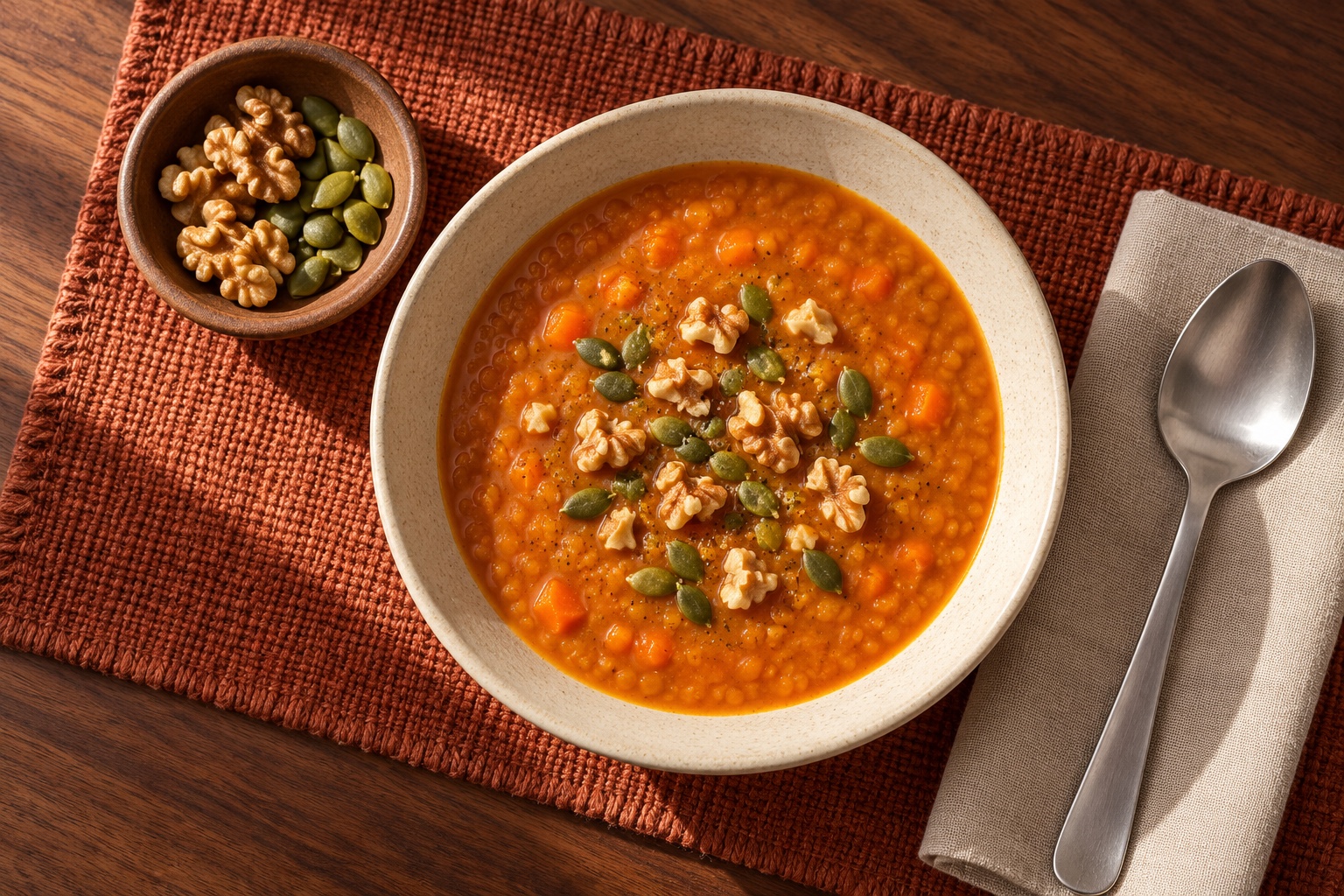
A bowl of lentil soup is soft all the way through. Add a few pumpkin seeds and chopped walnuts, and the next spoonful has a different character: a little bite, a deeper flavour and something to notice. The same idea works with roasted vegetables, a grain dish or a quick lunch at home.
Nuts and seeds can earn a place among everyday cooking ingredients. For a UAE kitchen, that might mean using walnuts already bought for a family table, turning tahini into a lemon dressing, or giving a modest packet of pumpkin seeds several jobs during the week. Start with a meal you already like and consider what would improve its taste or texture.
What they contribute to the meal
The World Health Organization's healthy-diet guidance includes nuts and seeds among foods that can contribute to a varied, nutrient-dense diet. It also identifies nuts as a source of unsaturated fat. Its wider emphasis is on variety, balance and moderation across the diet. An interesting topping belongs within that bigger picture.
The NHS vegetarian-diet guide lists nuts and seeds as sources of protein and other nutrients, while encouraging a variety of protein sources. A scattering over vegetables is a useful ingredient choice, but it should not be treated as proof that a meal supplies all the protein someone needs. Keep thinking about the whole plate, including ingredients such as beans, lentils, eggs or other protein foods that suit your diet.
There is room for proportion, too. The NHS balanced-diet guide notes that nuts provide fibre but contain plenty of fat, and advises moderation. Choose an amount that fits the meal and your needs; a larger pile is not automatically a better meal.
Give one ingredient a clear job
For a crisp finish: try pumpkin seeds over lentil and carrot soup. Add them just before eating so their texture stays distinct. Chopped walnuts work alongside them, or on their own. Start with a light scatter, taste a spoonful and decide whether the dish needs more. The cover illustrates this combination; it is a meal idea, not a recipe with calculated nutrients.
For flavour throughout: roughly chop walnuts and fold them through cooked bulgur with parsley and roasted peppers. Small pieces distribute the flavour through more bites than a few large halves resting on top. Keep the grain and vegetables prominent. A familiar rice dish can take the same approach, with chopped almonds and herbs added at serving.
For a sauce: stir tahini with lemon juice, then add water gradually until it reaches a consistency you enjoy. It may thicken at first before loosening as you keep stirring. Spoon it over roasted cauliflower or use it alongside a bean-filled flatbread. The amount of lemon and water is a matter of taste and the tahini you have, so adjust rather than relying on a rigid ratio.
These are different culinary roles. A seed topping, chopped nut mixture and smooth paste will not behave the same way. Choose the form for the result you want: visible crunch, flavour spread through a dish, or a dressing that brings ingredients together.
Shop for the meals you will actually make
You do not need a shelf of expensive mixes. One familiar nut and one seed can offer enough variety to begin. The NHS fibre guide suggests unsalted nuts or seeds, and recommends choosing nuts without added sugars. Plain versions also give you more control over how a finished dish tastes.
Check what is in the packet or jar before buying. A honey-coated nut mix and plain walnuts have different uses; a sweetened spread may not give you the savoury sauce you imagined. Buy a pack size you expect to use and follow its storage instructions. Put the next meal idea on your shopping list alongside the ingredient, so the purchase has a purpose.
Make shared meals clear about ingredients
Nuts and seeds need particular care when cooking for others. NHS food-allergy guidance identifies peanuts and tree nuts among common allergens and notes that sesame can also cause allergy. It advises checking labels and ingredients and telling restaurant or cafe staff about an allergy.
Ask guests about their requirements before choosing a topping or dressing, and keep ingredient information available. A seed-based option should not be assumed suitable for someone with a nut allergy. Use ingredients they know are appropriate for them; a garnish is optional.
For your next meal, choose one change you can taste: pumpkin seeds on soup, walnuts through bulgur or tahini beside vegetables. Notice the texture, adjust the amount and keep the combinations you enjoy. A useful ingredient earns its place by making ordinary food more appealing.
Original AI-assisted educational article. Official sources checked on 20 October 2026. Cover: AI-generated editorial illustration of an unmeasured soup-and-topping idea.
A good read is worth sharing.
Pass this story on to someone who would enjoy it.
The conversation 0
A thought, a question, a little food for thought. Join in — no account needed.
Loading the conversation…
Be the first to add a thought.