
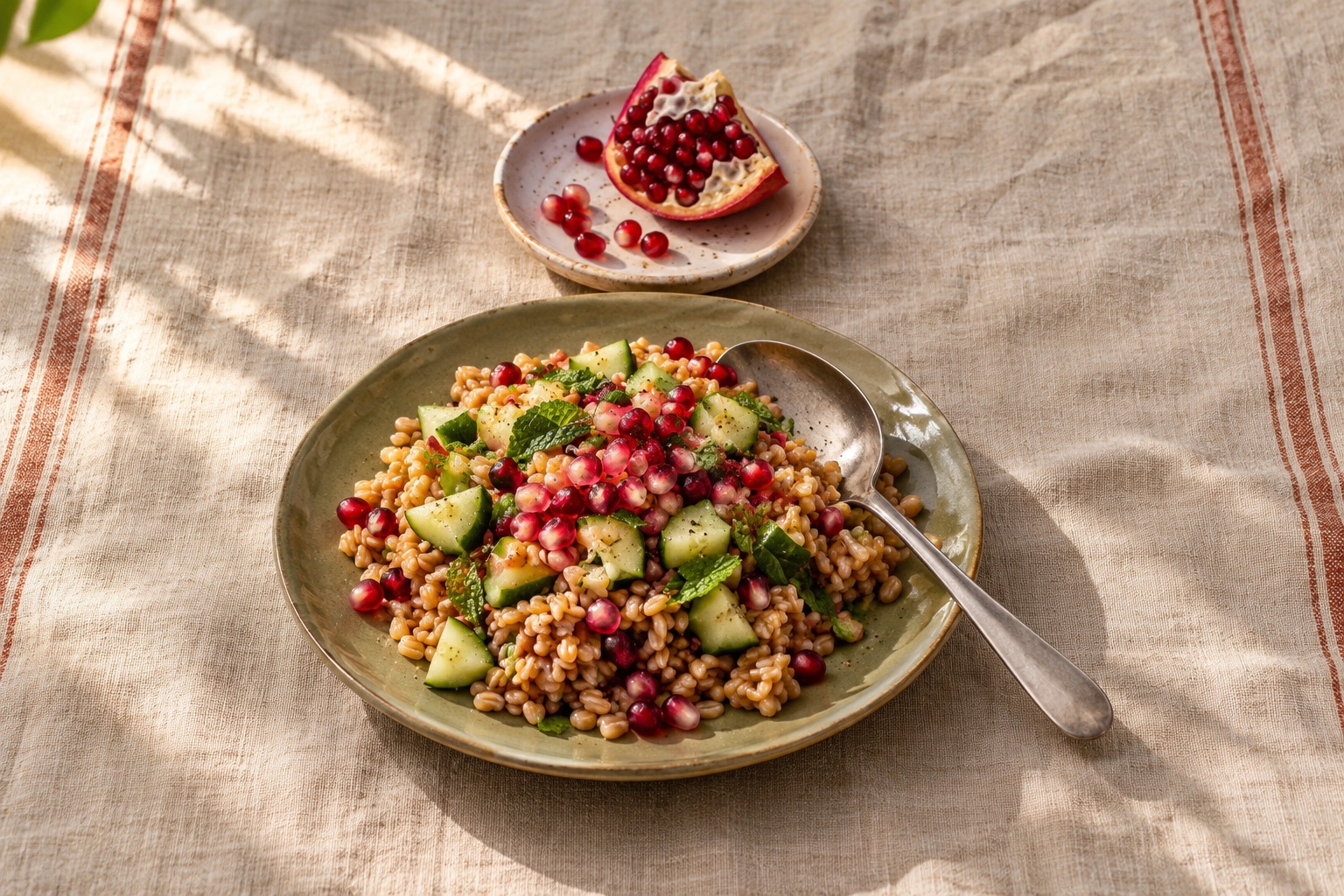
Put a spoonful of pomegranate seeds into a bowl of warm grains and you get something the dressing cannot supply. Each seed has its own small burst of juice. The next bite might be all grain, cucumber and herbs. That unevenness is part of the pleasure. If you want pomegranate in every bite instead, a little pomegranate molasses in the dressing will do a different job.
For a Dubai lunch built around grains, bread and a spread such as labneh, one fruit can work across the table. The decision is how you want to taste it. Mix the seeds through a salad for little bursts, put a small bowl on the table so everyone can add their own, or use the molasses to give a whole dish a sweet-tart edge.
Open the fruit and taste a few seeds
The juicy parts that recipes often call arils surround the inner seeds. The USDA’s pomegranate collection notes describe differences between varieties in colour, sweetness, acidity and seed hardness. Taste a few from the fruit you have before adjusting the rest of the dish. If they are sharp, a dressing you already like may have enough acidity. If they are sweet, you might still want a splash of vinegar.
Rinse and rub the whole fruit under running water before cutting, even though you will leave the peel behind. That follows the UK Food Standards Agency’s advice on washing fruit and CDC’s guidance on washing fresh produce. With the fruit steady on a board, lightly score the skin along a few ridges and pull it into sections over a deep bowl. Ease the seeds away from the pale membrane with your fingers. A deep bowl is handy for catching the seeds that escape.
Put the crunch where you will notice it
For a grain salad, start with farro or bulgur, diced cucumber and torn mint. Dress the grains first so you can judge the seasoning. Fold in some seeds gently, then save a spoonful for the top. The ones mixed through appear in scattered bites, while the ones on top are easy to catch with the first forkful. The farro and pomegranate salad published by USDA Agricultural Research Service offers another approach: it mixes the seeds with farro and cucumber and uses molasses in the dressing.
On a plate of labneh and flatbread, try serving the seeds on one side of the labneh. You can swipe a bite through the fruit or leave the next one plain. If you are finishing roasted aubergine, scatter the seeds just before serving, alongside chopped parsley. The fruit gives the soft aubergine a firmer bite and a little juice.
The same idea works in a dry snack. In the NHS’s pomegranate popcorn recipe, the fresh seeds go in once the popcorn has cooled. If the point is to keep that contrast while serving, mix only the bowl you are eating now. The next portion can wait uncombined.
Use molasses when the whole dressing needs fruit
Stir a small spoonful of pomegranate molasses into olive oil and a little vinegar. Dip a grain or a piece of cucumber into the dressing before pouring it over everything. If it is too sharp, add a little more oil and taste again. If you also plan to scatter fresh seeds, taste the dressing and fruit together. They may give the dish enough sweetness and tartness between them.
Try a forkful of plain grain salad next to one with fresh pomegranate. Then try a third with a little molasses dressing. You can tell in three bites whether lunch needs more texture, a change to the dressing, or a little of both.
Sources checked on 13 November 2026. The cover is an AI-generated editorial illustration.
A good read is worth sharing.
Pass this story on to someone who would enjoy it.
The conversation 0
A thought, a question, a little food for thought. Join in — no account needed.
Loading the conversation…
Be the first to add a thought.