
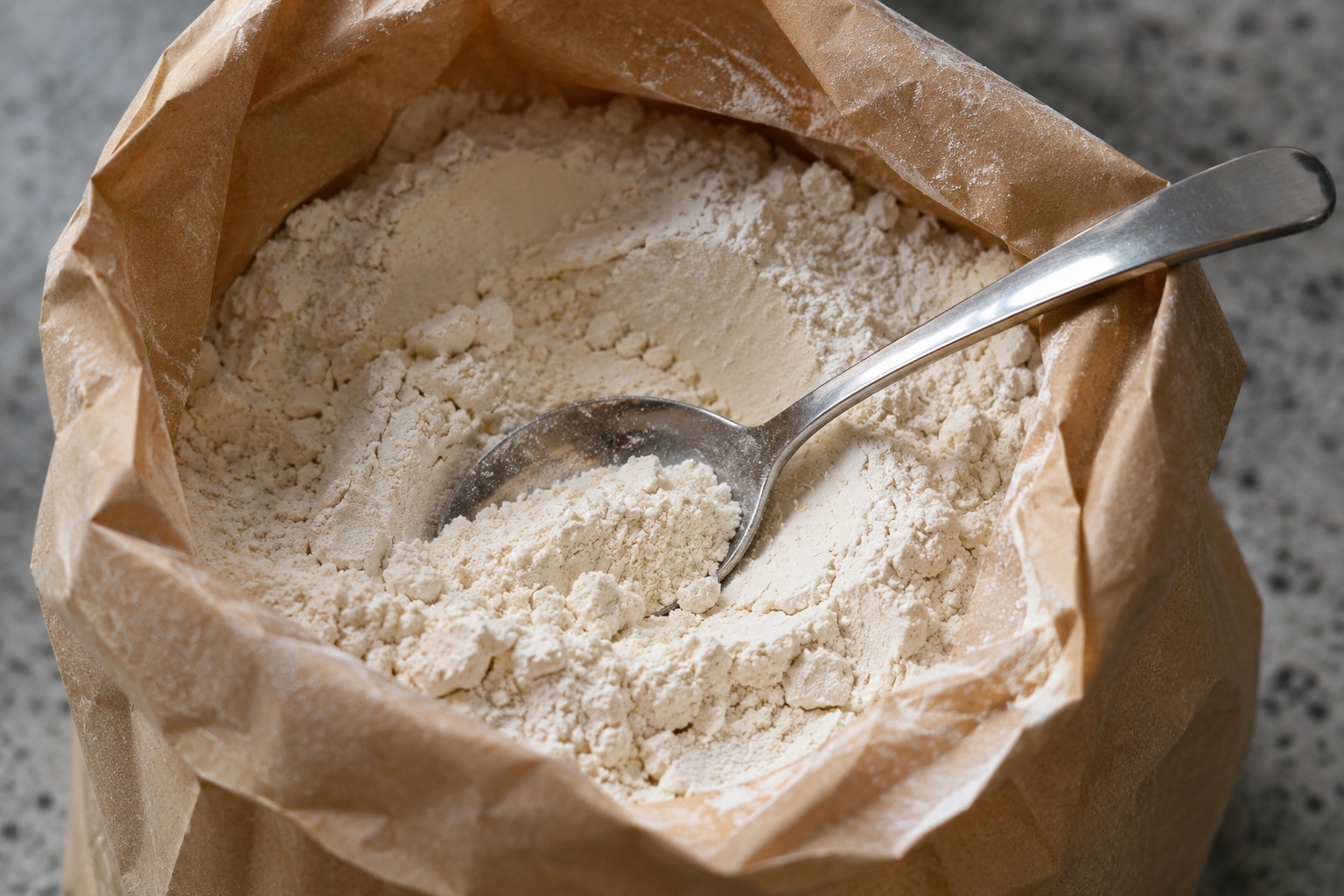
A batch of plain biscuits begins with familiar objects: a bag of flour, a mixing bowl and a tray. The eventual reward is easy to picture, especially if you are baking something to share over tea. Before measuring, imagine the whole session through to the serving plate. That includes the stage when the ingredients are still raw.
The Food Standards Agency’s flour guidance explains that flour is not usually treated to kill food-poisoning bacteria. Uncooked flour products should not be eaten unless sold as ready to eat. Read the label.
Before opening the bag
Choose one complete biscuit recipe and read it through. Check its batch size and the equipment it calls for, including the tray. Find its preheating instruction before you begin measuring. Put the ingredient list and method together where you can consult them. A recipe bookmarked on your phone is easier to follow if you have already found the next paragraph before beginning the mix.
The FSA advises keeping flour or baking mixes in a sealed bag or container and following the product’s cooking, storage and handling instructions. Check whether its label says it must be cooked or is ready to eat.
For this session, keep the design simple: an undecorated biscuit whose shape and portion size suit the occasion. Perhaps you want small rounds beside a cup of tea, or a larger biscuit to serve individually. Choose the recipe that offers the result you want before starting, rather than assembling half a method from several different versions.
While the mixture is still raw
The FSA’s advice on uncooked flour includes avoiding a taste of dough or batter unless labelled ready to eat. Leave flavour judgments for the finished biscuits. Its guidance also cautions that home flour-heating treatments cannot be relied on to eliminate harmful bacteria. Follow the complete recipe and relevant product instructions through cooking.
Make the change from mixing to serving
The WHO’s Five Keys to Safer Food include keeping clean and separating raw from cooked food. The poster recommends separate equipment for handling raw food and avoiding contact between raw and prepared foods. These are general food-handling principles. Applied to this baking session, they give the serving plate a different job from the mixing bowl: keep it apart during preparation, along with any food you plan to serve without cooking.
While the biscuits cook, turn to the used equipment and worktop. EFSA’s general food-handling guidance recommends washing hands before and during food preparation, cleaning and sanitising preparation surfaces and utensils, and using different utensils for raw food. Work through that change before bringing finished food into the space. The spoon that stirred the mixture stays with the equipment to be cleaned; set out clean serving tools afterward.
In a small kitchen, this can be a useful moment to pause the assembly. Put away equipment you have finished using, read the recipe’s remaining instructions and choose how you want to present the biscuits. An everyday plate may suit an informal cup of tea; individual small plates may fit a more leisurely table. Present the batch in a way that suits the occasion and the people sharing the table.
When the bake has completed the cooking directed by its recipe, bring it to the table. Now enjoy the flavour and texture, and write a short note for another day: did that biscuit size suit your cups and plates, and would you choose the same style again? These are useful personal preferences to record after the first finished batch, alongside the recipe you actually followed.
Original AI-assisted editorial. Sources checked on 27 November 2026. Cover: AI-generated editorial illustration.
A good read is worth sharing.
Pass this story on to someone who would enjoy it.
The conversation 0
A thought, a question, a little food for thought. Join in — no account needed.
Loading the conversation…
Be the first to add a thought.