
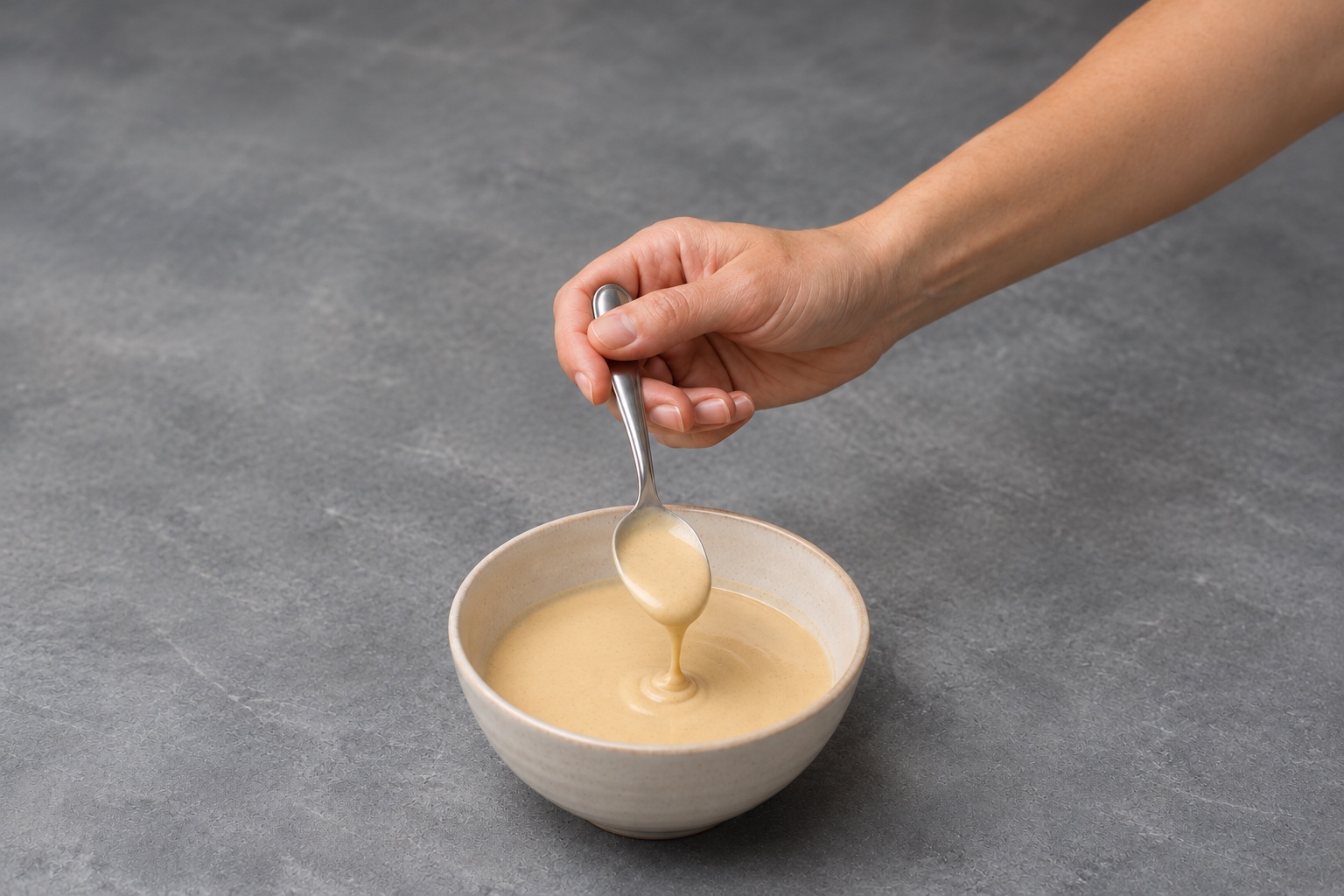
A spoonful of tahini straight from the jar can be dense enough to sit firmly on a plate. A sauce made from it can slip between roast vegetables, coat a mouthful of grain or settle into a sandwich. The useful kitchen skill is knowing which version the meal needs before you start mixing.
For a UAE home cook, that can mean looking beyond the familiar hummus bowl. A little sesame sauce can give a tray of vegetables a finishing flavour, bring together a lunch assembled from separate ingredients, or provide something to dip a crisp piece of khubz into. Start with the food you already have, then make the sauce to suit it.
Begin with the paste you actually bought
Check the ingredients and the directions on your jar. Tahini is sesame paste; a ready-made tahini dressing may already include other ingredients. Treat the two as different starting points. Before measuring out the paste, follow any stirring instructions, working through the contents rather than taking only a spoonful from the surface.
Use a small mixing bowl with room to move a spoon or whisk. Put the amount of paste you want to use into that bowl, leaving the original jar for the next meal. This makes adjustments easier: you can change one small batch without committing the rest of the jar to the same lemon, garlic or seasoning.
Add water for texture, lemon for flavour
Water has a useful job here. In Abdo’s tahini sauce in Westminster’s community cookbook, tahini is combined with lemon and garlic, with water added to loosen the mixture into a sauce. That gives you a practical approach without needing to copy the whole falafel recipe.
Begin with your tahini and a little lemon juice, adding garlic if you want its flavour. Mix, then add water in small steps, stirring thoroughly between additions. Test the consistency before adding more. There is no need to keep squeezing lemon simply because the mixture still looks thick: decide separately whether it needs more liquid and whether it needs more sharpness.
Lift a little sauce with a spoon and let it fall back into the bowl. For dipping, stop while it still holds a soft mound. For spooning over vegetables, look for a slow ribbon. For tossing through a salad, try a looser coating on one forkful first. These are useful visual tests, rather than promises about an exact number of spoonfuls of water.
Season against a bite of the meal
Taste a little sauce with the food it will accompany. A sauce that seems assertive on its own may be just what a plain potato needs. One that tastes pleasantly sharp by itself may become too sharp alongside a lemony salad. Add seasoning a little at a time and repeat the same small test.
Keep the first batch simple. Garlic, chopped parsley or a little cumin can each take it in a different direction; they do not all have to go into the same bowl. If another part of the meal already supplies a strong flavour, let the sauce provide a quieter sesame note.
Give it a different job at the next meal
With roast cauliflower or carrots, spoon the sauce over part of the vegetables so you can still enjoy their browned edges. In a khubz sandwich, spread a little inside before adding the filling, keeping the sauce thick enough to stay where you put it. For a grain-and-bean lunch, toss a small portion together first, then add more sauce only if it needs it.
Those are meal ideas, not a fixed menu. The same jar can support different dinners because you change the sauce’s consistency and seasoning each time. Make a modest batch for the meal in front of you, and follow the jar’s and your chosen recipe’s storage directions.
Keep sesame visible to the people eating
Tahini is unsuitable for someone who needs to avoid sesame: West Suffolk NHS lists tahini among sesame-containing foods. The UK Food Standards Agency’s technical guidance also identifies tahini as sesame-derived. Check the ingredients on a bought sauce. When sharing a homemade sauce, tell people it contains sesame; its pale colour will not explain its ingredients for you.
Original AI-assisted article. Sources checked on 23 November 2026. Cover: AI-generated editorial illustration of a fictional tahini preparation, not a photographed product or a tested recipe result.
A good read is worth sharing.
Pass this story on to someone who would enjoy it.

The conversation 0
A thought, a question, a little food for thought. Join in — no account needed.
Loading the conversation…
Be the first to add a thought.