
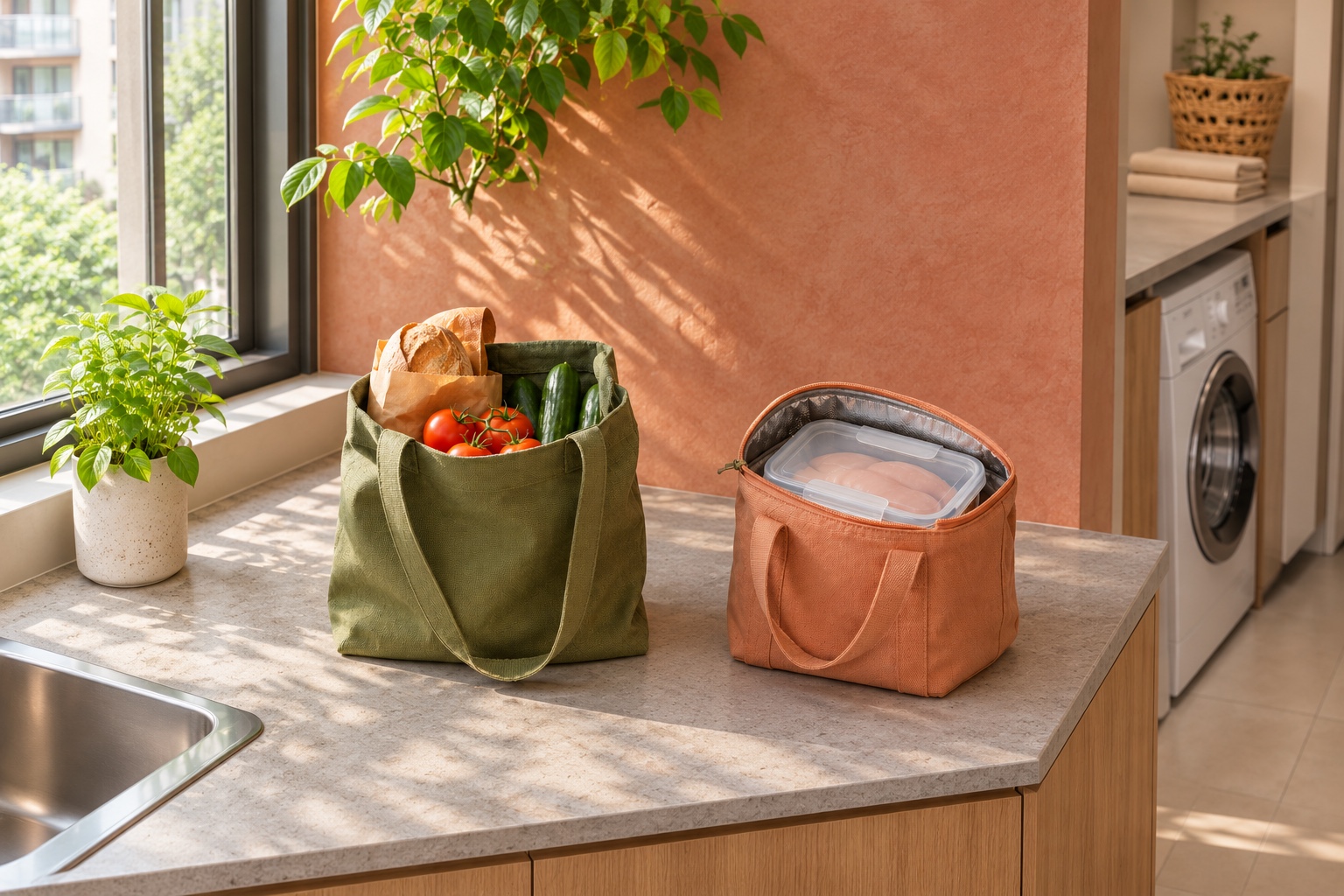
A loaf of bread, a few tomatoes and a packet of chicken can all be on the same shopping list. Give them two different rides home. A cloth tote can hold the bread and produce, while a second bag carries the sealed raw chicken. Using a bag you recognise by its colour or shape makes that decision easy at a busy checkout and again when someone else does the shopping.
Decide which bag does which job
The Dubai Municipality guide to grocery shopping advises shoppers to keep fruit and vegetables apart from raw meats and to check that the packages they buy are sealed. The UK Food Standards Agency recommends dedicating a reusable bag to raw food. A bag can look clean and still transfer bacteria from raw meat juices to something you eat as it comes, such as bread. A washable fabric tote of a different colour or a distinct insulated bag makes it easy to spot the one you use for raw meat, poultry or seafood.
Start the separation in the trolley. Give raw meat, poultry and fish a place away from the rest of the groceries. At checkout, keep the shop-sealed chicken or fish in the designated bag. A separate, washable food container with a lid that seals can catch leaks around the original package. Keep the bread, salad leaves and fruit in the other bag, with the bread in its own wrapper. Put household cleaners or detergents in their own bag as well.
Make the setup easy for whoever shops next. Fold the raw-only bag around its empty, clean tub and keep it with the other shopping bags. At a staffed checkout, put the raw packs together and hand over their bag as a separate group. At self-checkout, open that bag before you scan the raw items so you already have somewhere to put them. A knot or coloured tab on one handle can make two similar bags easy to tell apart.
Keep the cold part of the trip short
Pick up cold items towards the end of the shop and go straight home to put them away. Dubai Municipality calls out eggs, meat and fish as items to buy towards the end of the trip. If the journey will be hot, the Food Standards Agency’s hot-weather shopping advice recommends packing cold items at checkout in a cool bag with ice or frozen gel packs. You can use the chilled bag for the raw packs and keep them contained and separate. If you are buying chilled ready-to-eat food as well, give it separate chilled space. When you get home, put the perishable groceries in the fridge or freezer promptly and keep raw items apart from food you will eat as it is.
Check the bags while they are empty
After unpacking, look inside each bag, including the bottom and seams, for soil, spills or damage. The Food Standards Agency advises a hot wash for fabric bags. Check the care label so you know which bags can take that wash. It recommends retiring soiled or damaged plastic-based bags from grocery use, ideally disposing of or recycling them as appropriate. CDC’s archived general food-safety advice for raw poultry also recommends cleaning reusable grocery bags often. Wash reusable food tubs thoroughly in warm soapy water and dry them, or use a dishwasher if the tubs are suitable, as the Food Standards Agency advises.
If you spot a spill where a bag sat, clean the surface before using it to make a sandwich or cut fruit. Make a separate spot for the raw bag if the counter is small, such as a washable tray at one end. Wash your hands with soap and water after handling raw meat or poultry. Let washed bags dry before folding them away, and keep the dedicated bag distinct so it returns to the right job on your next trip.
Sources checked on 15 November 2026. Cover: AI-generated editorial illustration of groceries sorted into two reusable bags.
A good read is worth sharing.
Pass this story on to someone who would enjoy it.
The conversation 0
A thought, a question, a little food for thought. Join in — no account needed.
Loading the conversation…
Be the first to add a thought.