
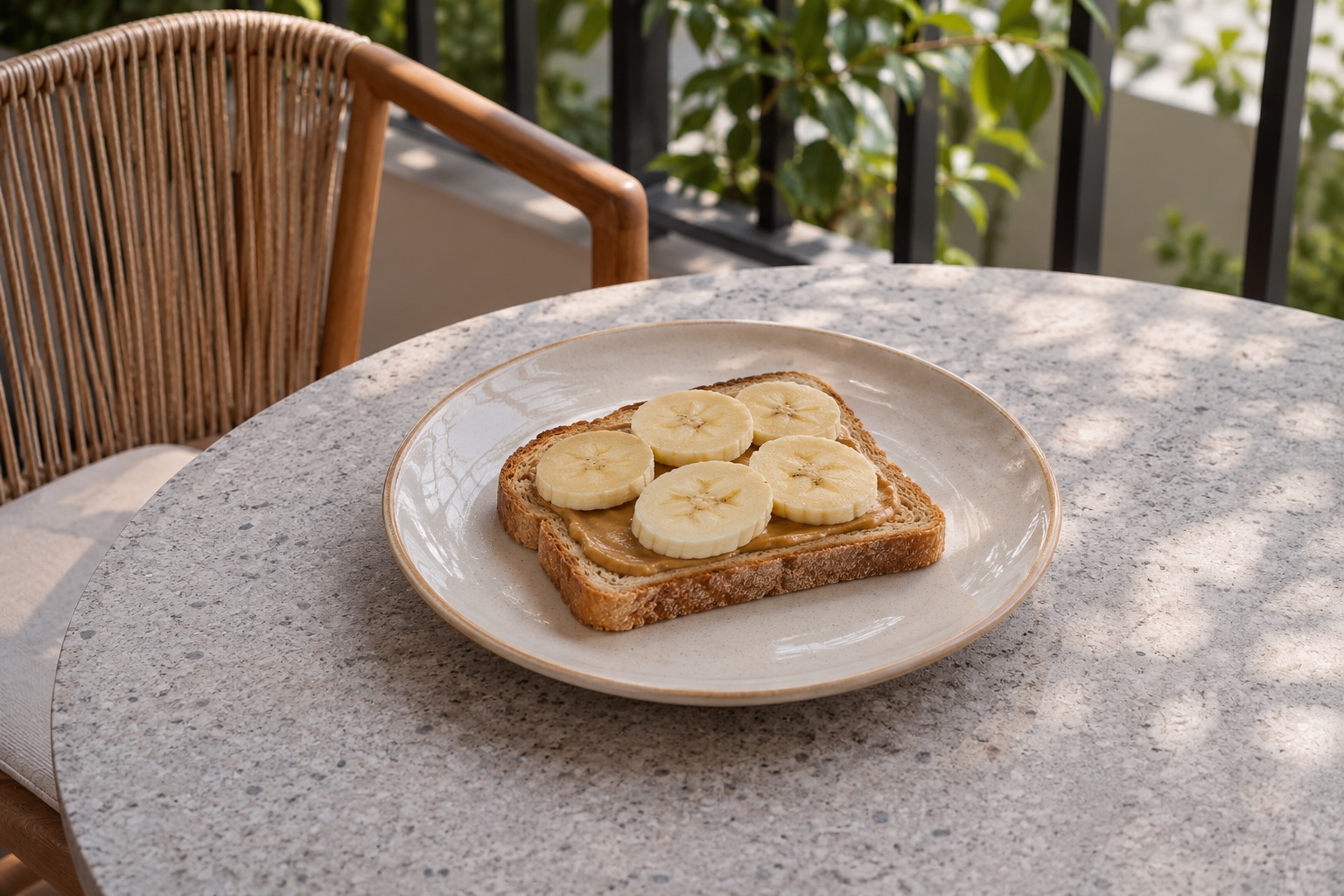
A bunch of bananas bought for the working week can lead to more than one kind of breakfast. One banana may give you neat slices; another may be ready to mash with a fork. Let that difference guide what you make this morning. A soft, ripe banana can become part of a small everyday meal without requiring a whole baking project.
Start with the fruit you have
The Food Standards Agency says slightly overripe fruit, including brown bananas, can be eaten normally if it contains no mould. It also says obviously rotten or mouldy food should not be eaten. Brown colour and spoilage are different questions: a peel’s appearance alone cannot give a guarantee about the fruit inside. Do not try to turn rotten or mouldy fruit into breakfast by trimming or cooking it.
Before starting, follow the NHS’s handwashing guidance: wash with soap and water for around 20 seconds before handling food or eating. For the breakfast itself, set out a plate and fork if you plan to mash, or the bowl and spoon you want for yoghurt. Choose your serving dish before beginning.
Once the fruit is suitable to use and prepared, look at the flesh as you peel it. Will it give you pieces you want to bite into, or does it suit being worked into a spoonable mixture? That is a cooking preference, rather than another safety test.
Keep the slices as part of the bite
When you want distinct pieces, slice the banana into the size that suits the rest of breakfast. Thick rounds give you a clear bite of fruit. Smaller pieces can be scattered through plain yoghurt so that a spoonful picks up different proportions of the two. There is no need to cut every piece to an identical thickness.
For toast, try a thin layer of a nut or seed butter you enjoy, then lay banana slices across it. Leave the edges of the toast visible so it is comfortable to pick up. The banana stays a separate element of the bite, alongside the spread and bread. If you prefer a spoon breakfast, keep the toast alongside the yoghurt instead.
These are serving suggestions, not a reason to open several ingredients at once. Choose the version you actually want to eat. A banana, the yoghurt or spread already in your routine, and the bread you planned to toast are enough to begin.
Let a softer banana join the mixture
For a banana that suits mashing, put the peeled flesh on a plate and press it with the back of a fork. Leave small pieces if you like some fruit to remain distinct; keep working it if you want a more even mixture. You are making breakfast, so there is no need for a perfectly smooth purée.
Fold the mashed banana into plain yoghurt, keeping some streaks visible or mixing it through. Use the same fork to scrape the mashed fruit from the plate into the yoghurt. Spoon it into a bowl and eat it with toast alongside. You can also stir it into a serving of already-cooked porridge. This gives the fruit a place in the meal through its soft texture, rather than asking it to hold a tidy sliced shape.
A busy Dubai morning may call for slices on toast; a slower breakfast may leave room for mashing and mixing. Either can be a deliberate use of the fruit. The useful habit is to notice the next banana while breakfast is still being decided, and make an ordinary meal that fits it.
Original AI-assisted editorial. Sources checked on 27 November 2026. Cover: AI-generated editorial illustration.
A good read is worth sharing.
Pass this story on to someone who would enjoy it.

The conversation 0
A thought, a question, a little food for thought. Join in — no account needed.
Loading the conversation…
Be the first to add a thought.