
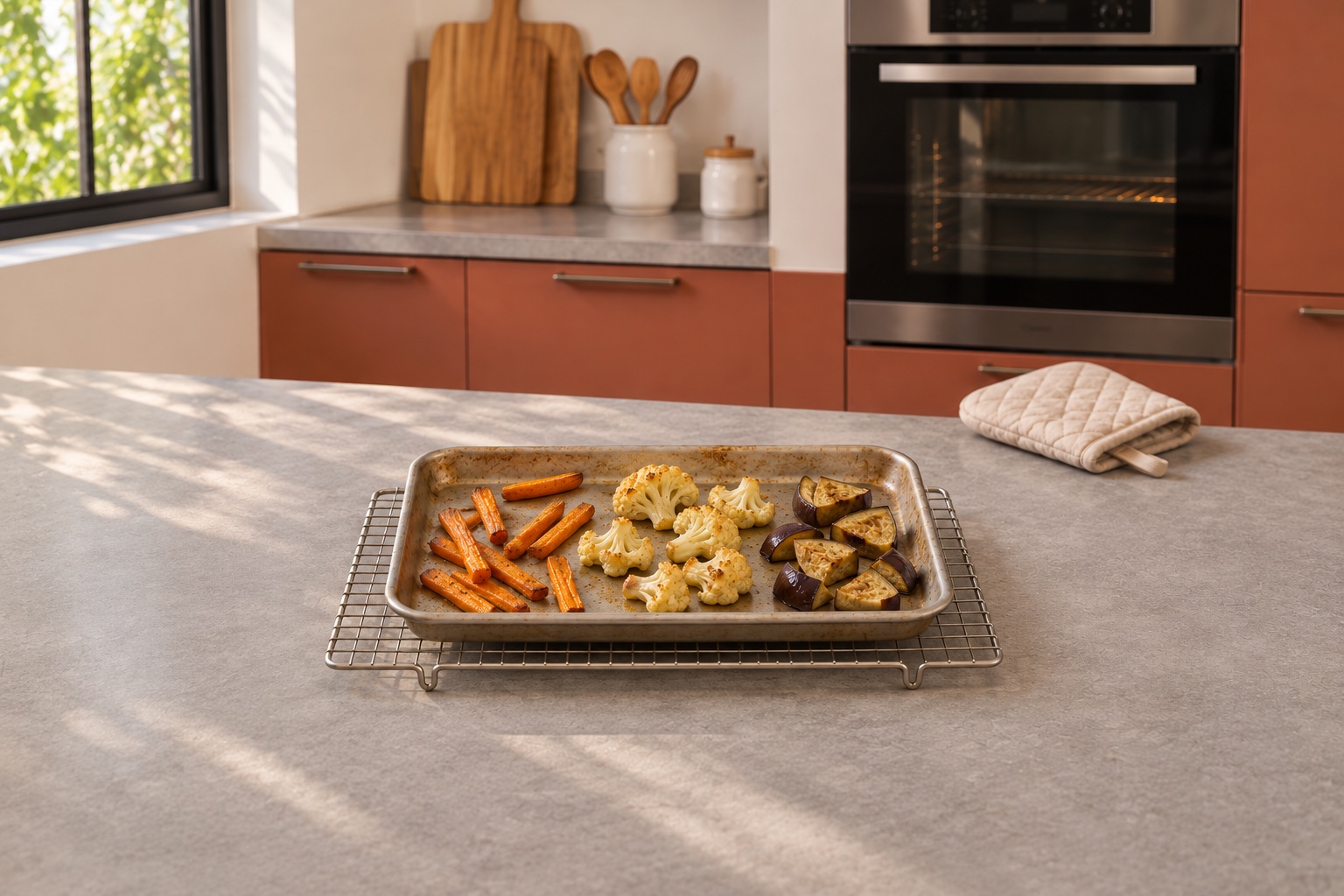
A mixed tray of vegetables asks the oven to do several jobs at once. Carrots need time to soften through their centres, cauliflower has fine branching edges, and aubergine can become wonderfully soft inside its skin. Giving each ingredient a little attention makes a more useful plan than assuming everything will finish together.
For a weekday dinner in Dubai or anywhere else, start with the vegetables you have and the meal you want to serve. This is a way to organise the cooking, with room to adjust for your oven and ingredients. Use a recipe suited to your chosen vegetables for the oven setting and initial timing.
Plan the cuts before filling the tray
Put your chosen vegetables beside one another before chopping. Think about the part of each piece that will take longest to become tender. A thick carrot can be split into slimmer batons; a cauliflower floret can keep its branching head while a particularly thick stalk is trimmed down. Keep aubergine in substantial pieces if you want a soft centre that holds together when served.
Aim for reasonably similar pieces within each vegetable type. The carrot batons can match one another without needing to imitate the shape of the cauliflower. This makes it easier to judge a group of pieces as they cook and to repeat a result you enjoy.
Prepare, then give the pieces room
The UK Food Standards Agency's Home food fact checker advises washing fruit and vegetables with water, rubbing their surfaces under the water and giving them a final rinse. Once washed, drain and dry the vegetables before adding oil and seasoning.
Spread the pieces across the roasting surface so they are easy to turn, with cut faces resting on the tray where practical. Keep a few clear gaps instead of piling everything into a deep heap. If the quantity fills the tray in several layers, bring out another tray or cook a smaller amount.
A concrete example is the USDA Farmers Market recipe for sweet potato rounds, which specifies one layer, a turn during cooking and a golden, tender finish. Its timetable belongs to those thin sweet potato slices; use the recipe for the vegetables you are actually preparing.
Keep track of different cooking paces
Leave the different vegetables in loose areas of the tray while you learn how they behave. You can turn the cauliflower without searching through a jumble, or test a carrot from its own group. These areas are an organisational aid; they do not create separate oven temperatures.
When your recipe calls for ingredients to go in at different stages, keep the later ingredients ready and leave them space. Separate trays are useful when one vegetable needs a different start or finish. Check each type during cooking, moving pieces carefully with suitable utensils and using oven gloves for hot trays.
Check a piece as well as its colour
Turn a few pieces to see their contact sides. Test a thick piece with a fork to judge its centre, and look at how the outer edges are developing. A browned cauliflower tip tells you something different from the tenderness of its stalk. If one group is ready, transfer it to a serving dish while the others finish. Keep an eye on the remaining pieces rather than waiting for every vegetable to look identical.
Give the finished tray a place in dinner
Decide on the rest of the meal while the vegetables cook: perhaps beans and a grain, or a cooked fish or chicken dish you already enjoy. Add a little lemon or chopped herbs at serving if they suit the meal. Taste before adding more seasoning.
The NHS 5 A Day guide includes vegetables cooked in dishes, alongside fresh, frozen and canned options. A roasting tray is one practical way to give vegetables a regular place in dinner. Choose the mix for its flavours and textures, and record the cuts and cooking order that worked well for your next meal.
Sources checked on 9 November 2026. Cover: AI-generated editorial illustration of roasted vegetables in an unoccupied home kitchen.
A good read is worth sharing.
Pass this story on to someone who would enjoy it.
The conversation 0
A thought, a question, a little food for thought. Join in — no account needed.
Loading the conversation…
Be the first to add a thought.