
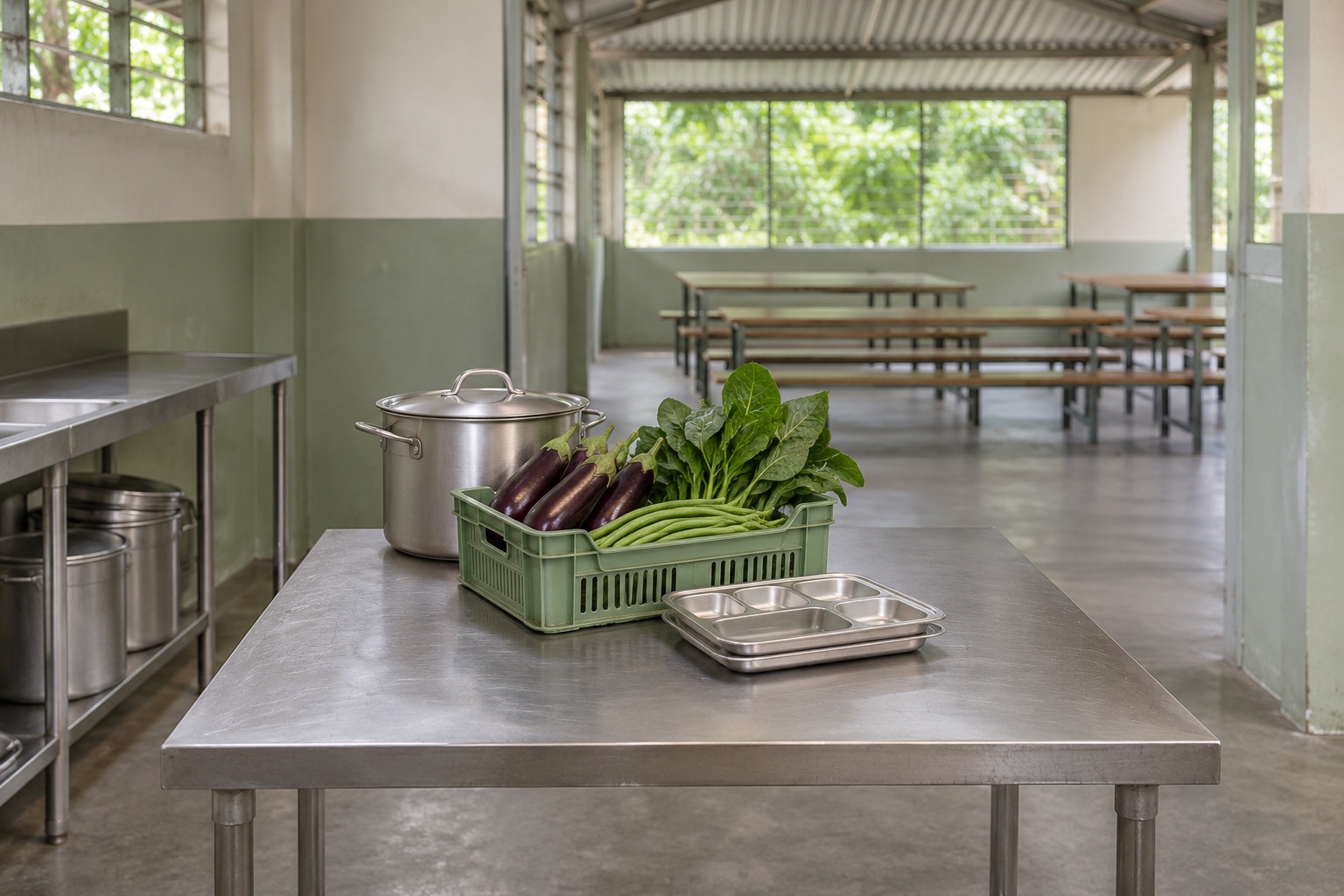
Timor-Leste launched a US$7.2 million school meals project on 17 November 2026 with South Korea and the World Food Programme (WFP). The project will help schools buy food from local farmer groups and cooperatives and equip more kitchens to prepare it. The partners also held their first steering committee meeting in Dili on launch day and put project oversight arrangements in place. WFP’s 17 November launch announcement
The project covers buying and cooking
Funded by South Korea through its international cooperation agency, the project runs from 2026 to 2030. It builds on earlier work in Baucau, Bobonaro and Manufahi and extends the project’s coverage to Viqueque. WFP says the project aims to reach 85,049 children across 498 schools. It plans to help arrange purchases through groups and cooperatives representing 470 smallholder farmers. The project will also support construction of 30 new school kitchens and dining spaces and provide equipment and training, including for school cooks.
School kitchens and purchasing agreements address different parts of the same job. A cooperative needs to know what schools expect to buy and when. Kitchen staff need to know what might arrive and have the space and equipment to turn it into lunch. Building those arrangements together can help schools plan meals around what farmers can supply. The Food and Agriculture Organization describes this link between what schools buy and what local growers can produce as a central feature of school meals programmes based on local sourcing. FAO guide to inclusive school food procurement
What to watch as the project gets under way
The launch establishes the programme and its oversight. The pupil and farmer figures describe its intended reach, and the kitchens are still to be built under the plan. For school meal planners elsewhere, the next steps offer a practical comparison: whether regular purchasing can be arranged at volumes small farms can supply, and whether kitchens can use those deliveries throughout the school year. Those details will determine how much of the plan reaches the lunch table.
Sources checked on 18 November 2026. Cover: AI-generated editorial illustration of a fictional school kitchen receiving area.
A good read is worth sharing.
Pass this story on to someone who would enjoy it.
The conversation 0
A thought, a question, a little food for thought. Join in — no account needed.
Loading the conversation…
Be the first to add a thought.