
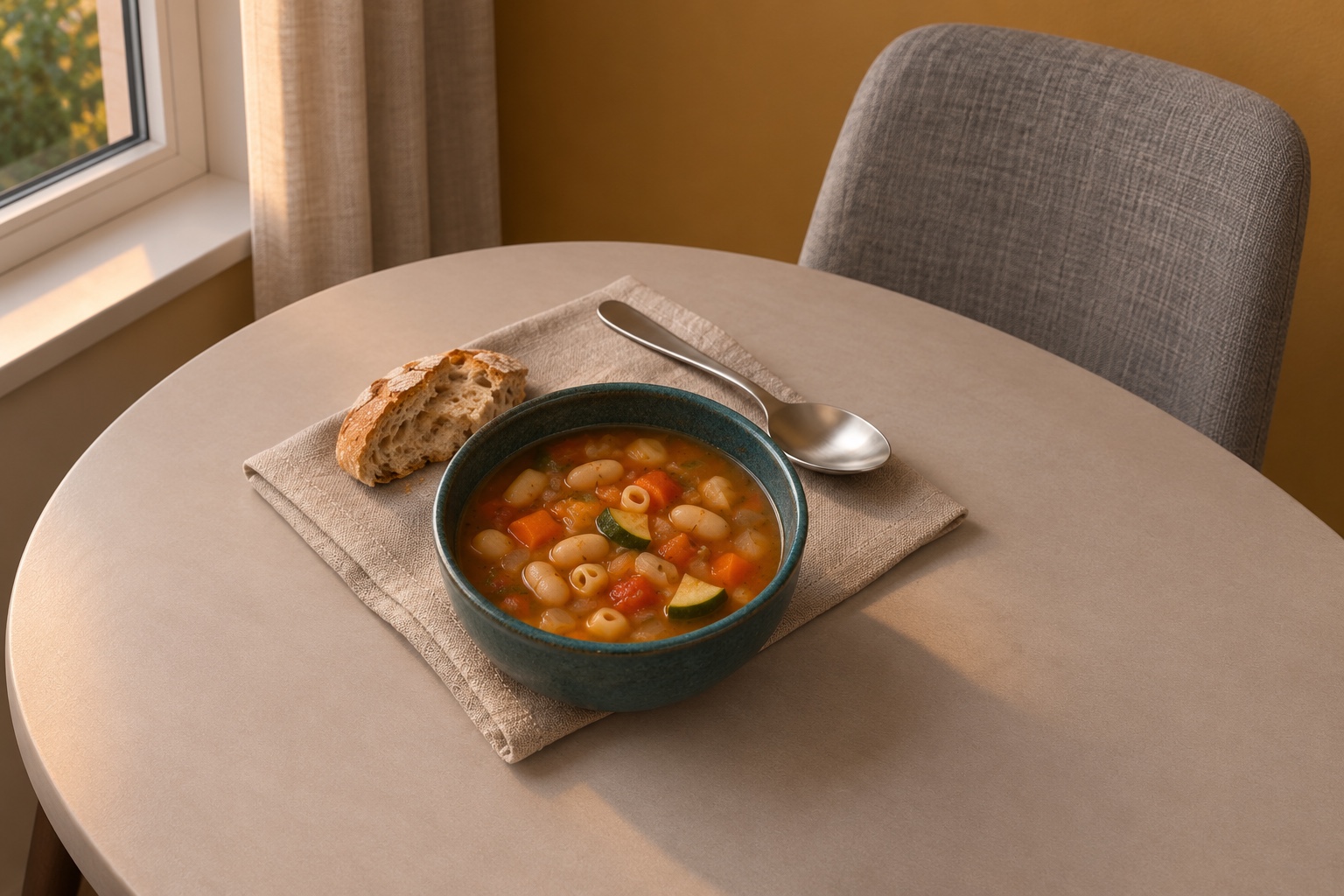
A vegetable soup can leave you looking forward to the next spoonful: a soft carrot beside a white bean, a little pasta and enough broth to bring them together. It can also be a smooth bowl you eat with bread. Decide which of those meals you want before gathering every vegetable in the fridge.
For an evening at home in Dubai, that decision can be more useful than a long shopping list. Start with the eating experience, then choose a recipe and the ingredients that give the bowl its place at dinner.
Choose the texture before the ingredients
If you want distinct pieces, choose a recipe that keeps them in the broth. The NHS classic vegetable soup combines vegetables, tomatoes and small pasta shapes, then serves the soup with wholemeal bread. Its measured method is a useful starting point for seeing how a modest amount of pasta fits alongside the vegetables.
For a smooth example, the NHS super veggie soup cooks leeks, broccoli and potatoes, adds spinach later, then blends the vegetables before adding milk. The contrast is practical: choose the recipe that matches the texture you want, and use its quantities and method, together with your appliance’s instructions.
Picture the bowl before starting. Do you want to find separate pieces with the spoon, or dip bread into a puree? Put that choice at the top of your recipe notes. It helps keep the plan clear when a half-used vegetable or another seasoning catches your eye.
Give the ingredients different jobs
Vegetables are the starting point, but consider what else you want on the table. The NHS Eatwell Guide identifies pulses such as beans, peas and lentils as sources of fibre and protein. It describes starchy foods as sources of energy and recommends higher-fibre or wholegrain choices where possible.
As a practical meal-building idea, you might choose cooked white beans within a chunky tomato soup, or put wholegrain bread beside a smooth vegetable bowl. If pasta is already part of the recipe, decide whether you also want bread alongside it. Make those choices deliberately rather than adding everything automatically.
Two useful directions to explore are tomato, carrot and courgette with cooked white beans and small pasta; or a smooth green soup with bread and a separate bean salad. These are suggested combinations to develop with a suitable recipe, rather than measured recipes with calculated nutrition values.
Use variety without making the pot crowded
WHO’s healthy-diet guidance supports variety within and across food groups, including vegetables, pulses and wholegrains. It also recognises frozen and canned vegetables as useful choices when they have no added sugars or excess sodium. That gives a home cook options beyond buying every ingredient fresh.
Give a few ingredients a clear role. Choose one vegetable you particularly want to taste, then a small supporting cast. Keep the next possible addition beside the recipe for a moment: does it help the soup you pictured, or could it become tomorrow’s dish?
Finish one spoonful before changing the whole pot
WHO notes that stock cubes and other cooking condiments can contribute salt, and advises choosing lower-sodium products. Check the stock label as you plan the recipe. Then, when the soup is ready, try a small serving before deciding on a final addition.
You could test chopped parsley or a little lemon in that serving, tasting between additions. This is a useful way to find the finish you enjoy without committing the whole pot to it. Record the combination and the recipe you used, so the next attempt begins with something you liked.
The Eatwell Guide treats balance across a day or week, rather than requiring every meal to match its proportions. Think about the actual ingredients in the soup and the rest of dinner. A repeatable bowl you enjoy is a useful addition to your cooking routine.
Original AI-assisted article. Sources checked on 22 November 2026. Cover: AI-generated editorial illustration of a fictional home soup meal; no measured nutrient content is implied.
A good read is worth sharing.
Pass this story on to someone who would enjoy it.

The conversation 0
A thought, a question, a little food for thought. Join in — no account needed.
Loading the conversation…
Be the first to add a thought.