
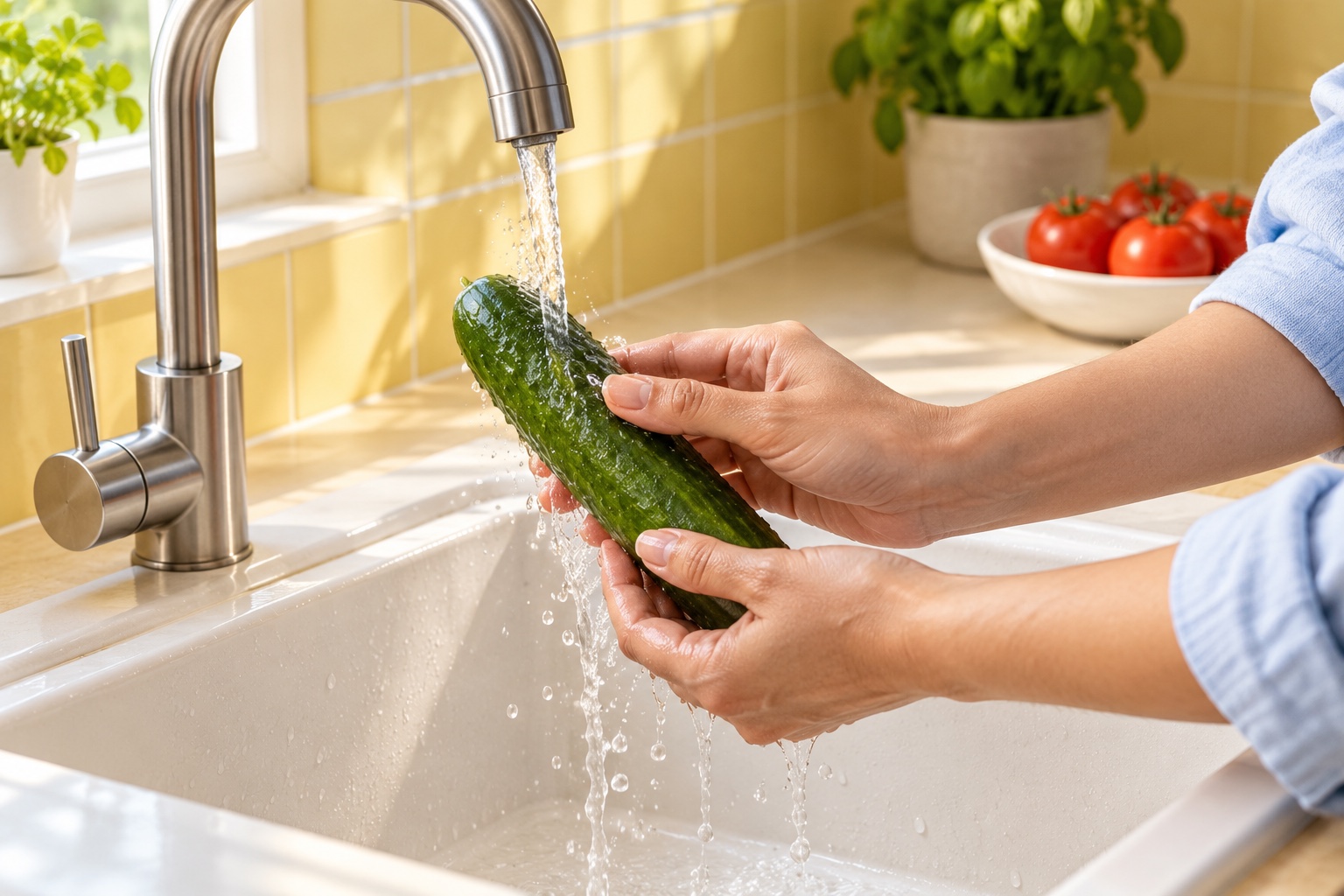
The first decision in a good salad happens before the lemon or dressing. It is the moment you put the ingredients beside the sink and decide what needs washing, which board to use and where the prepared food will go.
For an everyday UAE lunch or dinner, that can be a simple routine rather than an elaborate project. Take a cucumber-and-tomato salad as the example: a few familiar ingredients, some herbs you enjoy and a clear path from the shopping bag to the serving bowl.
Make space before you start
The UK Food Standards Agency's cleaning guidance recommends washing hands with soap and water before preparing food, keeping preparation surfaces clean and clear, and washing utensils between tasks to avoid spreading bacteria.
Use separate boards and utensils for raw meat, poultry and seafood and for foods that will be eaten without cooking, as the agency's cross-contamination guidance explains. Put a clean serving bowl in its own space before you begin. In a small kitchen, choosing that spot first can make the next steps less muddled.
Rinse before the knife comes out
The UK Food Standards Agency's cleaning guidance advises washing fruit and vegetables with water, either under a running tap or in a bowl of fresh water, rubbing their skins and giving each item a final rinse. For this salad, use running water and wash the whole cucumber and tomatoes before moving them to the produce board.
Keep the water-rinsing step distinct from cleaning boards, worktops and utensils. Clean hands and equipment remain part of the routine after the ingredients have been rinsed.
Let the pack answer the washing question
A sealed bag alone does not tell you whether its contents are ready to eat. The Food Standards Agency's cross-contamination guidance says to check the label: unless fruit, vegetables or salad are marked ready-to-eat, they need washing, peeling or cooking before eating. Wash raw salad ingredients that are not labelled ready-to-eat, and follow any pack preparation instructions.
Keep that distinction in your routine: whole ingredients that need washing and a labelled ready-to-eat product do not necessarily need the same preparation step. Use clean hands or utensils to transfer ready-to-eat leaves.
Build the salad with texture in mind
Once your whole ingredients have been washed, prepare them on the clean produce board. For a spoonable salad, cut cucumber and tomato into similar small pieces. For a more substantial-looking side, try cucumber half-moons and tomato wedges instead. The ingredient list can stay almost the same while the eating experience changes.
Add chopped mint or parsley that you have prepared appropriately, then mix a small dressing separately. Try lemon juice and a little olive oil, taste it on a spoonful of the salad and adjust to your preference. Keep some dressing back until you have tasted the vegetables together.
Serve it beside the other foods at your meal, using a clean serving spoon. This is a flexible serving idea rather than a nutritionally calculated recipe. Choose the rest of the meal and its quantities to suit your household.
Give prepared food a timely destination
The World Health Organization's food-safety guidance advises refrigerating cooked and perishable foods promptly, preferably below 5°C. It explains that refrigeration slows bacterial growth without stopping it completely; chilled food will not keep indefinitely. Follow the storage directions for packaged salad ingredients and plan when you will use them.
WHO also emphasises using safe water and washing fruit and vegetables, especially when they will be eaten raw. These steps work alongside clean hands, separate equipment and suitable storage.
Plan where prepared ingredients will wait before you begin cutting.
Keep the sequence easy to repeat
On your next salad day, set out just what you need: ingredients, a clean produce board, the serving bowl and your chosen utensils. Read any pack instructions, prepare the components and give the finished food its place at the table or in the fridge. A clear sequence leaves more attention for the enjoyable part: the flavours and textures you want to bring together.
Sources and editorial note
This AI-assisted educational article uses Food Standards Agency and WHO guidance checked on 19 October 2026. The cover is an AI-generated editorial illustration of one preparation step, using all three HAS Meal homepage hero photographs as photographic-quality references; it does not demonstrate a sterilisation result.
A good read is worth sharing.
Pass this story on to someone who would enjoy it.
The conversation 0
A thought, a question, a little food for thought. Join in — no account needed.
Loading the conversation…
Be the first to add a thought.