
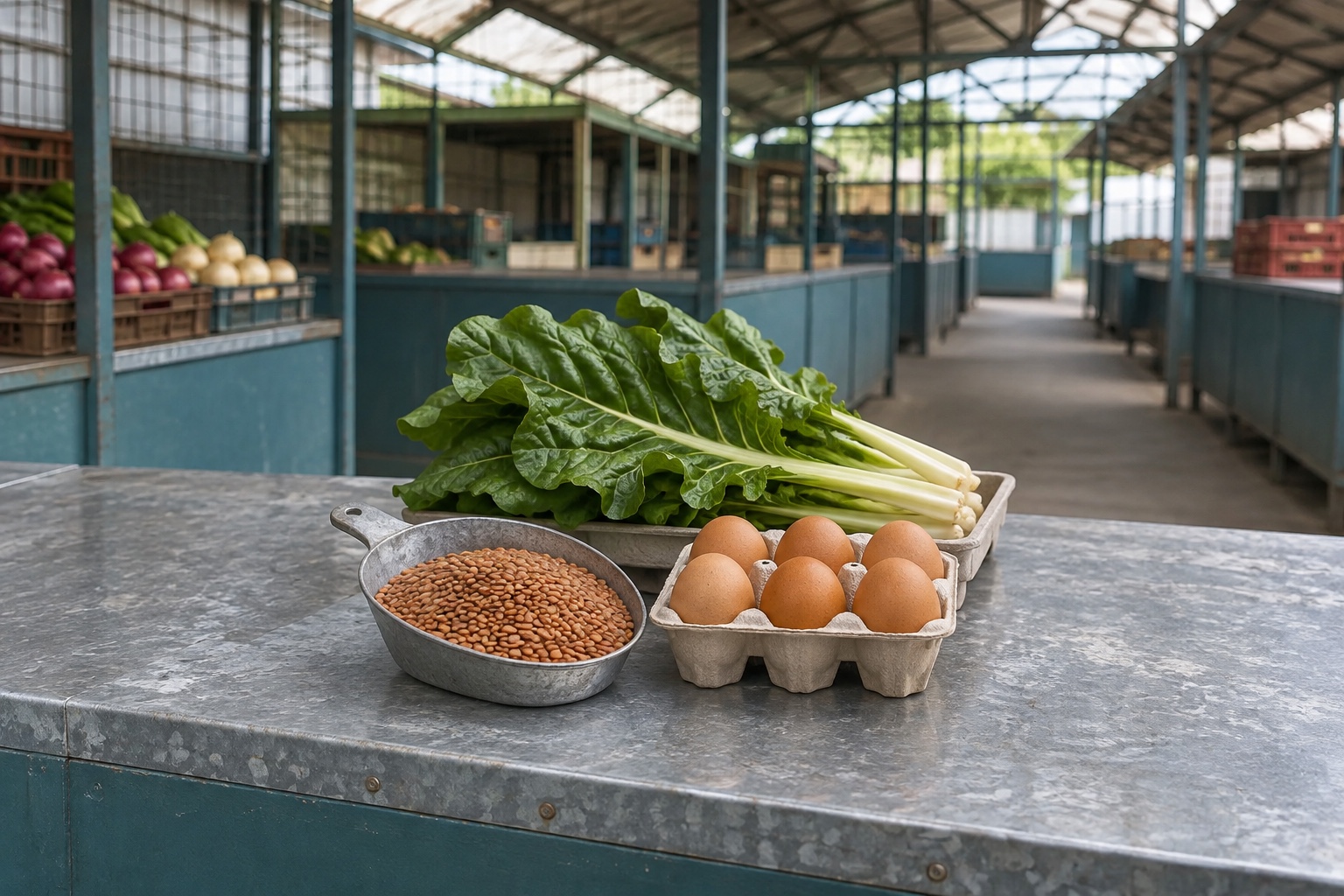
The World Health Organization (WHO) invited countries on 13 November 2026 to help test a tool for comparing changes to their diets. The planned pilot will involve up to five countries with different eating habits, food systems and access to data. Each case study will start with what people currently eat in that country, then model alternatives involving different amounts or types of foods from plants and animals. WHO’s original call for country case studies
Why the starting diet matters
Consider a public canteen weighing a change to one lunch dish. Before deciding what the swap might do, an analyst would need to know the portion people already eat and what the proposed recipe would replace. The same change on paper can start from a different lunch elsewhere. That is the value of comparing a proposed diet with a local baseline: it makes clear what would actually change and what evidence is needed to estimate its effects.
WHO wants the tests to consider four areas together, where data allow: nutrition and diet-related chronic disease, chemical food safety, the burden of foodborne disease, and environmental impact. Its plan also asks the teams to make their assumptions and gaps in the data visible. The European Food Safety Authority describes the broader method as weighing potential benefits alongside risks. WHO’s pilot will test whether local teams can use that approach across whole diets and include environmental measures. EFSA’s explanation of risk–benefit analysis
What the pilot can tell policymakers
The framework is being developed to inform WHO’s separate work on guidance about how much animal-source food to eat. The November call names no participating countries, announces no pilot results and sets no targets for how much meat, dairy or plant food people should eat. WHO plans to use existing data rather than ask participating countries to conduct new surveys. Its schedule puts final case studies in July 2027 and targets early 2028 for launch of the framework. WHO’s full pilot plan and timeline
For school meal planners and public caterers in the UAE or elsewhere, the method raises a useful question: do the data describe the people and meals the decision will affect? Knowing which staples a kitchen uses, what it could buy instead and where the estimates are uncertain makes comparisons more useful than assuming the same swap works everywhere.
Sources checked on 17 November 2026. Cover: AI-generated editorial illustration of ordinary groceries in a fictional market stall.
A good read is worth sharing.
Pass this story on to someone who would enjoy it.
The conversation 0
A thought, a question, a little food for thought. Join in — no account needed.
Loading the conversation…
Be the first to add a thought.