
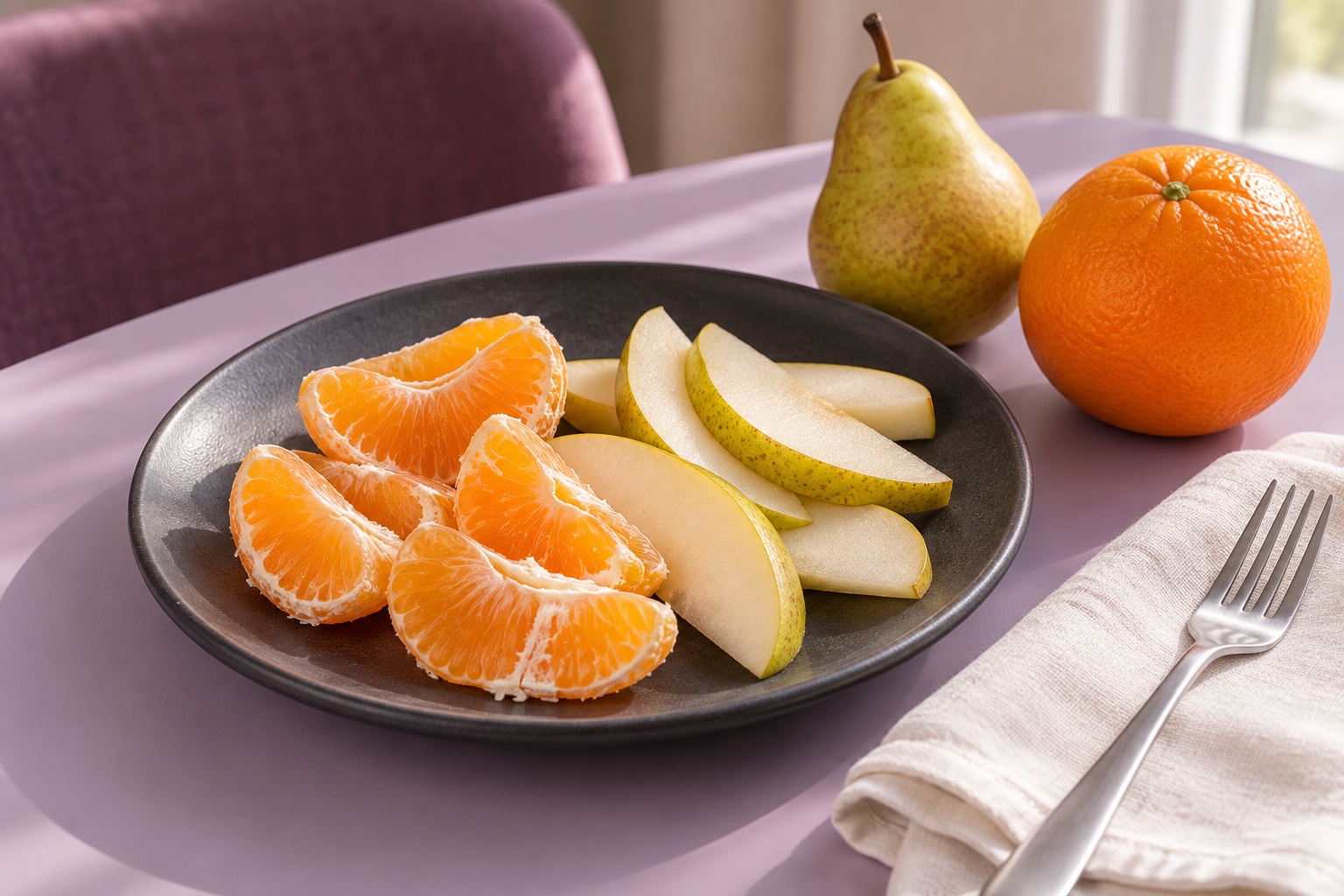
A peeled orange at the end of lunch feels different from a glass of orange juice alongside it. There are segments to separate, membranes to bite through and a flavour that changes from one piece to the next. A pear on a small plate can have the same appeal: a simple finish that deserves a place at the table.
For an ordinary day in the UAE, fruit might arrive as a supermarket purchase, a cafe drink or part of a shared meal. Understanding its form helps you make a more deliberate choice. You can enjoy the fruit you like while recognising that eating it, juicing it and blending it raise different questions.
The same fruit can arrive in different forms
The World Health Organization's healthy-diet guidance includes fruit within a varied diet. It also notes that most fruit juices, including versions without added sugars, contain significant amounts of free sugars, which should be limited. WHO's definition includes sugars naturally present in fruit juices and juice concentrates. A drink can therefore have no added sugar and still contain free sugars.
That distinction is about the form of the food, not a claim that someone has secretly added spoonfuls of sugar. It also does not mean every smoothie has the same composition as every juice. Ingredients and preparation vary. A useful first question is simply what you are being served: pieces of fruit, juice or a blended drink.
The NHS portion guide explains that whole fruit is less likely to cause tooth decay because its sugars remain within the fruit's structure. Juicing and blending release sugars, which is why its advice treats fruit drinks differently from whole fruit. It recommends having juice and smoothies with meals to reduce their impact on teeth; this does not remove the risk entirely.
Understand the small-glass guidance
In its UK 5 A Day guidance, the NHS advises limiting fruit juice, vegetable juice and smoothies to a combined total of 150 ml a day, including unsweetened versions. Together they count towards a maximum of one 5 A Day portion. This is UK public-health guidance, not a UAE rule or an instruction that everyone should drink juice each day.
Combined means that switching from juice at breakfast to a smoothie later does not create a separate allowance. If you choose a fruit drink, look at the actual volume. A cafe's description of a cup as “small” tells you less than its capacity. You can ask about size and ingredients before ordering, then decide how it fits your day.
Give fruit a role in the meal
Serving fruit can be as considered as serving anything else. Try peeled orange pieces and pear slices on a plate, with each fruit in a loose group so people can choose the texture they enjoy. This is the idea illustrated on the cover; the picture represents an unmeasured serving, not a prescribed portion.
For a savoury approach, fold a few orange segments through a salad of sliced fennel and parsley. Let the citrus provide the bright note and keep the dressing simple. Alternatively, add small pieces of apple to a cabbage salad, or serve sliced pear alongside a plain yoghurt dessert. These are flexible flavour ideas, with no calculated nutrient totals attached.
The NHS notes that fruit can contribute to your intake when it is part of a meal or dish. You do not have to wait for a separate fruit snack. A useful planning question is where it would be welcome in food you already make: beside lunch, folded through a salad or offered as a shared meal finish.
Make the purchase easy to use
Fresh fruit is one option. WHO also recognises frozen and canned fruit and vegetables as useful choices when they do not come with added sugars or excess sodium. The NHS suggests choosing canned fruit in natural juice or water without added sugar. A tin of pear halves or frozen fruit prepared according to its pack instructions can give you another way to plan a meal finish.
Buy with a specific use in mind. Choose a fruit you enjoy eating, decide which meal it will join and keep the preparation manageable. At a cafe, consider whether you want a drink or would enjoy fruit on the plate instead. At home, set out the fruit with the rest of the meal so it gets the same attention as the other ingredients.
Original AI-assisted educational article. Official sources checked on 21 October 2026. Cover: AI-generated editorial illustration of an unmeasured fruit-serving idea.
A good read is worth sharing.
Pass this story on to someone who would enjoy it.
The conversation 0
A thought, a question, a little food for thought. Join in — no account needed.
Loading the conversation…
Be the first to add a thought.