
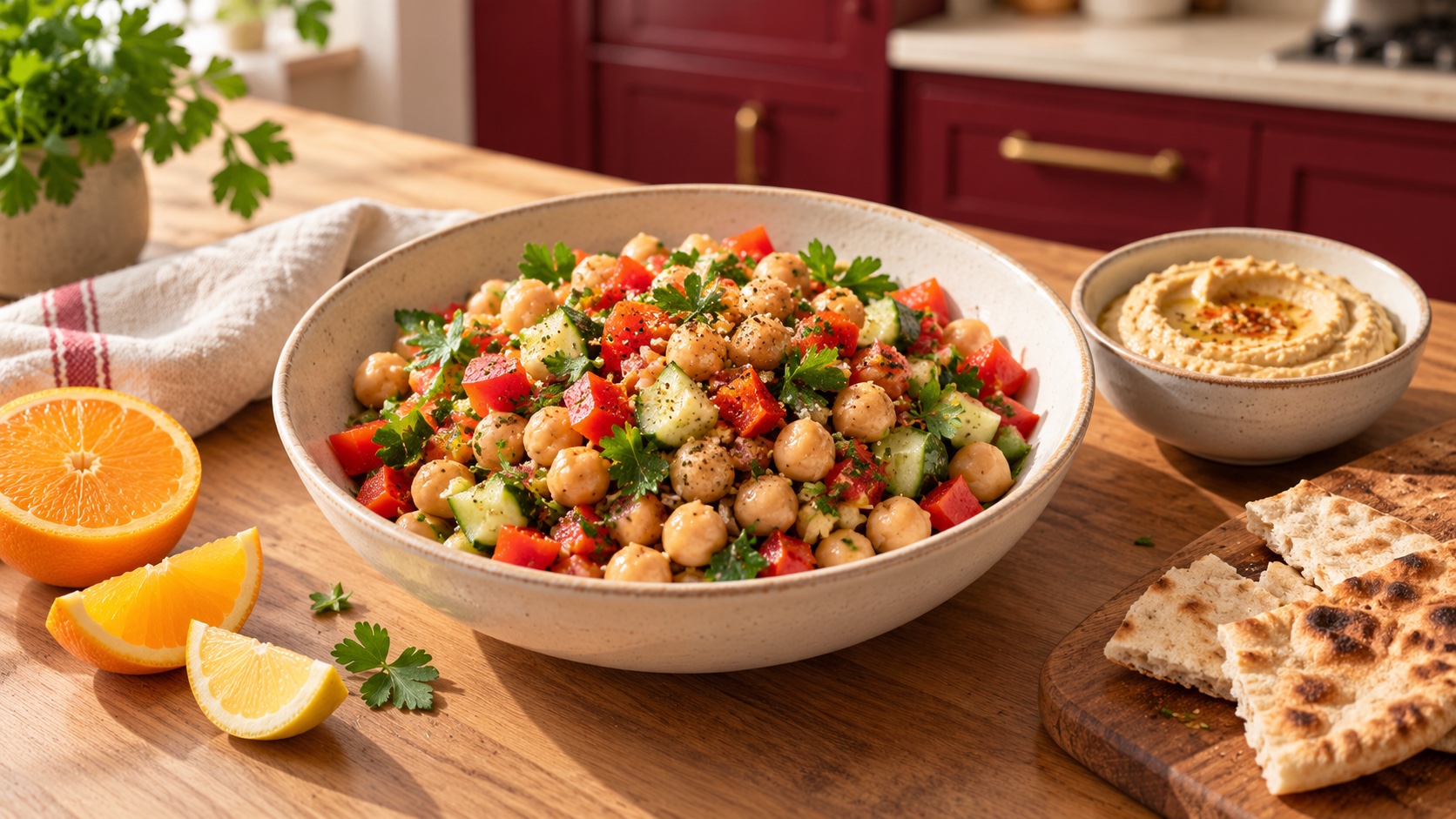
A tub of hummus, some bread and whatever vegetables are left in the fridge: lunch can come together with very little ceremony. For a desk lunch in Dubai or a quick meal at home in Abu Dhabi, that familiar combination offers an interesting question. What could you put beside the chickpeas to make better use of the iron they contain?
The useful answer is a small food pairing: include a vitamin C containing fruit or vegetable in the same meal. A crisp red pepper or an orange can do more than add colour. But the science deserves a little context before lunch becomes another exercise in nutritional perfection.
Start with the chickpeas, not a miracle ingredient
Iron is essential for making red blood cells. Chickpeas are pulses, which the NHS lists among iron sources for a vegan diet. The same guide explains that iron from plant foods is absorbed less well than iron from meat.
Think about the actual amount of pulses in your lunch. Prepared hummus contains other ingredients, and recipes and portions vary. A few spoonfuls of dip should not automatically be treated as a substantial serving of chickpeas. For a more chickpea-focused lunch, keep the hummus and add some whole chickpeas to a salad or bowl.
Give the meal a vitamin C partner
The NHS guidance on a vegan diet recommends eating vitamin C containing foods alongside plant iron to help absorption. Its separate vitamin C guide lists peppers, citrus fruit, strawberries and broccoli among food sources.
Use that as a shopping cue. Add red pepper strips to the hummus plate, mix chopped pepper through chickpeas, or eat an orange with lunch. Lemon is lovely for flavour, but a token squeeze is not a reliable measure of how much vitamin C the meal supplies. Choose a recognisable serving of fruit or vegetables rather than asking a garnish to carry the whole idea.
This is an application of established dietary guidance, not a tested recipe promising a particular percentage increase in absorption. The exact meal, the amount eaten and the person's iron status all matter.
Three ways to turn the idea into lunch
- The crunchy hummus plate: serve hummus with whole chickpeas, wholemeal pitta and generous strips of red pepper. Add cucumber for crunch and an orange if you would like something sweet. Keep the chickpeas visible on the plate instead of letting the meal become mostly bread.
- The five-minute chickpea bowl: combine cooked chickpeas with chopped red pepper, cucumber and parsley. Dress with olive oil and lemon to taste, then serve with flatbread. The pepper provides the vitamin C pairing; the lemon also brings the acidity that makes the bowl enjoyable.
- The lentil variation: use cooked lentils as the base when you want a change from chickpeas, with broccoli on the side or citrus fruit as part of the meal. Keep the same practical structure: pulses, a carbohydrate you enjoy, and a vitamin C containing fruit or vegetable.
These are flexible meal ideas, not personalised portion prescriptions or complete daily nutrition plans. Adjust the quantity to your appetite and needs. A useful lunch should be satisfying enough to repeat, not a carefully arranged photograph you never make again.
Think about what is in the mug
Tea and coffee can reduce absorption of nonheme iron. The NHS guidance linked above advises avoiding them during or after main meals when trying to support plant iron absorption. A simple option is water with lunch and tea or coffee between meals. That leaves room for a familiar routine without making every break a calculation.
There is no universal minute-by-minute waiting rule in the cited NHS page. This article does not turn that advice into a rigid countdown or a reason to stop enjoying tea and coffee altogether.
The whole week matters more than a perfect pairing
The important qualification comes from the UK Scientific Advisory Committee on Nutrition's Iron and Health report, published in 2011. Its summary puts a varied, balanced diet with iron-containing foods ahead of carefully separating every absorption enhancer and inhibitor. This is established guidance, not a new study announced today.
A food combination that helps absorption in a meal does not automatically prove that it will raise someone's iron stores or improve health over time. Treat the pepper-and-chickpea idea as a convenient habit within a varied diet. It is not a treatment for anaemia, a beauty shortcut or a promise of more energy.
If you are concerned about iron deficiency, seek clinical assessment rather than diagnosing it from how you feel or choosing iron supplements on the strength of a lunch article. The SACN guidance also recommends appropriate assessment for suspected deficiency.
A small upgrade you can actually keep
At your next lunch, ask three ordinary questions: where are the pulses, which fruit or vegetable could sit beside them, and would water work with this meal? The result might be no more complicated than hummus, chickpeas, pepper, pitta and an orange. That is the appeal: a useful scientific idea translated into food you can recognise and enjoy.
Sources and editorial note
This AI-assisted educational article uses the NHS and SACN official sources linked beside the relevant claims, checked on 8 October 2026. The cover is an AI-generated illustration of a meal idea, inspired by HAS Meal's homepage photography; it is not a photograph of a specific product or a measured nutritional serving.
A good read is worth sharing.
Pass this story on to someone who would enjoy it.
The conversation 0
A thought, a question, a little food for thought. Join in — no account needed.
Loading the conversation…
Be the first to add a thought.