
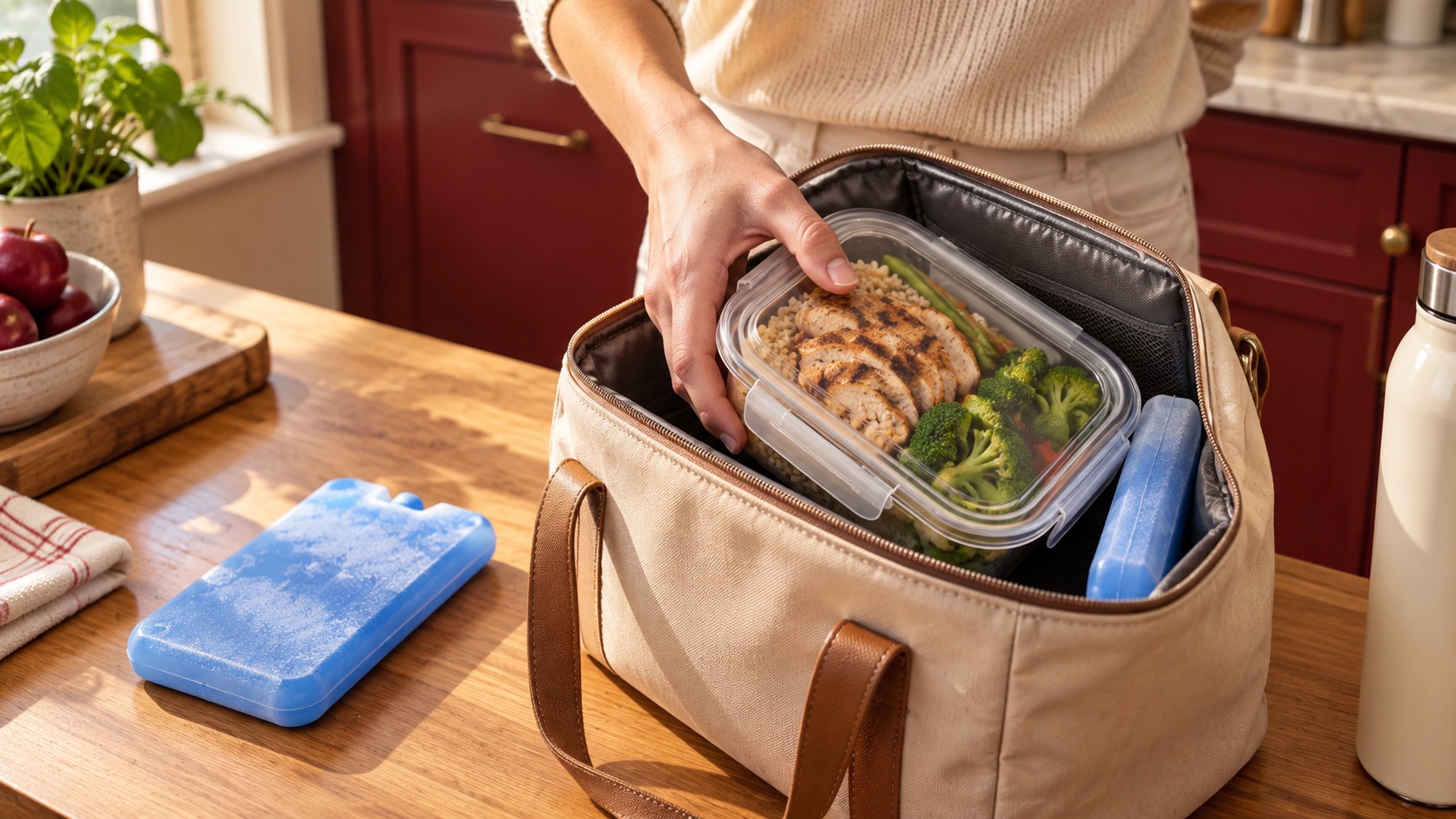
Office lunch food safety often depends on a small, forgettable moment: the meeting that starts just as your meal arrives. Imagine a lunch box travelling from a chilled kitchen to a car, through reception, then onto a desk. The useful question is what happens between those places. For a working day in the UAE, thinking about that final stretch can make lunch easier to manage.
Think in temperatures, not packaging
A neat container tells you little about how food has been held. The World Health Organization's food-safety guidance describes a temperature range of roughly 5°C to 60°C where microorganisms can multiply quickly. It advises promptly refrigerating cooked and perishable food, preferably below 5°C, or keeping cooked food hot above 60°C until serving.
Cold and hot holding are two different strategies. Choose the one appropriate to the meal and its handling instructions, and keep it consistent. A lunch waiting on a desk is not being actively chilled or kept hot. Air conditioning makes an office comfortable; it does not turn the desk into a refrigerator.
Give lunch a destination before the day begins
Before leaving home, decide where lunch will go when you arrive. Is there space in the shared fridge? Can reception contact you promptly? If lunch arrives during a call, could a colleague put it away? These are planning questions, not complicated kitchen tasks. A recurring reminder before a long meeting can be more useful than remembering the meal at lunchtime.
The UK Food Standards Agency's chilling guidance recommends a fridge between 0°C and 5°C and checking it with a thermometer. Follow the meal's storage directions rather than guessing from how cold the room feels. Put the container where you will see it, with your name on it if the fridge is shared.
Pack a cold journey, not just a cold start
For chilled food on the move, the Food Standards Agency's hot-weather advice recommends cool bags or boxes with frozen ice packs. Keep the bag closed as much as possible and away from direct sunlight. Refrigerate lunch at your destination instead of treating an insulated bag as an all-day storage guarantee.
Make the kit easy to repeat: a clean lunch container, an insulated bag and cold packs returned to the freezer after use. Pack shortly before leaving. The practical goal is to reduce the gaps in temperature control, including stops on the way to work. A bag that fits your commute is more likely to become a habit than an elaborate system you rarely use.
Hot weather needs a shorter wait
The same UK hot-weather guidance advises discarding perishable picnic food left outside the fridge for more than two hours during hotter-than-usual weather. That is a general consumer benchmark, not a promise that every meal is safe for two hours in a hot car. Keep uncontrolled waiting as short as possible and follow product-specific instructions. These international recommendations are not a statement of UAE regulatory requirements.
Consider the whole journey when assessing time outside temperature control. If you cannot establish how long a perishable meal has been unrefrigerated, take a precautionary approach and do not eat it. An unexpected delay is a reason to reassess the plan.
Read the date together with the storage instructions
GOV.UK's food-labelling guide distinguishes a use-by date, which concerns safety, from a best-before date, which concerns quality. It also explains that incorrect storage can make food unsafe before its use-by date. A printed date cannot compensate for a lunch left warm. Keep the label or handling instructions available when you transfer food into another container.
A small routine that survives a busy day
Start with WHO's wider principles: clean hands and surfaces, separate raw ingredients from ready-to-eat food, cook thoroughly, control storage temperature and use safe ingredients and water. Then build a routine around your actual workplace: a fridge location, a delivery handover and a realistic lunch break.
If you are planning meals for the week, explore the HAS Meal menu and keep the supplied handling instructions with your order. Convenience works best when the last few metres of the journey have a plan too.
Sources and editorial note
This AI-assisted educational article draws on the WHO and UK official guidance linked above, checked on 7 October 2026. The cover is an AI-generated editorial image. Local rules and product-specific instructions may differ; no claim is made about any provider's delivery temperatures.
A good read is worth sharing.
Pass this story on to someone who would enjoy it.
The conversation 0
A thought, a question, a little food for thought. Join in — no account needed.
Loading the conversation…
Be the first to add a thought.