
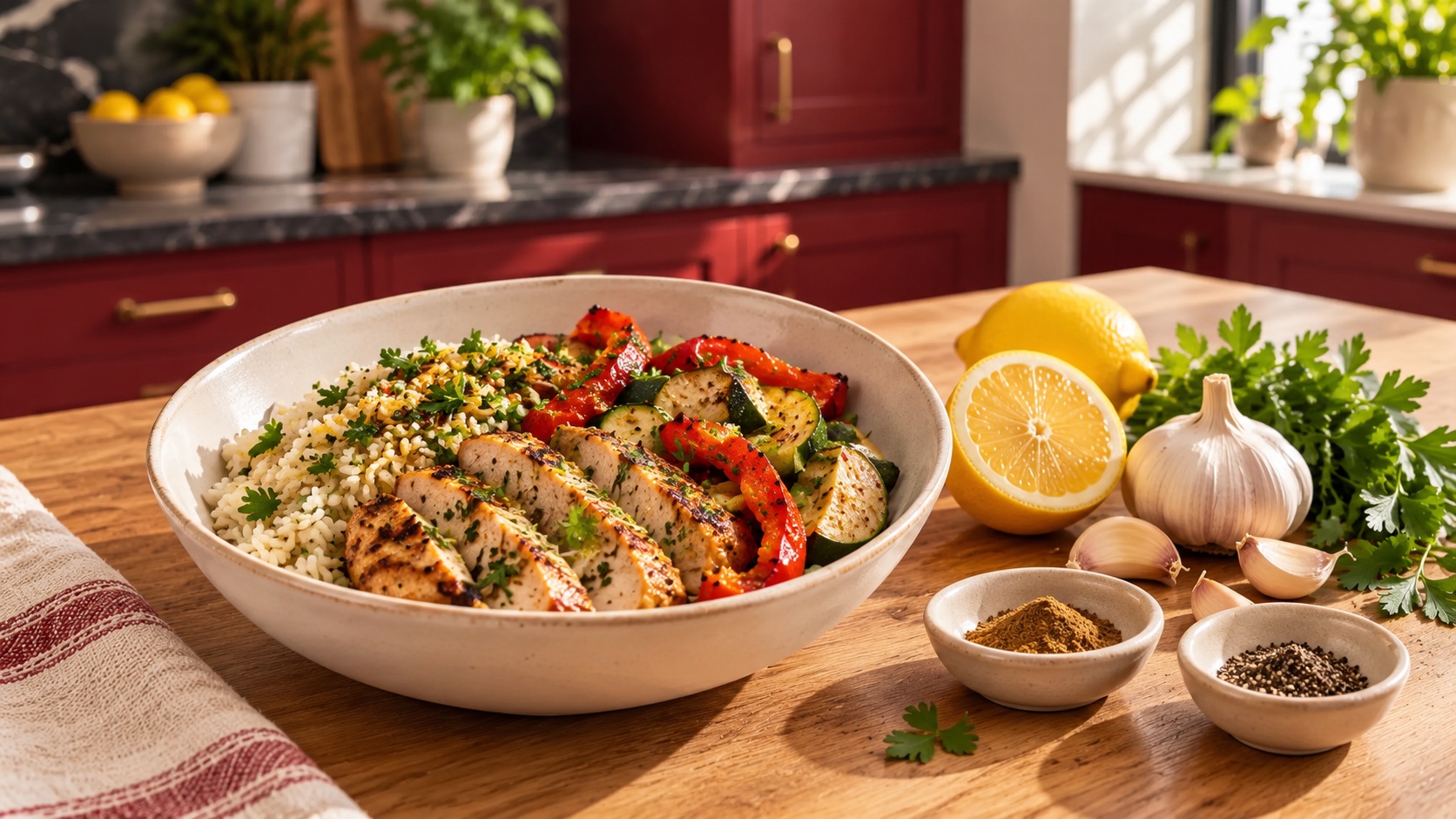
The first thing you notice about a good lunch might be the lemon, the warm scent of cumin or the browned edges of a roasted pepper. Those details can make a meal worth looking forward to. They also give you somewhere useful to start if you want to rely less on salt.
For a busy day in Dubai or Abu Dhabi, the goal can be refreshingly practical: build a lunch that has plenty of flavour, then pay attention to the ingredients and sauces that bring sodium along with them. You can do this at home, at a supermarket shelf or when choosing a takeaway.
Start with the whole lunch
The World Health Organization's sodium guidance explains that excess sodium can raise blood pressure. For adults, WHO recommends less than 2,000mg of sodium per day, equivalent to less than 5g of salt. That is a whole-day recommendation, including sodium already present in foods; it is not an allowance of extra salt to sprinkle over meals.
A plate can collect sodium from several places: the seasoning on the main dish, a stock cube in the rice, a bottled dressing, bread and a side of pickles. You may enjoy each ingredient individually. The useful question is how they fit together, rather than whether you touched the salt shaker.
The health guidance concerns an eating pattern. One carefully assembled lunch cannot guarantee a particular blood-pressure result, and the meal ideas here have not had their sodium content measured.
Give flavour more than one job
The NHS guide to reducing salt suggests herbs, spices, black pepper, garlic, chilli and lemon juice as ways to flavour food. It also recommends tasting before adding extra salt. Use that advice as permission to make seasoning more interesting.
Think of four small choices while assembling lunch:
- A fragrant starting point: choose individual spices such as cumin or coriander. Smell a little before you decide how much suits the meal.
- A bright finish: squeeze lemon over the finished dish, a little at a time, so you can judge the balance.
- A fresh element: chop parsley or mint shortly before serving. Keep some leaves visible rather than mixing everything into one sauce.
- A change of texture: pair tender cooked food with crisp cucumber or browned vegetables. Let each part remain recognisable.
These are culinary suggestions, not evidence that lemon neutralises sodium. Adding herbs to a salty dressing leaves the sodium in that dressing; the opportunity is to use a different flavour combination or less of the original sauce.
A lemon-and-herb bowl to make your own
Build a bowl around cooked chicken, plain cooked rice and roasted peppers and courgette. Before cooking the chicken, season it with garlic, cumin, black pepper and a little oil. Cook it thoroughly, then finish the assembled bowl with lemon and chopped parsley. Choose quantities that suit your appetite and kitchen routine.
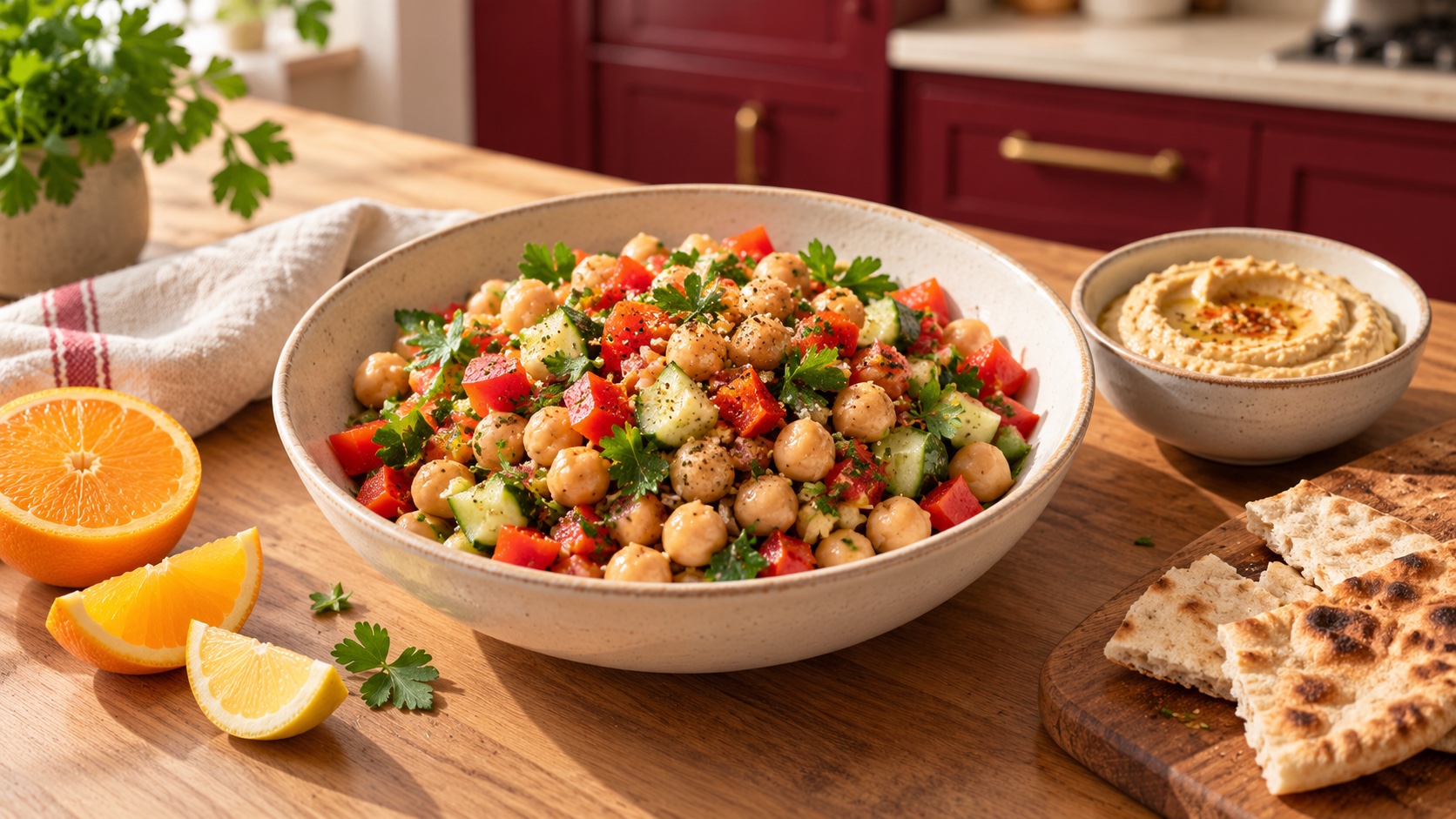
For a plant-based version, use cooked chickpeas and change the vegetables to cucumber and tomato. Try mint alongside the parsley, or serve the grain separately so the salad stays crisp. The idea is adaptable enough to work with ingredients you already enjoy.
If you want something creamy, stir chopped garlic and lemon into plain yoghurt and serve a small dish alongside the bowl. Taste the complete meal before deciding whether it needs another condiment. Check the ingredients of spice blends and ready-made marinades: a product described as a seasoning may already include salt.
Make a useful comparison at the shelf
A quick label check can make shopping more deliberate. The NHS food-label guide explains how nutrition information can help you compare products. It highlights figures per 100g or 100ml and, sometimes, per portion, while noting that a manufacturer's portion may differ from yours.
Look at what the number on your package describes: one serving, the whole package or 100g. Compare similar products on the same basis, then consider how much you actually use. A dressing with a small printed serving might look different once you pour several servings over lunch.
For a simple shopping habit, choose one ingredient you buy regularly—stock, sauce, bread or canned pulses—and compare two versions. The NHS page describes UK labelling; its regulatory details should not be treated as UAE rules. Apply the comparison habit to the information printed on the product in front of you.
Use the same idea when ordering in the UAE
At a café or on a delivery menu, look for a meal whose main ingredients you can identify. Try an ordering routine that leaves room for adjustment: ask whether sauce or dressing can be served separately, and check whether the menu offers nutrition information.
Choose the condiment that contributes most to your enjoyment, then taste before adding the others. A request for sauce on the side gives you more control over that sauce; it does not establish the sodium content of the rice, marinade or complete meal. If the menu provides no figures, keep the claim modest and focus on the choice you can actually make.
Choose one repeatable change
You do not need to redesign every meal tomorrow. Start with a lemon-and-herb finish, a sauce comparison or a request you can repeat when ordering. Notice which version you enjoy enough to choose again. A good routine is easier to keep when the lunch still tastes like something you wanted.
Sources and editorial note
This AI-assisted educational article draws on the official WHO and NHS guidance linked beside the relevant claims, checked on 10 October 2026. WHO's adult recommendation is used here; national guidance and label systems can differ. The meal ideas are illustrative, with no measured sodium claim. The cover is an AI-generated editorial illustration created using all three HAS Meal homepage hero photos as style references.
A good read is worth sharing.
Pass this story on to someone who would enjoy it.
The conversation 0
A thought, a question, a little food for thought. Join in — no account needed.
Loading the conversation…
Be the first to add a thought.