
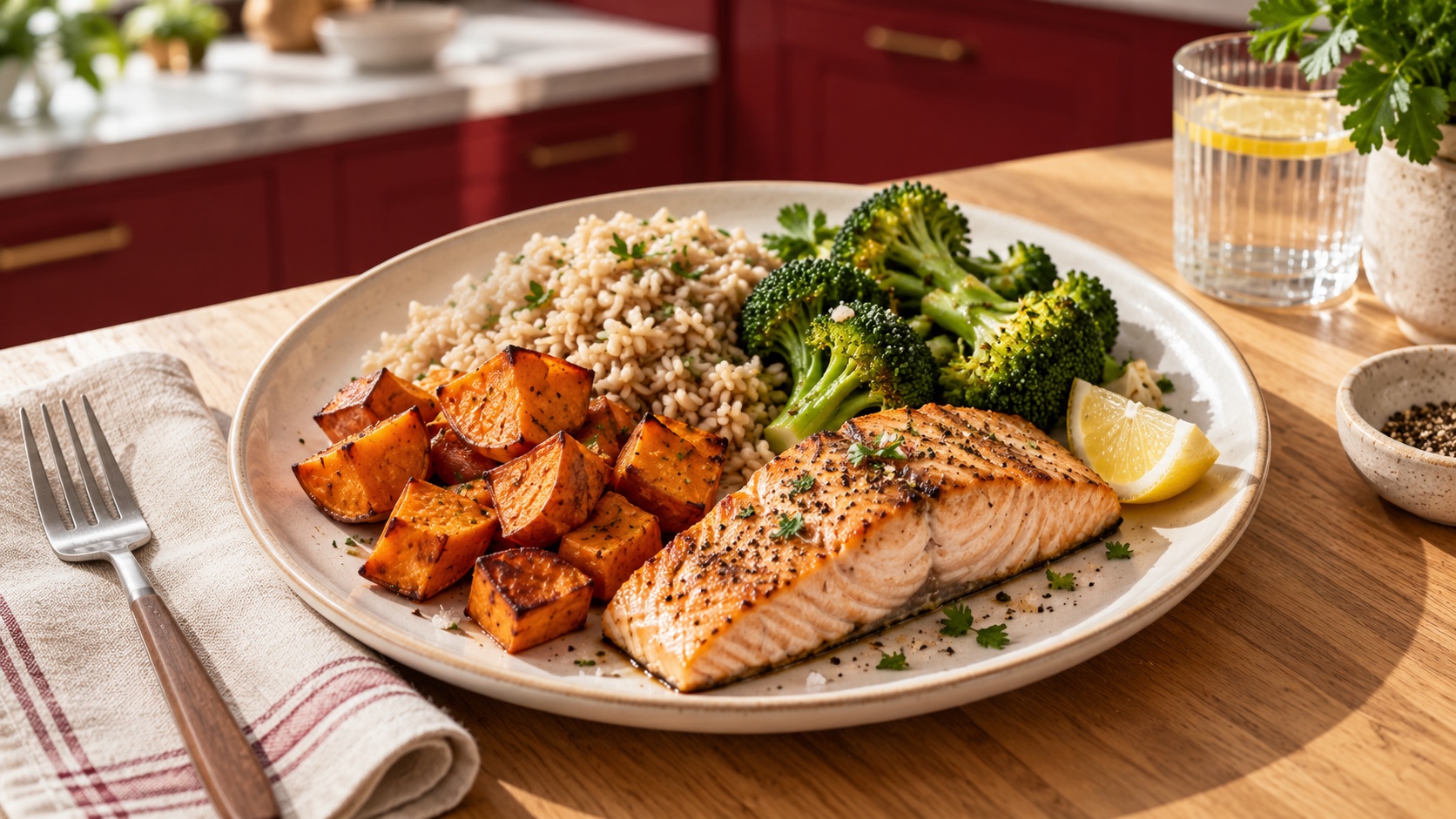
A roasted sweet potato has plenty going for it before anyone mentions skincare: soft orange flesh, browned edges and a sweetness that works beautifully with something savoury. Put it beside cooked fish, a grain you enjoy and green vegetables, and it becomes the centre of a very ordinary, very enjoyable lunch.
There is also a useful nutritional story here. Some colourful foods supply beta-carotene, which the body can use to make vitamin A. Vitamin A has a role in maintaining healthy skin. The interesting part is how to turn that fact into a meal you want to eat, while keeping expectations about appearance realistic.
What vitamin A actually contributes
The NHS vitamin A guide identifies healthy skin as one of the vitamin's functions. It explains that the body can convert beta-carotene into retinol, a form of vitamin A. Carrots, sweet potatoes and spinach are among the foods it lists as beta-carotene sources. Eggs, dairy foods and oily fish are among its sources of vitamin A itself.
That is a statement about a nutrient's normal function. It does not establish that adding an extra sweet potato to an already adequate diet will clear acne, smooth wrinkles or create a visible glow by next week. The official guidance supports eating a varied diet; the meal ideas below are ways to put that into practice.
Give the colourful vegetables a proper lunch to belong to
It is easy to focus on one nutrient and forget the rest of the plate. The World Health Organization's healthy-diet guidance puts adequacy, balance, moderation and diversity at the centre of healthy eating. It includes vegetables, fruit, whole grains and pulses, with protein from appropriate animal or plant sources.
Use those principles as a flexible starting point: a colourful vegetable you like, a protein food, and a grain or other starchy food that makes lunch satisfying. A little olive oil can be part of the dressing or cooking. WHO favours unsaturated fats over saturated fats; that is broader nutrition advice, not evidence that an olive-oil drizzle changes the appearance of your skin.
Three lunches built around the same idea
- The roasted sweet-potato plate: pair sweet-potato chunks with cooked salmon, a cooked whole grain and broccoli. Season with lemon, black pepper and herbs. Cut the sweet potato into similar-sized pieces so the tray cooks evenly, and leave room between them if you enjoy browned edges. Choose portions that suit your appetite.
- The carrot-and-egg lunch: serve roasted carrots with a fully cooked spinach omelette and wholegrain toast. Carrots bring sweetness, the leaves add a different texture, and the toast makes the meal easy to assemble. Keep the seasoning simple enough that you would happily make it on a workday.
- The plant-based version: combine roasted sweet potato with cooked lentils, wilted spinach and bulgur or rice. Add cumin, lemon and a little olive oil to taste. This is an alternative format for the same colourful lunch idea, with pulses as the protein food.
None of these combinations has been tested here as a skin treatment, and the photograph is not a measured nutritional serving. They are adaptable meal suggestions. You can change the protein, use a different grain or make the vegetables the part you prepare first.
Make the routine easier to repeat
For a busy day in Dubai or Abu Dhabi, the useful question may be what you can decide before you become hungry. Choose one vegetable to roast, one main protein food and one accompaniment. If you are ordering lunch, look at the complete meal description rather than a beauty-themed name or the colour of the packaging.
Variety can be simple. Use sweet potato one day and carrots another; switch between fish, eggs and pulses where they fit your eating pattern. You do not need a special powder or an elaborate bowl to make those choices. Flavour matters too: a squeeze of lemon, a favourite herb or properly browned vegetables can be what makes a routine last.
Keep food and sun protection in the same plan
For an outdoor lunch in the UAE, skin health also means thinking about where you sit. The WHO guidance on ultraviolet radiation links excessive UV exposure with premature skin ageing and other harm. It recommends shade, protective clothing, a broad-brimmed hat, UV-protective sunglasses and broad-spectrum sunscreen on skin that clothing does not cover.
WHO recommends sun protection when the UV Index reaches 3 or above and cautions against using sunscreen to extend time in the sun. Check the local UV forecast when planning time outside. A nourishing meal belongs alongside those precautions; it should not be treated as a replacement for them.
Think in food habits, not bigger doses
The NHS guide says people should be able to obtain the vitamin A they need through a varied, balanced diet, and warns that excessive vitamin A from supplements can be harmful. This lunch idea is about ordinary foods. It is not a reason to add vitamin A capsules or change prescribed treatment.
Start with something tangible at your next meal: a tray of orange vegetables, some greens and the rest of a satisfying lunch. Enjoy the taste and the variety. Let the science explain why nutrients matter without asking one plate to deliver a cosmetic transformation.
Sources and editorial note
This AI-assisted educational article uses the NHS and WHO official sources linked beside the relevant claims, checked on 9 October 2026. These are established nutrition and sun-protection recommendations, not a new beauty trial. The cover is an AI-generated illustration of a meal idea, created using HAS Meal's three homepage hero photos as style references.
A good read is worth sharing.
Pass this story on to someone who would enjoy it.
The conversation 0
A thought, a question, a little food for thought. Join in — no account needed.
Loading the conversation…
Be the first to add a thought.