
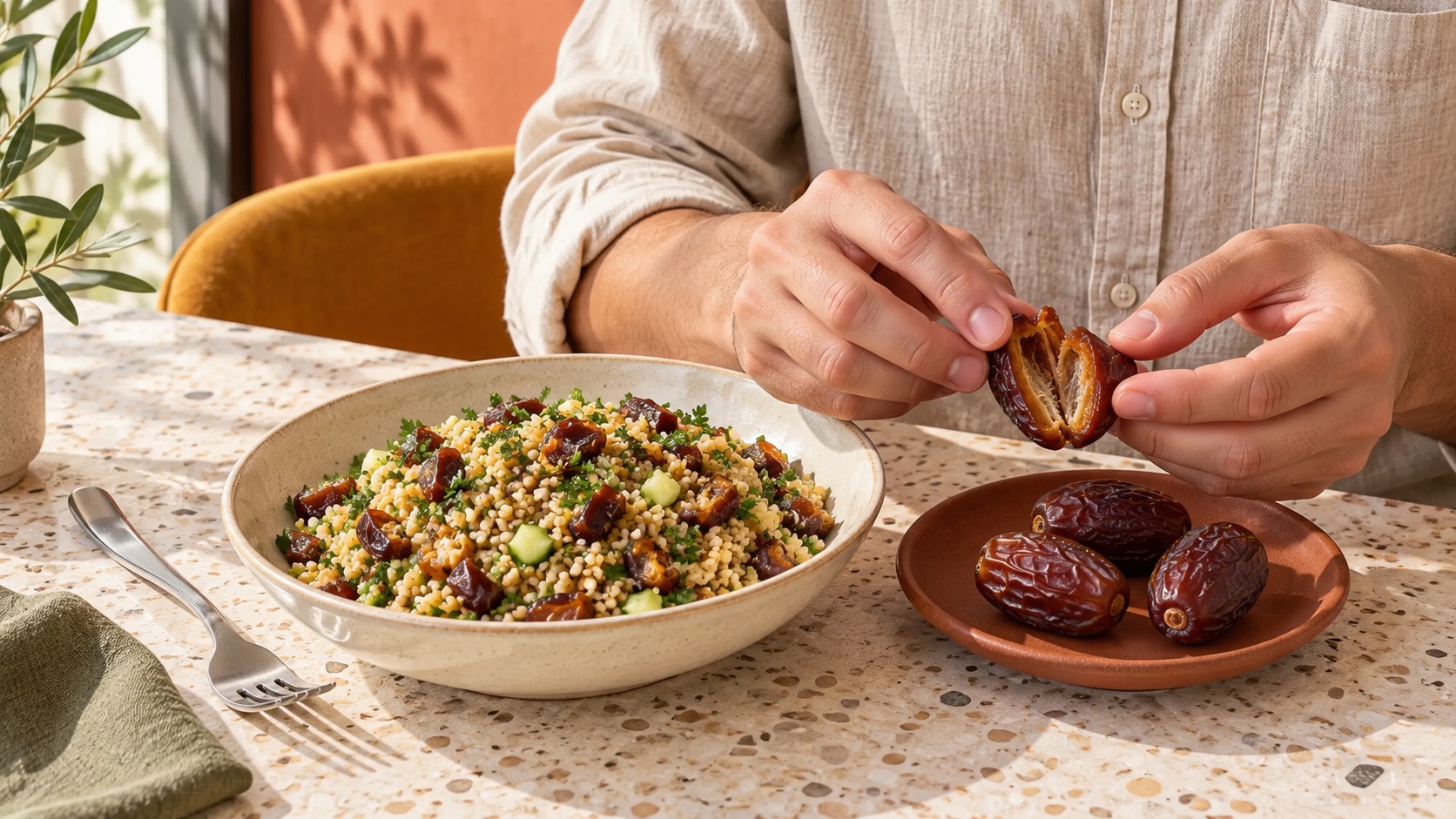
A date brings a particular kind of sweetness to a meal: a chewy piece tucked into grains, a soft slice beside roasted vegetables, or a small addition to plain yoghurt. Its texture makes it useful in the kitchen. You can give it a clear role in a dish, then enjoy the other ingredients around it.
For readers in the UAE, dates also offer a connection between everyday food and agricultural heritage. That connection can sit comfortably alongside practical questions: which form are you buying, how will you serve it, and what else belongs in the meal?
A food with a landscape behind it
In its announcement of 15 March 2015, the Food and Agriculture Organization recognised the Al Ain and Liwa date palm oases as Globally Important Agricultural Heritage Systems. The announcement describes their genetic resources, biodiversity, cultural heritage and traditional irrigation knowledge. That recognition connects the fruit to a history of cultivation and local knowledge.
A useful way to bring that appreciation to the table is to pay attention to taste and texture. When choosing dates, consider whether you want a softer fruit to chop into a dish or a firmer piece to serve separately. Ask about the variety if you are curious, while treating any claim about a particular packet's origin as something its seller should be able to substantiate.
Look at the food form
Whole dried dates, date syrup and a packaged date-based bar can have different ingredients and uses. A fruit on a plate gives you one eating experience; a syrup drizzled into a sauce gives you another. A bar may include nuts, chocolate, added sweeteners or other ingredients, so read what that particular product contains.
The World Health Organization's healthy-diet guidance places moderation and diversity among the foundations of a healthy diet. Its definition of free sugars includes sugars naturally present in syrups, honey and fruit juices. Applying that definition, date syrup is a source of free sugars. The classification follows its form as a syrup, and its amount belongs in the wider eating pattern.
If you enjoy date syrup, decide what flavour it adds and how much you intend to use. For packaged snacks, compare the ingredients and nutrition information of similar products on the same basis. Read the front-of-pack name alongside that information, so the product's actual composition guides your choice.
Put dried dates into the meal
The NHS explanation of 5 A Day explicitly includes dried dates among dried fruits. In that UK framework, 30g of dried fruit counts as one fruit-and-vegetable portion. That figure is a reference within the framework, not a universal daily prescription or a fixed number of dates.
The same guidance recommends eating dried fruit at mealtimes rather than as a snack between meals to reduce the impact on teeth. For an everyday routine, this gives you a reason to plan where the dates fit: in a dish, on a small side plate during the meal, or as its finish. An open box beside a desk can easily become a different pattern of eating.
Three ways to cook and serve them
A savoury grain salad. Prepare bulgur according to its packet and combine it with finely chopped pitted dates, parsley and small cucumber cubes when assembling the meal. Add lemon juice and a little olive oil to your taste. The chopped fruit distributes sweetness through the grains, while the herbs and cucumber give the dish a different texture. Serve it alongside the other foods you enjoy at that meal.
A warm vegetable accompaniment. Roast carrots using a recipe you already like, then scatter thin pieces of pitted date and chopped parsley over them just before serving. Cumin can give the dish another flavour direction. Try a modest amount of date first and adjust to suit your palate. The vegetables remain recognisable, and the date becomes a deliberate accent.
A simple meal finish. Spoon plain yoghurt into a small dish and add a few chopped pieces of date. If you enjoy walnuts, break some over the top for a crisp texture. Keep the components visible, so the soft fruit and yoghurt retain their own character. This is an illustrative serving idea, with no measured nutrient total.
Before chopping, check dates for pits and remove them. Choose the cut for the dish: fine pieces to distribute through grains, thin slices for vegetables, or larger pieces when you want the fruit's texture to stand out.
Enjoy the ingredient within a wider pattern
Start with one meal you already cook and one way of adding dates to it. Notice whether you like them scattered through a savoury dish or served separately. You can then vary the grain, herbs or vegetable without having to create a new recipe each time.
Dates can have a place in a varied eating pattern alongside other fruits, vegetables and meal ingredients. Enjoy their character, keep their food form clear, and make room for the rest of the table.
Sources and editorial note
This AI-assisted educational article uses WHO and NHS guidance checked on 14 October 2026, with a clearly dated FAO source for agricultural heritage. Meal ideas are illustrative. The cover is an AI-generated editorial illustration of a café meal, with all three HAS Meal homepage hero photos used as photographic-quality references; no particular venue or date origin is claimed.
A good read is worth sharing.
Pass this story on to someone who would enjoy it.
The conversation 0
A thought, a question, a little food for thought. Join in — no account needed.
Loading the conversation…
Be the first to add a thought.