
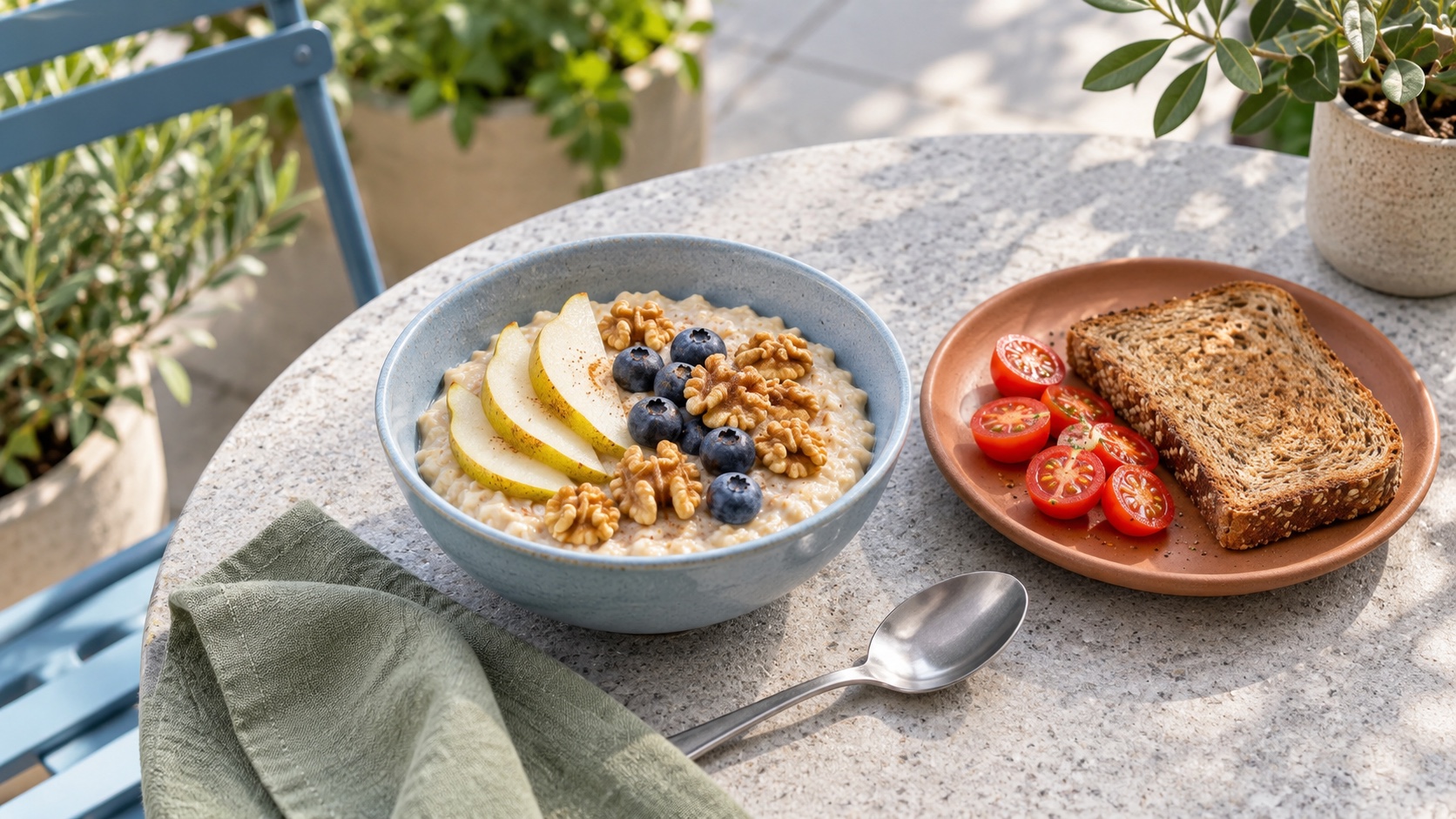
Breakfast has a texture before it has a nutrition label: the crisp edge of toast, the softness of cooked oats, the bite of a pear and the crunch of a walnut. Those details give you an enjoyable way to think about fibre. Start with the foods you like eating, then make room for a wider mix.
That works whether your UAE morning begins at home, in a café or with something assembled before work. You do not need one perfect bowl every day. A few familiar breakfast patterns can make the choice easier while leaving room for taste, appetite and whatever is available in your kitchen.
Look at the ingredients, not just the headline
The World Health Organization's healthy-diet guidance recommends getting carbohydrates primarily from wholegrains, vegetables, fruits and pulses. It places those foods within a varied, balanced eating pattern. The useful idea for breakfast is to consider the foods supplying your carbohydrates, rather than treating every breakfast built around bread or grains as interchangeable.
A breakfast can be both convenient and deliberately assembled. You might choose a grain as the starting point, then decide what fresh element or topping makes it satisfying to eat. Let the ingredients keep their own character instead of trying to hide everything inside one large blended drink.
Fibre can come from several places
The NHS guide to getting more fibre suggests options including porridge, wholemeal bread, fruit, vegetables, pulses and unsalted nuts or seeds. It stresses variety rather than relying heavily on one food. The page also describes higher fibre intake as associated with lower risks of several long-term diseases; that concerns an eating pattern, not a guaranteed result from a particular breakfast.
Think of the combinations below as different ways to arrange a meal. They have no calculated fibre total, and none is presented as a complete daily diet. You can change the portion, texture and accompaniments to suit your routine.
Three breakfast patterns to make your own
The soft bowl with a crisp finish. Cook plain oats according to the packet, using the liquid and consistency you prefer. Spoon them into a bowl, then add thin pear slices, a few blueberries and broken walnut pieces. Keep the toppings in small clusters so each spoonful can taste a little different. If the pear is firm, slice it finely; if it is ripe, use larger pieces. Cinnamon can be a flavour choice without turning the bowl into a wellness promise.
The toast with a savoury side. Serve wholemeal toast with warm cooked beans, halved cherry tomatoes and a little chopped parsley. Keep the beans in a small dish if you like the toast crisp, or spoon them over it just before eating. Add black pepper or a squeeze of lemon to suit your taste. You can make this a sit-down plate or assemble the parts separately for a short breakfast break.
The breakfast plate that needs no grand recipe. Pair wholemeal bread with a spread you enjoy, a piece of fresh fruit and a few unsalted nuts. Arrange the fruit separately if you prefer it that way. This is a flexible starting point for mornings when cooking feels unrealistic: choose a combination you will actually look forward to, rather than buying unfamiliar ingredients for a plan you will rarely use.
Make one useful comparison when shopping
The NHS page notes that fibre amounts depend on how a food is prepared and how much you eat. It also points to package nutrition information as a guide. If fibre is listed on two similar products, compare the same basis—such as per 100g—then consider the amount you normally serve.
For an easy first comparison, choose a food you already buy, such as breakfast cereal or bread. Read its ingredients alongside the nutrition panel, and compare another version you would be happy to eat. A printed serving is a reference point; the breakfast you put on your plate may use a different quantity. Keep the packet or take a photo if you want to make the comparison again next time.
Bring the same idea to a UAE café
Read a breakfast menu by its parts: the bread or grain, fruit or vegetables, and the accompaniments. Ask what comes with an item if the description is vague. For porridge, you could ask whether fruit and toppings can be served separately, then arrange the bowl the way you enjoy it.
If you prefer a savoury breakfast, ask whether the café offers wholemeal bread alongside its usual options. Treat these as practical questions, not assumptions about a meal's measured nutrient content. Menu descriptions can help you choose; they cannot supply a fibre figure that the café has not provided.
Choose a breakfast you can repeat and vary
Start tomorrow with one pattern, then change one detail on another morning: pear for apple, parsley for mint, or a different way of serving the toast. Notice which combinations work with your time and taste. You are building a small collection of breakfasts, with enough familiarity to be convenient and enough variety to stay interesting.
Sources and editorial note
This AI-assisted educational article uses official WHO and NHS guidance, checked on 12 October 2026 and linked beside the relevant claims. The meal ideas are illustrative and have not had their nutrient content measured. The cover is an AI-generated editorial illustration, using all three HAS Meal homepage hero photos as references for photographic quality while exploring a new terrace setting and palette.
A good read is worth sharing.
Pass this story on to someone who would enjoy it.
The conversation 0
A thought, a question, a little food for thought. Join in — no account needed.
Loading the conversation…
Be the first to add a thought.