
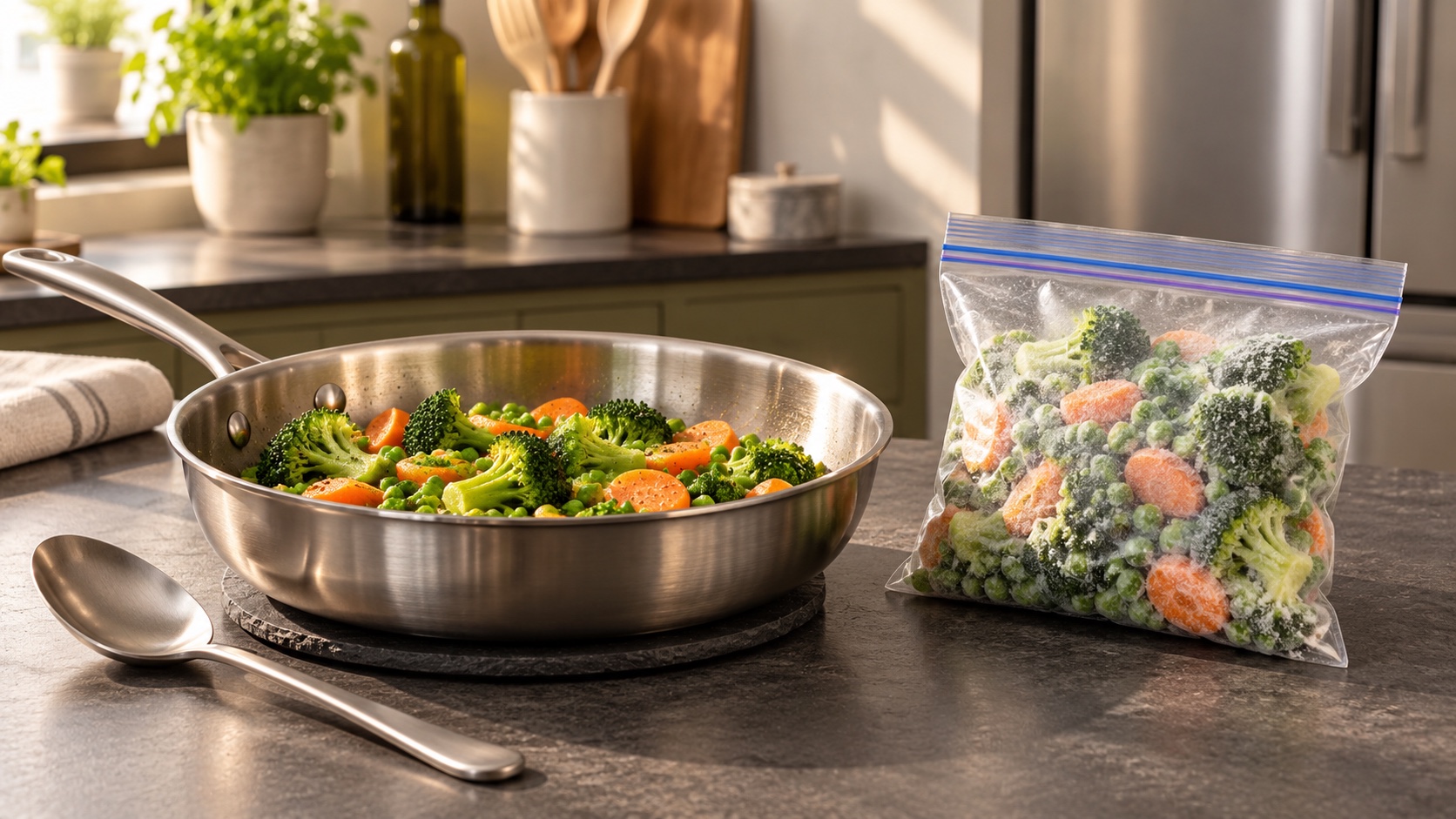
Picture a weekday evening: the rice is cooking, there is a lemon on the counter, and dinner needs one more ingredient to feel inviting. A small bag of frozen peas or broccoli can give that meal a direction. The useful freezer shelf is the one you can turn into food you enjoy.
For a busy household in Dubai or elsewhere in the UAE, that can mean keeping a few familiar vegetables ready for different dishes. A compact drawer can be enough. Start with ingredients that fit your actual cooking habits, then give each one a job before adding another bag to the shopping basket.
Where frozen vegetables fit
The World Health Organization's healthy-diet guidance recognises fresh, frozen and canned fruit and vegetables as good choices, provided they do not contain added sugars or excess sodium. It also puts diversity within and across food groups among the foundations of a healthy diet.
The NHS explanation of its 5 A Day guidance includes frozen fruit and vegetables, including those cooked into soups, stews and other dishes. You can therefore think about vegetables across a meal, whether they arrive in a bowl of soup, alongside a grain or folded into a sauce.
These sources support giving frozen vegetables a place in your routine. They do not establish that every frozen product has the same nutrient content, or that one form is always better than another. The ingredient list, accompaniments and way you assemble the whole meal still deserve attention.
Give three bags three different jobs
Peas for a quick pasta. Cook peas according to their packet instructions and combine them with freshly cooked pasta, lemon zest and chopped mint. Mash a small spoonful of the cooked peas with a little pasta cooking water to make a loose coating, leaving the rest whole. Add an accompaniment you enjoy, such as beans or an egg cooked separately. The idea is a flexible meal pattern, with portions chosen for your appetite.
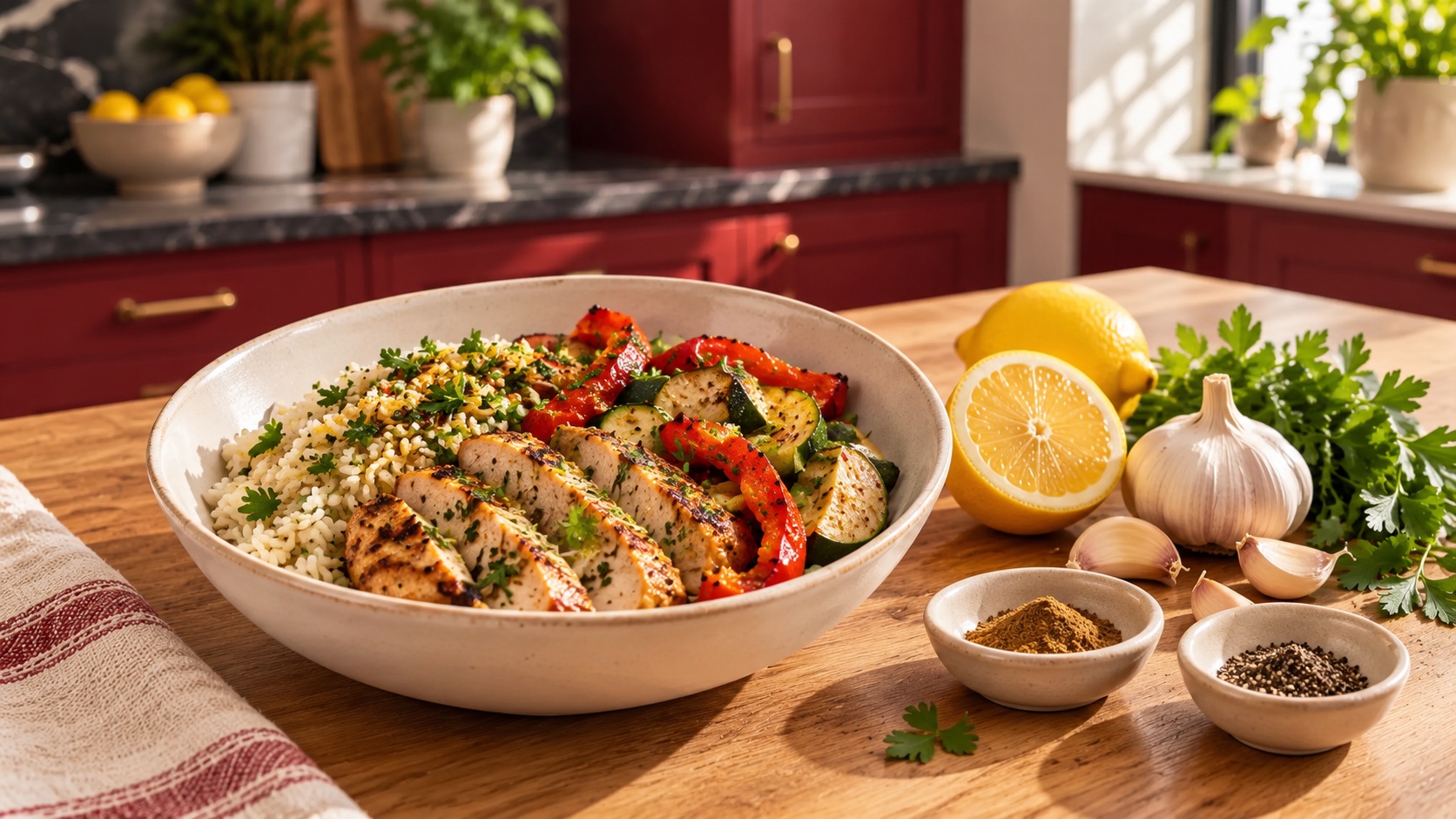
Broccoli or a mixed vegetable bag for a warm plate. Prepare the vegetables by the method on the pack, then serve them with freshly cooked rice and your usual cooked protein. Finish with lemon, parsley or a little toasted cumin. Keeping the vegetables distinct makes it easy to change one part next time: another grain, a different herb or a sauce you already know how to make.
Spinach for a lentil pot. Cook a familiar lentil dish and incorporate frozen spinach using its package directions, allowing enough cooking for both components. Choose cumin and garlic for one version, or ginger and coriander for another. Serve with bread or rice as you prefer. A bag becomes useful when you can name a dish you will actually cook with it.
Let the fresh ingredients do another job
A freezer-based dinner can still have fresh details: a lemon squeezed at the table, cucumber served on the side, or parsley scattered over a warm dish. Shop for those details in quantities you expect to use. Think through a second destination for a bunch of herbs before buying it, such as tomorrow's salad or a yoghurt accompaniment.
This is a practical way to plan around the food already available in your kitchen. It does not promise a particular saving in money or waste. If you repeatedly leave one ingredient untouched, replace it with something better suited to your routine.
Read the pack before choosing the pan
Some vegetables come plain; others arrive with sauces or seasoning. Read the ingredients and nutrition information so you know what you are buying. Decide whether you want a flexible ingredient for several dishes or a prepared accompaniment for one meal.
Storage and preparation directions also matter. The UK Food Standards Agency's freezing guidance recommends a freezer temperature around −18°C and following the label's freezing and defrosting instructions. It explains that bacteria have not been killed by freezing and may become active again as food defrosts. If a product requires defrosting, the guidance recommends doing so in the fridge. Follow your product's cooking directions when preparing the meal.
Take out only the amount needed for the meal and promptly return the rest to the freezer in properly closed packaging. Follow the product's instructions if thawing is required. Keep an opened pack visible and easy to identify, so it has a realistic place in the next meal plan.
Make the shelf easy to use
Before shopping, glance through the drawer and choose one dinner that uses something already there. Keep a short list of the combinations your household liked. A useful shelf can hold a few dependable ingredients and enough space to see them clearly.
Next week, vary one detail in a familiar meal. Peas might join pasta one evening and a vegetable soup on another; broccoli might sit beside rice or become part of a warm grain bowl. The goal is a collection of enjoyable dinners that works with your time, kitchen and taste.
Sources and editorial note
This AI-assisted educational article draws on official WHO, NHS and UK Food Standards Agency guidance checked on 13 October 2026 and linked beside the relevant statements. Meal ideas are illustrative, with no measured nutrient totals or promised savings. The cover is an AI-generated editorial illustration, using all three HAS Meal homepage hero photos as photographic-quality references while exploring an olive-grey kitchen and late-afternoon light.
A good read is worth sharing.
Pass this story on to someone who would enjoy it.
The conversation 0
A thought, a question, a little food for thought. Join in — no account needed.
Loading the conversation…
Be the first to add a thought.