
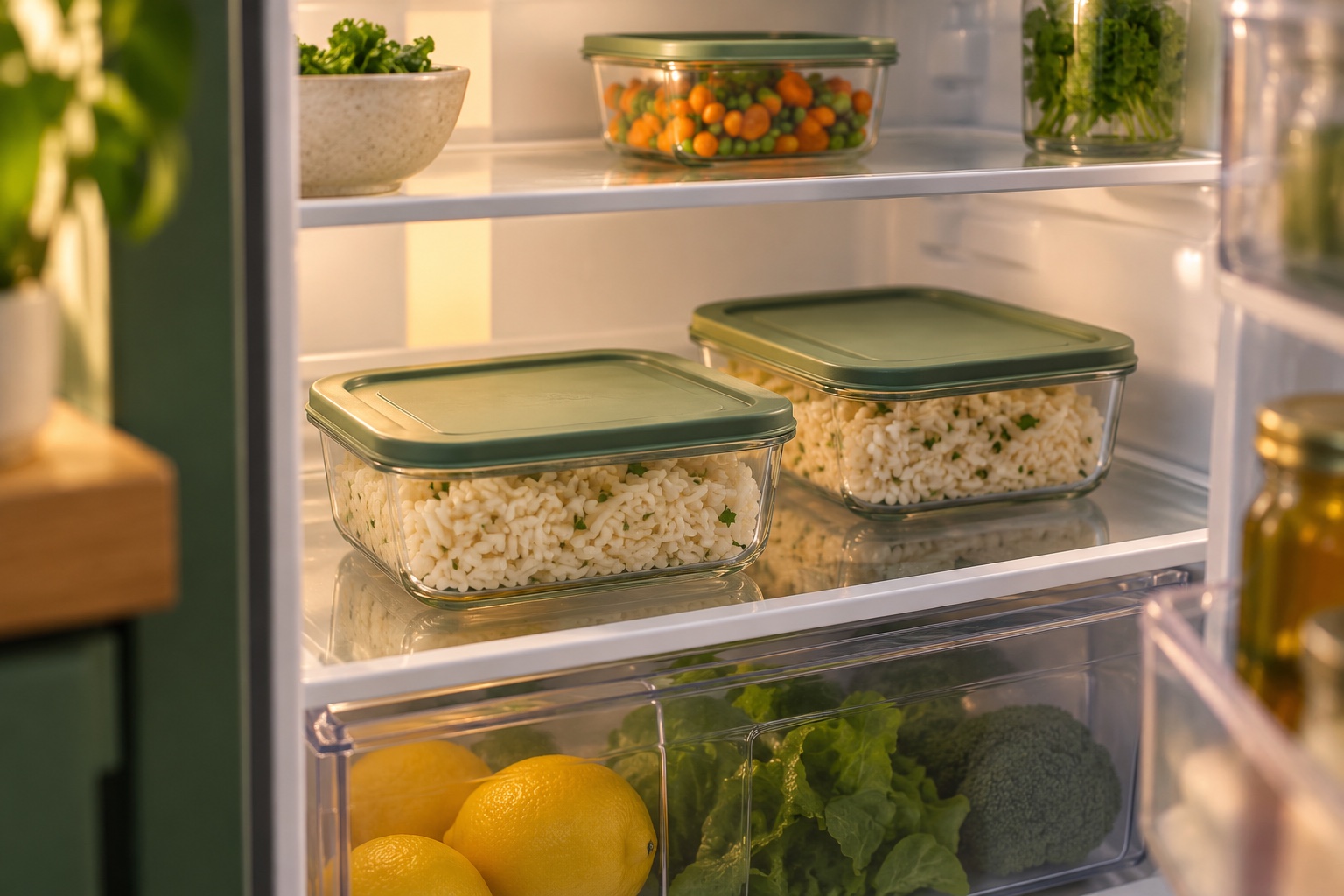
A second serving of rice can be the beginning of another meal: a little bowl beside lentils, a vegetable rice dish, or a quick accompaniment to dinner. The useful planning question comes while you are cooking: who will eat the extra portion, and when?
For a busy UAE household, that question turns an indefinite container at the back of the fridge into a meal with a purpose. Here is a home-cooking routine built around UK Food Standards Agency (FSA) rice-specific advice and the World Health Organization's broader food-handling principles. It is household guidance, not a statement of UAE catering regulations.
Why the cooling stage matters
The FSA's rice guidance explains that uncooked rice can carry Bacillus cereus spores that survive cooking. Leaving cooked rice at room temperature gives bacteria or toxins more opportunity to make it unsafe. Reheating does not make an unsafe storage history acceptable.
Its advice is to chill leftover rice promptly, ideally within one hour, dividing it into smaller portions to help. Do not leave it cooling in its rice cooker, steamer or cooking pan. That hour is a target for rapid chilling, not a reason to leave dinner sitting out until a timer rings.
Give the extra portion a destination
Before cooking, set out clean containers and decide how much rice you actually want for the next meal. If there is no realistic plan for an extra serving, adjust the quantity you cook. A smaller batch can be easier to fit into an evening than an ambitious meal-prep session.
Think about the handover, too. If one person cooks and another clears the table, agree who will deal with the extra rice. A short message such as “this portion is for tomorrow's lunch” is more useful than assuming someone else has put it away. Make the cooling step part of cooking, with a clear person responsible.
Make the fridge do its job
The FSA's household chilling guidance recommends a fridge temperature of 0–5°C and checking it with a fridge thermometer. Its general guidance says to cool cooked food before refrigerating rather than placing hot or warm dishes inside. Use small portions to cool quickly; for rice, keep the specific rapid-chilling advice above in view.
Keep cooked food protected from raw meat, poultry and fish. The FSA advises storing those raw foods sealed on the bottom shelf, where they cannot drip onto other food. Follow the appliance manufacturer's instructions when adjusting its setting.
A practical addition is a clearly marked space for the next meal. Put the cooking date and time on your container so another person can understand its history. This is a household organisational suggestion, not an extension of the food's storage life.
Choose the next meal deliberately
For rice, the FSA specifies no more than one day in the fridge before reheating. Cold rice also needs rapid cooling and consumption within 24 hours. Reheat rice only once, until steaming hot throughout. These rice-specific limits take precedence over more general advice about other leftovers.
Plan one serving at a time. For example, decide whether the portion will accompany tomorrow's lentils or vegetables, then prepare those other components separately. This keeps the next meal straightforward without relying on a large container that gets repeatedly brought out. This article concerns home-cooked rice; takeaway rice may have a different handling and reheating history.
Keep the wider kitchen routine in view
WHO's food-safety advice emphasises clean hands, clean equipment and separation between raw and prepared foods. Use a clean serving utensil and preparation area, and keep utensils used for raw meat away from the cooked rice. Cover stored food and avoid crowding the fridge so cold air can circulate.
WHO also explains that refrigeration slows bacterial growth without stopping it completely. A container being cold today does not establish how it was handled yesterday. Contaminated food may look, smell and taste normal, so a sniff or a small taste cannot confirm safety. If you cannot establish that rice was cooled and stored appropriately, discard it rather than trying to rescue it by reheating.
Make the routine easy to repeat: choose the next meal, have the containers ready, take responsibility for cooling, and record what went into the fridge. The extra rice then has a clear place in the household's plans.
Sources and editorial note
This AI-assisted educational article uses FSA and WHO guidance checked on 15 October 2026. Meal and labelling ideas are illustrative. The cover is an AI-generated editorial illustration of refrigerated rice, using all three HAS Meal homepage hero photos as photographic-quality references; it does not document an actual household.
A good read is worth sharing.
Pass this story on to someone who would enjoy it.
The conversation 0
A thought, a question, a little food for thought. Join in — no account needed.
Loading the conversation…
Be the first to add a thought.