
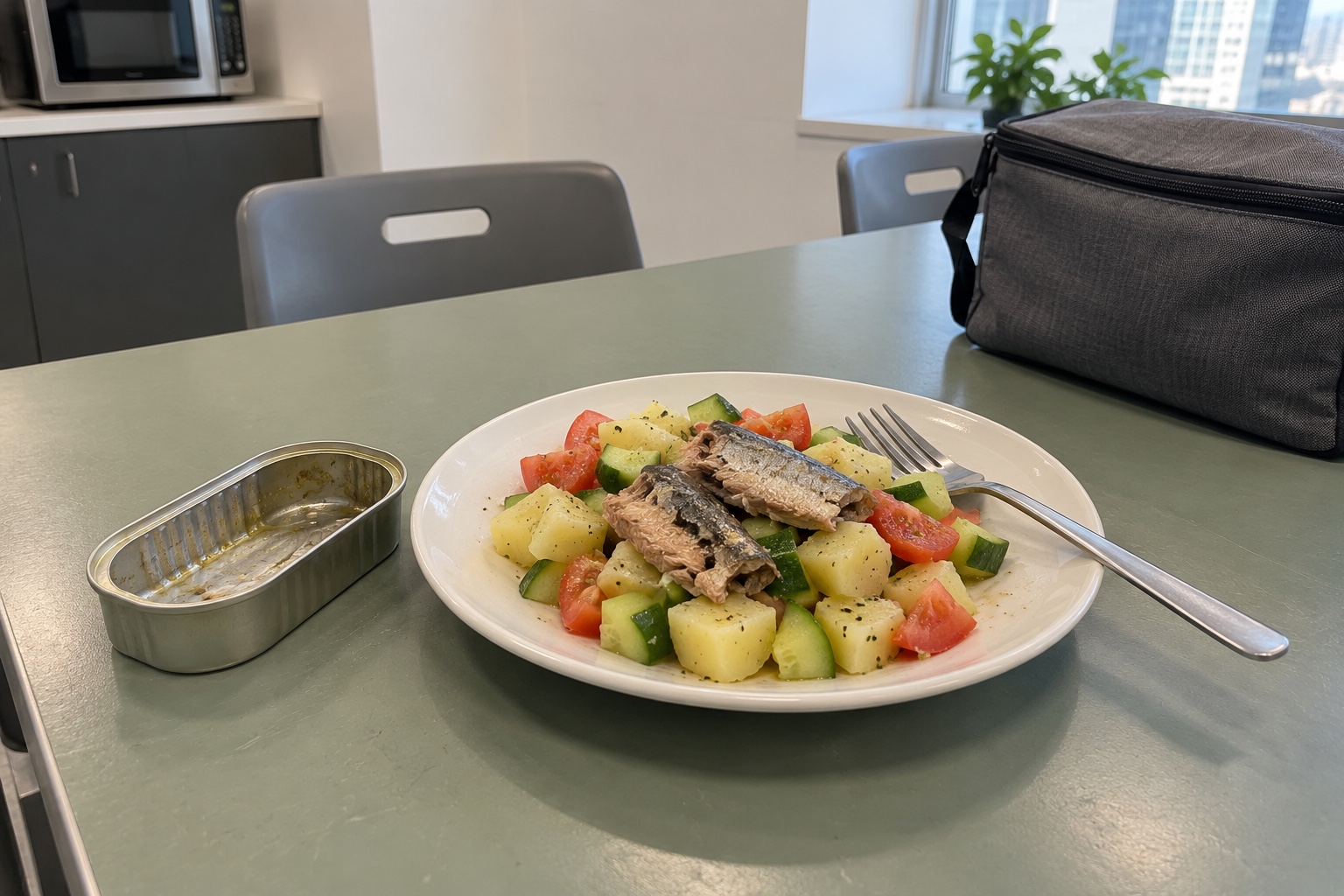
A tin of sardines can sit in the cupboard for weeks while lunch keeps falling back on the same sandwich. Choosing sardines for lunch starts with what to put beside them. Tender potatoes, crisp cucumber and juicy tomatoes give the fish different textures to work with, turning a small tin into the starting point for a meal.
For a working day in Dubai, that approach can be more useful than collecting another elaborate recipe. Choose one base, a few vegetables and a flavour you enjoy. These flexible combinations are intended for adults who eat fish. Let the vegetables, bread or potatoes change with what you enjoy and what is already in your kitchen.
What the fish brings to lunch
The NHS classifies sardines as oily fish, which contain long-chain omega-3 fats and provide vitamin D. Canned sardines that include edible bones can also contribute calcium when those bones are eaten. That does not make boneless products nutritionally identical; check which kind you have.
The World Health Organization’s healthy-diet guidance lists fish among sources of unsaturated fat and places variety, balance and moderation at the centre of a healthy eating pattern. A practical way to use that perspective is to give the vegetables and the rest of the plate as much attention as the tin. One ingredient does not do every job in a meal.
Read the tin before planning the plate
Start with ready-to-eat canned sardines and read the product information. Are they packed in oil, water or sauce? Does the label describe boneless fish? What is the drained quantity? A tomato sauce might become part of your pasta, while a strongly flavoured oil may change how much dressing you want to add.
Taste before adding more seasoning. Lemon, parsley, mint or black pepper can take the plate in different directions; none needs to become a compulsory ingredient. If comparing nutrition labels, compare the same stated quantity and notice whether the figures describe the drained fish or the contents as sold.
Three ways to give sardines a place at the table
1. Potato, cucumber and tomato salad
Cook potatoes until tender, then cut them into manageable pieces for a salad you will serve straight away. Add washed, chopped cucumber and tomatoes to a bowl, with parsley if you have it. Flake the sardines over the vegetables rather than stirring vigorously; leaving some larger pieces gives each forkful a different texture.
Try lemon juice and black pepper as a starting point, adjusting after tasting the fish and its packing sauce. The potatoes bring a soft, mild base, while cucumber adds crunch. For a softer mixture, break the potatoes a little with your fork; for more distinct bites, leave the pieces intact. Choose quantities for the people eating.
2. Tomato pasta with fish folded through
Cook your chosen pasta according to its instructions. In a separate pan, soften chopped tomatoes with garlic if you enjoy it, adding a little water when needed to loosen the sauce. A pinch of chilli is optional. Fold in ready-to-eat sardines gently near the end and warm them through without breaking every piece apart.
Toss with the pasta and serve with vegetables alongside, or add cooked vegetables to the pan. Keep the sauce simple enough for the sardines to remain noticeable. For a gentler first introduction, break a little fish into the sauce and leave the rest in larger pieces. That gives you both a familiar tomato base and a chance to notice the sardines.
3. A flatbread plate to assemble as you eat
Set sardines beside flatbread, washed cucumber and tomato, and a few lettuce leaves or herbs. Tear, fold and combine at the table. Keeping the ingredients separate lets you decide whether each mouthful needs more fresh crunch, bread or fish. Add a squeeze of lemon if it suits the tin you chose.
Keep the weekly picture in view
UK NHS guidance recommends at least two fish portions a week, including one oily, with upper limits for some groups. Check the full guidance for appropriate portions and limits, especially during pregnancy or when planning meals for children.
Follow the tin's storage and use-after-opening directions. For an office lunch, keep prepared food chilled until mealtime; our guide to the journey from kitchen to office fridge explains the routine. Choose one combination you would enjoy repeating, with room for other foods across the week.
Original AI-assisted article for general adult food choices. Sources checked on 23 October 2026. Cover: AI-generated editorial illustration of a generic office lunch, not a measured portion or product claim.
A good read is worth sharing.
Pass this story on to someone who would enjoy it.
The conversation 0
A thought, a question, a little food for thought. Join in — no account needed.
Loading the conversation…
Be the first to add a thought.